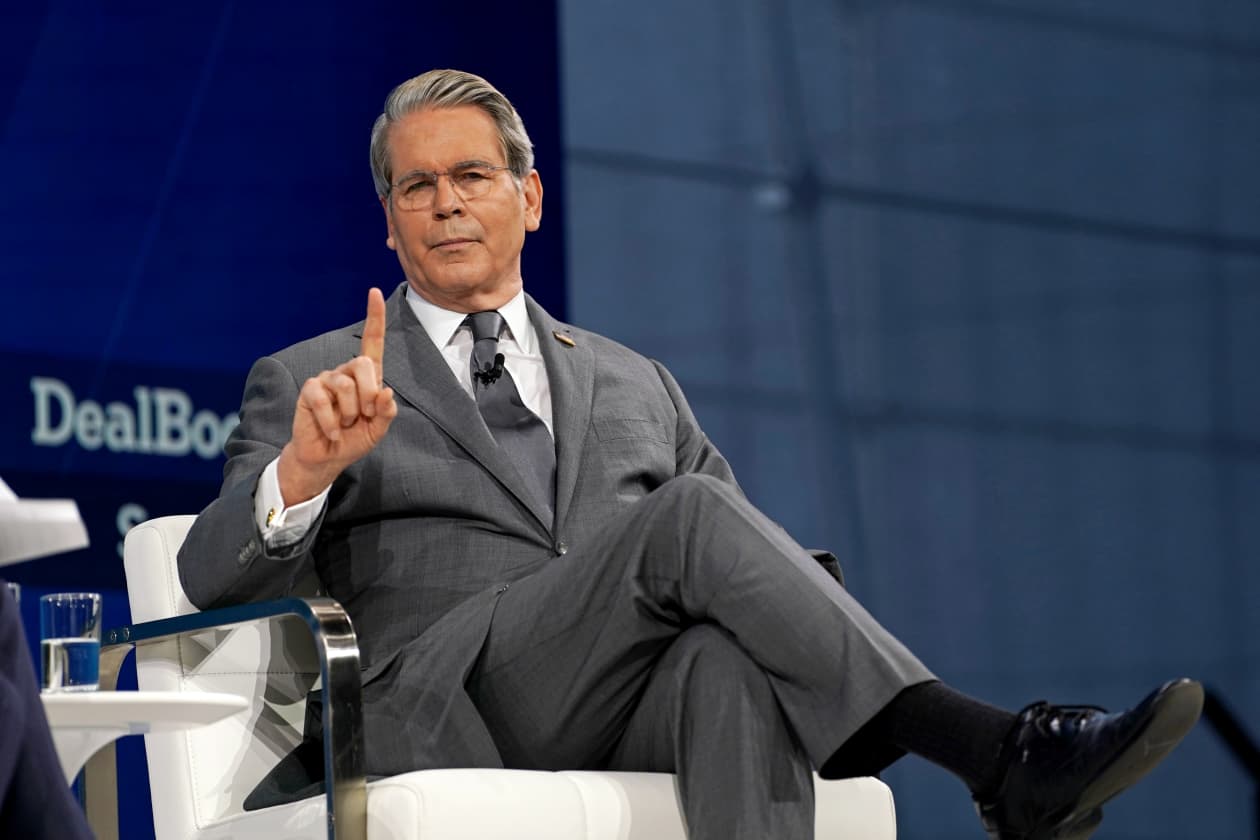
Treasury Secretary Scott Bessent said the administration is confident the Supreme Court will uphold Trump’s country-specific tariffs but outlined contingency plans to replicate the same tariff structure using Trade Act sections 301 and 122 and Section 232 if the Court rules against IEEPA-based levies. The Supreme Court heard oral arguments in November, prediction markets put a Trump win at roughly 25–27%, and major firms such as Costco have sued seeking refunds should the tariffs be struck down, leaving significant sectoral and market uncertainty that could sway equities and trade-exposed names depending on the court’s ruling.
Market structure: If the Supreme Court invalidates IEEPA tariffs (market-implied win ~25% for Trump), expect immediate winners: exporters and import-heavy retail (Asia/NA importers) and cyclicals reliant on global supply chains; losers include domestic producers that benefited from tariffs and import-focused retailers like COST if tariffs are reenacted via alternate statutes. Re-creation via Sections 301/232/122 would keep tariffs sector- and country-specific, preserving pricing power for protected domestic producers and maintaining margin pressure on importers, likely sustaining higher consumer prices by 1–2 percentage points in affected categories over 3–12 months. Risk assessment: Tail scenarios include (A) Supreme Court upholds IEEPA — tariffs persist and broaden, triggering persistent CPI upside and supply-chain reshoring cycles; (B) court strikes down and Treasury re-creates tariffs — extended legal and policy uncertainty for 6–18 months; (C) successful large corporate lawsuits (e.g., COST) force refunds and reduce policy durability. Near-term catalyst: court decision likely mid-December; medium-term: follow-on litigation, Treasury proclamations under 301/232 within 30–90 days. Trade implications: Tactical trades should be event-driven around the mid-December ruling: favor domestic-industrial longs (steel/metal producers) and inflation hedges if tariffs persist; favor exporters/consumer discretionary longs if tariffs fall. Options volatility will spike into the ruling for exposed names (COST, XRT, NUE); use defined-risk spreads to capture skew. Monitor FX (MXN/CNY moves on trade shifts), 5y breakevens, and spreads between domestic vs global industrial PMIs as execution triggers. Contrarian angles: Consensus assumes either full repeal or seamless re-creation; miss is the prolonged legal limbo (6–18 months) that compresses capex in trade-exposed sectors and increases idiosyncratic dispersion. The market may underprice refund tail-risk for large retailers — a court loss could create a >5% positive asymmetric re-rate for COST if refunds become likely, while a re-created tariff regime could leave small-cap domestics overvalued against fundamentals.
AI-powered research, real-time alerts, and portfolio analytics for institutional investors.
Request DemoOverall Sentiment
neutral
Sentiment Score
-0.10
Ticker Sentiment
