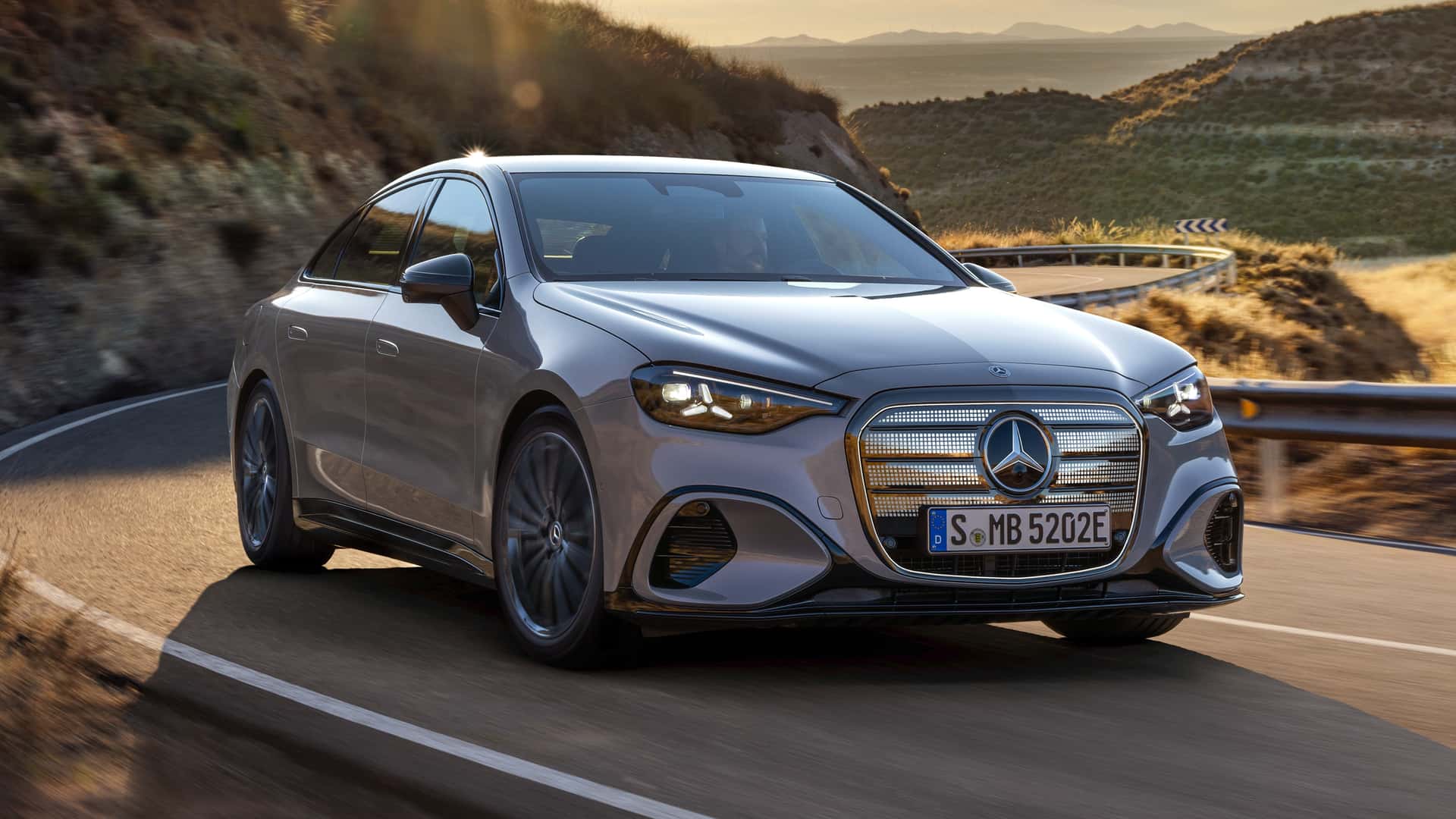
Mercedes unveiled the first C-Class Electric with 473 miles of WLTP range, dual motors producing 482 hp and 590 lb-ft, and ultra-fast charging that can add up to 202 miles in 10 minutes at 330 kW. The model brings S-Class-like ride technology, a 39.1-inch screen option, rear-wheel steering, and predictive air suspension, with a lower-cost single-motor version due in 2027. The launch is strategically important for Mercedes' EV lineup, but near-term market impact should be limited.
Mercedes is signaling that the market has punished the wrong variable: branding and design have mattered more than drivetrain capability. A cleaner, more conventional luxury sedan silhouette should improve the conversion rate among affluent buyers who were willing to consider Tesla/BMW but rejected the previous EV aesthetic; that matters because Mercedes needs incremental conquest, not just replacement demand. The bigger second-order effect is on residual values: if the new electric sedan restores showroom desirability, it should stabilize lease economics across the EQS/EQE family and reduce the discounting spiral that has been weighing on Mercedes’ EV mix.
The most interesting competitive implication is not versus mass-market EVs, but versus the premium German incumbents. A high-range, fast-charging, rear-steer, air-suspended EV sedan directly attacks BMW’s i3/i4 positioning and compresses the window for Audi to defend share with incremental refreshes. Supplier-wise, this should be favorable for battery, inverter, and software-content vendors, but potentially negative for luxury ICE-adjacent components as Mercedes broadens its dedicated EV architecture footprint.
The risk case is timing: this is a 2027 U.S. product, so near-term read-through is mostly sentiment and order-book optionality, not earnings. If macro softens or EV incentives weaken further, Mercedes could still face the same demand elasticity problem, especially given the interior’s screen-heavy layout that may appeal to tech-first buyers but alienate traditional luxury customers. The contrarian view is that the product is probably good enough to help Mercedes EV share recover, but not enough to re-rate the stock unless management proves pricing discipline and margin preservation through launch.
For the broader market, this is a mild negative for the thesis that premium EV demand is permanently broken and a mild positive for OEMs that can amortize EV platforms across multiple body styles. The key catalyst will be whether Mercedes can avoid heavy incentives at launch; if it can, that would imply the old EV styling was a larger demand drag than the market assumed. If not, the new car becomes another proof point that product quality alone cannot overcome the current luxury-EV inventory overhang.
AI-powered research, real-time alerts, and portfolio analytics for institutional investors.
Request DemoOverall Sentiment
mildly positive
Sentiment Score
0.35
Ticker Sentiment
