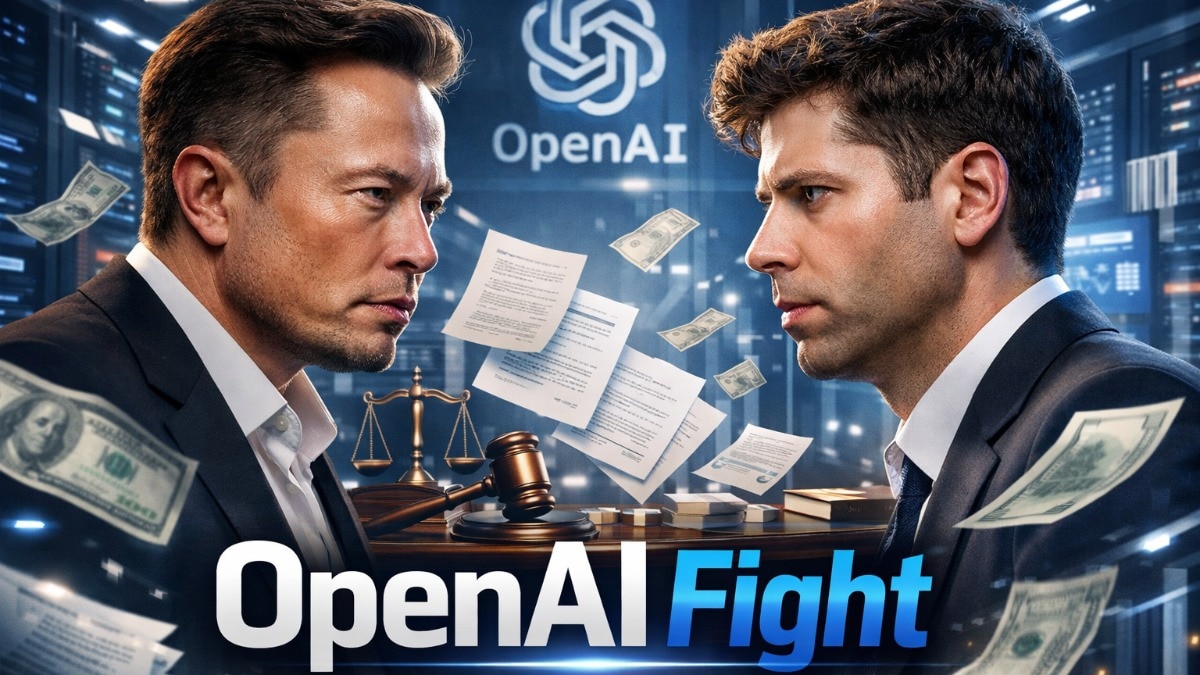
Elon Musk's lawsuit against OpenAI centers on claims that the company abandoned its nonprofit AI mission and became profit-driven, with Reuters citing expected witnesses including Musk, Sam Altman, Greg Brockman, and Microsoft CEO Satya Nadella. The dispute could affect OpenAI's governance, fundraising, and planned IPO, which has been reported as potentially valuing the company near $1 trillion. While the case is not an immediate existential threat, prolonged litigation could slow decision-making, expose sensitive records, and increase pressure from rivals and regulators.
The market issue is not whether this lawsuit is noisy; it is whether it impairs OpenAI’s ability to convert a research narrative into a durable capital-raising machine. That matters most for Microsoft because the economic value of its exposure is a call option on OpenAI scaling without governance leakage; if the dispute forces more disclosure, slower decision-making, or board/structural compromises, MSFT’s strategic upside gets haircut even if near-term Azure demand stays intact. The first-order earnings impact is limited, but the second-order risk is that counterparties begin demanding a higher governance discount on any OpenAI-linked commercial structure.
The bigger competitive implication is that litigation is a gift to rivals with cleaner narratives. Google and Anthropic do not need to “win” the case; they only need procurement teams, developers, and enterprise buyers to perceive OpenAI as more distracted and less predictable over the next 6–18 months. In AI, execution latency compounds: a few months of slowed product cadence can translate into materially lower model-share momentum, especially if talent retention weakens and partner trust becomes more expensive to maintain.
The contrarian view is that the headline risk may be over-discounted in the near term but under-discounted over the medium term. A drawn-out fight is more dangerous than a fast adverse ruling because it extends uncertainty into fundraising, IPO prep, and board governance, while also keeping internal records and strategic plans in the spotlight. That said, the case could also force a cleaner capital structure and remove some ambiguity around OpenAI’s commercial model, which would be mildly positive for long-duration partners if resolved quickly; the main edge is timing, not direction.
AI-powered research, real-time alerts, and portfolio analytics for institutional investors.
Request DemoOverall Sentiment
mildly negative
Sentiment Score
-0.15
Ticker Sentiment
