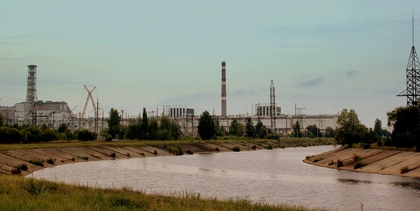
Ukrainian drones struck Russia’s Slavneft-YANOS oil refinery in Yaroslavl, causing a fire, and damaged a sulfuric acid pipeline at the Apatit nitrogen complex in Volgograd, injuring five employees. The article also says recent attacks forced Rosneft-owned Tuapse and Novokuibyshevsk refineries to suspend operations, underscoring escalating disruption to Russian fuel and industrial infrastructure. The immediate market effect is likely concentrated in Russian energy and industrial assets, but the broader impact could extend to regional fuel supply and supply-chain risk.
The immediate market read is not just higher crude beta; it is a widening premium for “security of molecules” across Russian supply chains. Repeated hits on deep-inland refining and adjacent chemical infrastructure raise the probability of temporary product shortages, inland freight disruptions, and unplanned maintenance spikes that are harder to hedge than headline oil prices. That creates a second-order beneficiary set: non-Russian refiners with export optionality, tanker owners moving replacement barrels, and Western chemical producers exposed to fertilizer and industrial-acid substitution demand.
The bigger risk for markets is a time-shifted margin squeeze rather than a sustained Brent shock. If Russian crude production is impaired less than product output, the first-order effect is tighter diesel, naphtha, and fertilizer intermediates in Europe/CIS before global crude balances fully reprice. That is bearish for industrial activity in import-dependent regions over the next 2-8 weeks, especially freight, agriculture, and heavy manufacturing, while energy equities may lag the actual uplift in refined product cracks.
A key contrarian point: this may be underpriced in product spreads, not overbought in crude. The consensus tends to map refinery disruption directly into Brent, but the more durable trade is in middle distillates and petrochemical chain dislocations. If these strikes persist for several weeks, expect Russian export volumes to shift toward crude and away from higher-value products, which can compress local margins while supporting non-Russian refining utilization globally.
Tail risk is escalation into broader infrastructure targeting that forces a sharper Kremlin response or triggers allied concern over spillovers, which could reduce strike cadence. Conversely, if Ukraine demonstrates repeatable precision and Russia cannot harden dispersed assets quickly, the campaign can create a rolling 1-3 month impairment cycle across energy logistics and industrial chemistry rather than a one-off event.
AI-powered research, real-time alerts, and portfolio analytics for institutional investors.
Request TrialOverall Sentiment
moderately negative
Sentiment Score
-0.45
