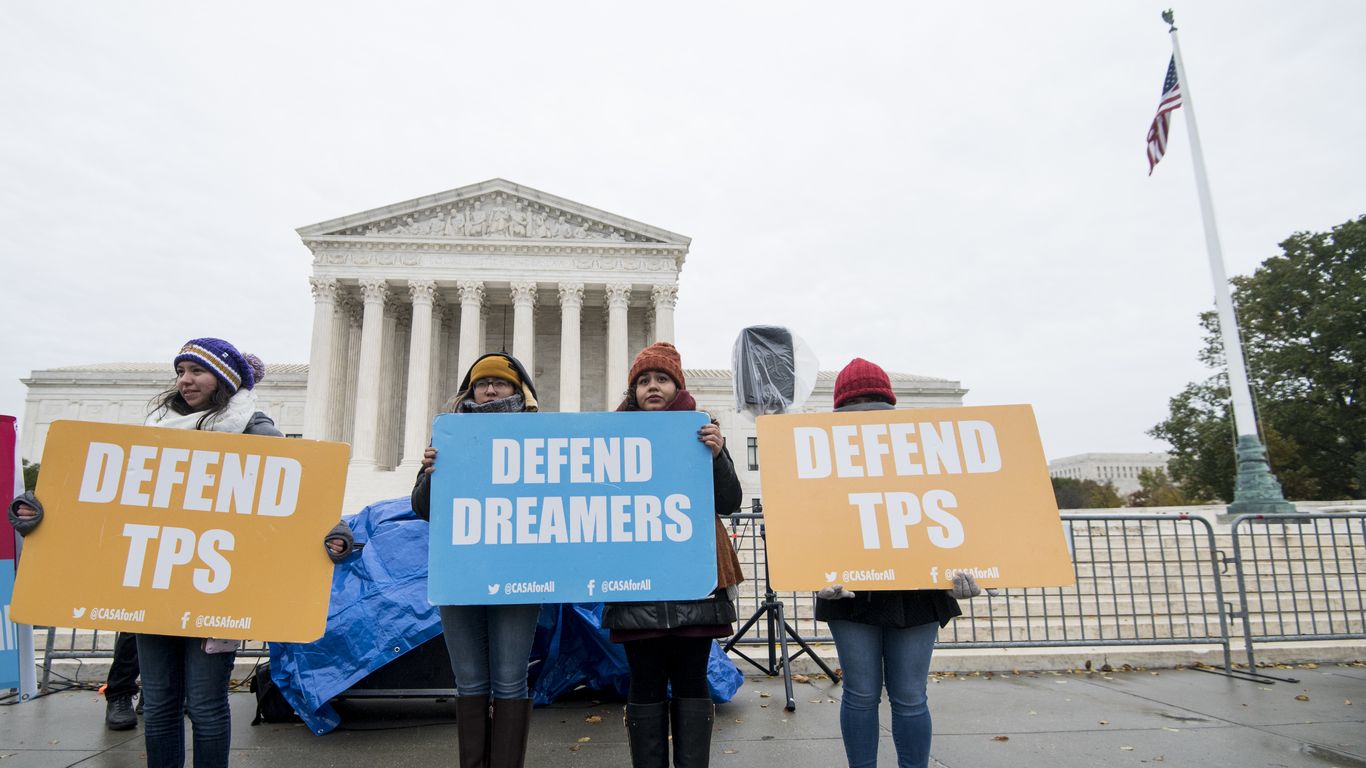
The Supreme Court is weighing challenges to terminations of TPS for migrants from two countries, with about 1.3 million people in the U.S. living under TPS protections. The case centers on whether DHS/TPS decisions can be reviewed by courts and whether prior terminations were based on adequate country-conditions reviews. While significant for immigration policy and legal precedent, the article does not point to a direct market-moving financial impact.
The market read-through is not about the humanitarian outcome; it is about whether immigration status becomes a genuinely durable legal asset or a revocable political liability. If the Court sides with the challengers on process, it raises the cost of abrupt policy shifts across a broad set of administrative actions, which is incrementally bearish for executive discretion but bullish for procedural enforcement as a market factor. The second-order effect is that agencies may need longer review timelines and cleaner records, which can slow down policy implementation across multiple domestic rule sets, not just immigration.
For NYT, the direct revenue impact is likely minimal, but the story reinforces demand for politically salient legal coverage that can drive engagement around Supreme Court and election-adjacent volatility. The bigger business effect is on newsroom attention allocation: prolonged immigration litigation tends to sustain audience interest over months, not days, and can produce repeated traffic spikes around procedural milestones. That supports low but persistent advertising and subscription engagement rather than a one-time event-driven lift.
The market may be underestimating the asymmetry around timing. Even a challenger win would not necessarily restore status in practice if a new DHS review reaches the same endpoint, so the investable catalyst is not the headline ruling but whether it constrains future termination speed. Conversely, if the government wins on reviewability, it strengthens the template for faster, less transparent administrative reversals, which increases political tail risk into the next policy cycle and makes the issue more binary around a few court dates over the next 3-6 months.
AI-powered research, real-time alerts, and portfolio analytics for institutional investors.
Request DemoOverall Sentiment
neutral
Sentiment Score
-0.10
Ticker Sentiment
