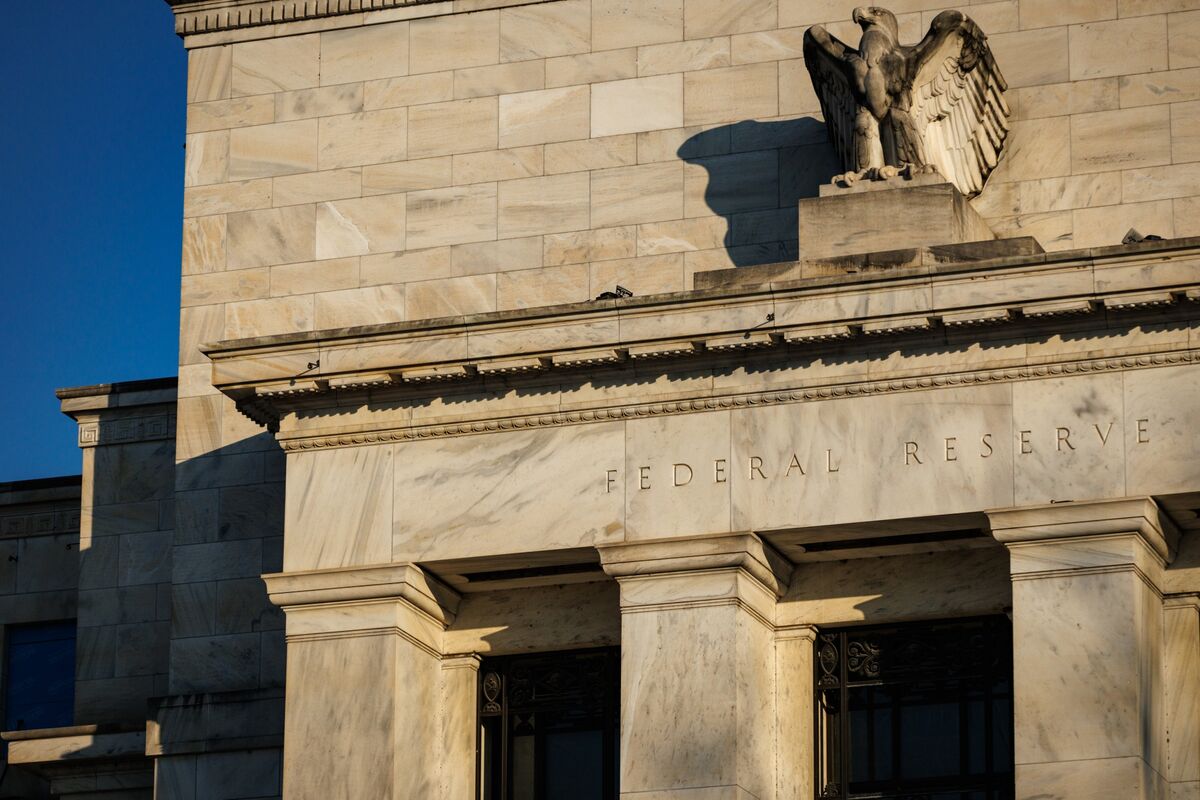
Options traders are split on the Fed’s near-term rate path, while swaps are pricing an almost certain hold at Wednesday’s meeting. Kevin Warsh’s first press conference as chairman is the key watchpoint for guidance, and the US-Iran interim peace deal has pushed oil to a three-month low, easing inflation pressure.
The near-term setup is less about the meeting outcome and more about volatility regime change. When the front-end is already anchored to a hold, the option market’s disagreement implies the real mispricing is in the path after the press conference: a small shift in perceived terminal policy can re-anchor the entire 2y-5y complex and steepen or flatten the curve in a single session. That makes rate vol cheap only if the chair validates the existing distribution; if not, the repricing can be abrupt because positioning is likely concentrated in short-dated hedges rather than convexity farther out.
The oil move matters mainly through second-order inflation expectations, not the spot inflation print itself. A sustained drop in crude can compress breakevens and remove pressure from the Fed to preserve optionality against energy-driven reacceleration, which is supportive for duration and lower-quality credit over the next 1-3 months. The bigger loser is the “higher for longer” camp: as headline inflation impulse fades, any hawkish guidance will need to come from growth or financial conditions rather than commodities, a weaker argument if oil remains soft.
Contrarian angle: the market may be overestimating how quickly peace-related disinflation flows through to policy and rates. If the agreement is interim or fragile, oil can bounce on implementation risk, and the Fed will not react to a one-week commodity downdraft if services inflation and labor data remain sticky. That creates a skewed setup where front-end yields can rally on dovish language, but the downside in rates may be capped unless the crude decline persists and feeds into survey and market-based inflation expectations over several weeks.
AI-powered research, real-time alerts, and portfolio analytics for institutional investors.
Overall Sentiment
neutral
Sentiment Score
0.05
