

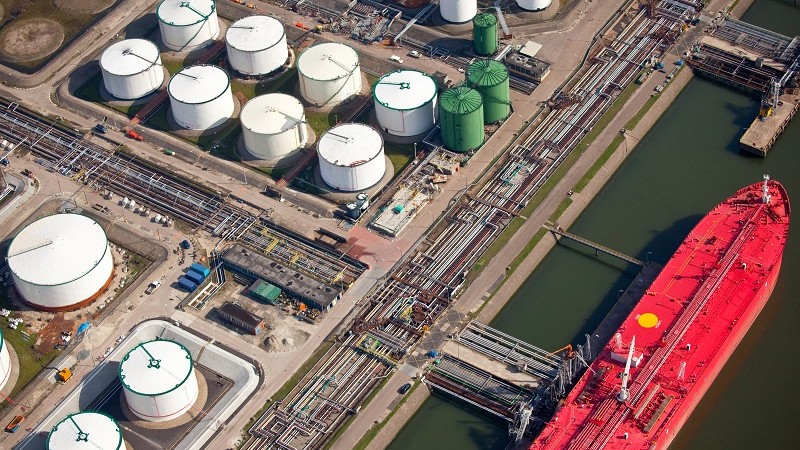
Oil markets are trading around U.S.-Iran talks, with ICE Brent falling below $90 per barrel on hopes the 45-day Strait of Hormuz blockade may end. The article warns that failed negotiations could trigger supply shortages and a new price spike, while also citing sanctions pressure on Chinese banks, Iranian export constraints, and OPEC output down 7.88 million b/d last month to 20.79 million b/d. The geopolitical risk premium remains high despite some de-escalation signals.
The market is treating Hormuz as a binary event, but the more important setup is the discounting of logistics fragility across the entire energy complex. Even if barrels keep moving, the combination of sanctions enforcement, tanker coordination requirements, and ad hoc exemptions raises friction costs, which supports regional time spreads and tanker rates before it necessarily lifts outright Brent. That means the cleaner expression is not just crude beta, but relative winners in shipping, integrated majors with downstream flexibility, and refiners exposed to import disruption.
The second-order loser set is broader than the headline implies. Australian and Nigerian fuel disruptions matter because they tighten refined-product balances, not crude balances, which can keep gasoline and jet cracks elevated even if Brent softens on diplomacy. That is bearish for transportation-sensitive equities and emerging-market carriers, while being constructive for downstream-heavy names and any producer with domestic pricing power.
Consensus is likely underestimating how quickly the market can flip from de-risking to panic if talks fail: a reopened lane can be reversed by one enforcement incident, and the time horizon for a price spike is days, not months. The more durable upside risk is that the Middle East supply base becomes structurally less reliable for quarters, forcing Asia to pay up for Atlantic Basin barrels and increasing demand for floating storage and non-Middle East supply optionality. On the downside, a genuine diplomatic breakthrough would compress geopolitical premium fast, but the floor should not collapse unless enforcement fully normalizes and sanctions leakage resumes at scale.
AI-powered research, real-time alerts, and portfolio analytics for institutional investors.
Overall Sentiment
mildly negative
Sentiment Score
-0.15
Ticker Sentiment
