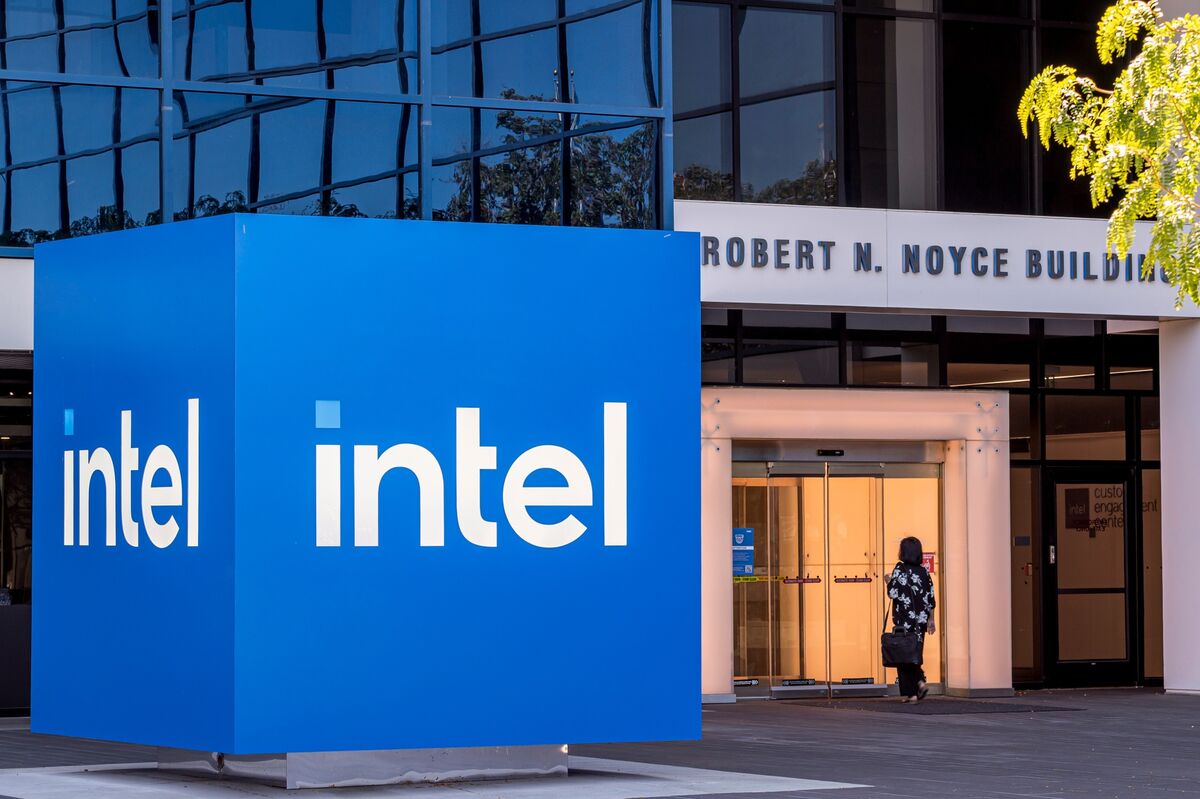
The US government’s stake in Intel has risen to about $36 billion, roughly a fourfold increase and an estimated $27 billion paper gain since the August investment. The move was driven by Intel’s improved financial outlook and a resurgence in sales, suggesting better operating momentum. The article also highlights CEO Lip-Bu Tan’s successful effort to repair relations with the White House, underscoring a governance and political dimension to the deal.
The market is starting to price Intel less like a distressed turnaround and more like a quasi-policy beneficiary with an embedded put from Washington. That matters because it compresses the company’s funding risk at exactly the point where manufacturing execution still requires heavy capex; lower perceived default/refinancing risk can improve supplier terms, customer confidence, and employee retention before the P&L fully inflects.
The second-order winner is the domestic semiconductor ecosystem, not just Intel. If Intel is viewed as strategically protected, foundry-adjacent equipment, materials, and construction vendors can see improved order visibility, while U.S. customers may lean harder into dual-sourcing away from Asia concentration; the loser is any competitor relying on Intel’s weakened position to win share on price alone. The flip side is that political support can reduce management discipline: a rally driven by policy optics can outrun actual process-node competitiveness, creating a valuation trap if operating metrics fail to keep pace over the next 2-3 quarters.
The key catalyst is not the headline mark-to-market gain; it is whether the next guidance cycle shows sustained gross margin recovery and capex efficiency. If that does not happen, the “strategic asset” narrative can reverse quickly because the market will stop treating the government involvement as a confidence signal and start treating it as a governance overhang. For the next 30-90 days, this is a sentiment trade; over 6-18 months, it becomes a fundamentals trade.
Consensus is likely underestimating how much the policy backstop can re-rate the stock in the near term, but overestimating how durable that re-rating is without product and manufacturing proof points. The move looks tactically underdone if Intel keeps printing better execution, but strategically overdone if investors extrapolate a one-quarter improvement into a multi-year competitive recovery.
AI-powered research, real-time alerts, and portfolio analytics for institutional investors.
Request TrialOverall Sentiment
mildly positive
Sentiment Score
0.45
Ticker Sentiment
