

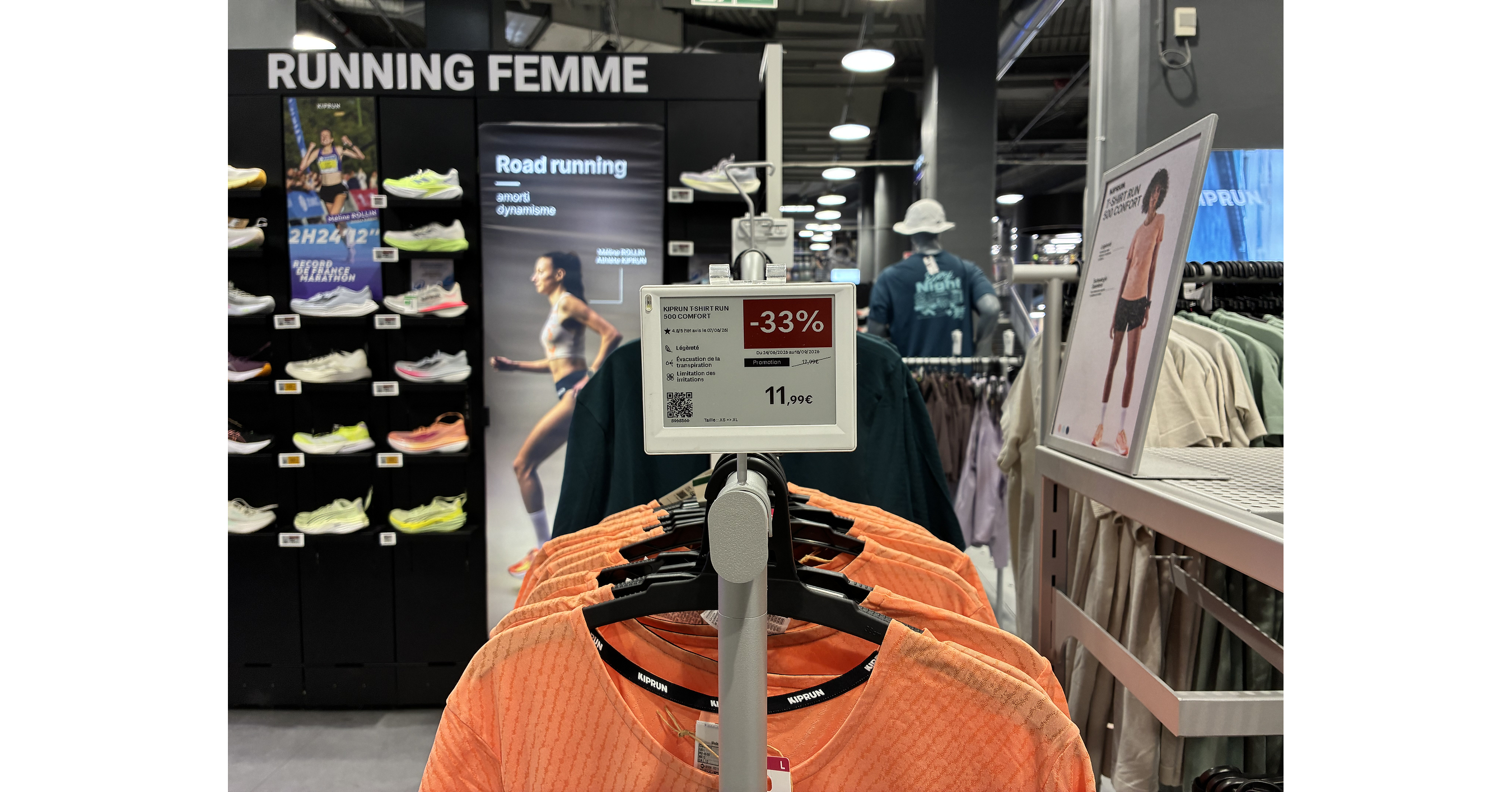
Vusion informó que Decathlon llegó a 700 tiendas equipadas con sus soluciones digitales durante el 2T 2026, con un despliegue en 54 países en tres continentes. La plataforma usa etiquetas electrónicas (ESL) con actualización instantánea y sincronizada de precios, reduciendo prácticamente las discrepancias entre el precio en lineal y el cobrado en caja (menos “errores de precio”) y liberando tiempo del personal para atención y asesoramiento. La noticia es positiva para la adopción tecnológica de Vusion, aunque el impacto financiero inmediato en mercados parece limitado.
This is less about near-term revenue and more about proof of platform stickiness at enterprise scale. For Vusion/SRBEF, the key signal is that a reference customer with a complex international footprint is standardizing on the product, which should improve win rates with other multi-country retailers because the hardest objection in ESL deployments is operational risk, not hardware capability. The second-order benefit is to make the total cost of ownership case more financeable: once the network integration is shown to work on existing infrastructure, the sales cycle should compress and the vendor can push into categories where labor savings are measurable but adoption has been slower.
The competitive dynamic likely tilts against smaller ESL vendors and any point solution that still requires bespoke networking or heavier on-site installation. If the integration pattern is repeatable, the moat shifts from device economics to software orchestration and implementation speed, which favors the incumbent with the largest installed base and strongest reference list. For CSCO, the direct revenue impact is modest, but Meraki becomes a better default stack for retail digitization; that helps the broader enterprise wireless/IoT narrative more than it moves the needle in a single quarter.
The main risk is over-extrapolation: a marquee deployment does not tell us the net margin contribution, renewal economics, or whether hardware pricing was concessionary to win share. Over the next 1-3 months, the stock response depends on whether management can translate customer logos into bookings and gross margin expansion; over 6-18 months, the real test is whether Decathlon-like rollouts become a template rather than an exception. What would falsify the thesis is a pattern of slow store activation, muted order flow, or any evidence that the project is more about installed-base defense than expanding economics.
AI-powered research, real-time alerts, and portfolio analytics for institutional investors.
Request TrialOverall Sentiment
mildly positive
Sentiment Score
0.28
Ticker Sentiment
Consensus may be underestimating how much this kind of deployment can widen the gap in retailer execution between leaders and laggards: ESL is not just a cost tool, it is a platform for dynamic pricing, inventory accuracy, and labor reallocation. But the move can also be overdone if investors assume every installed store immediately converts into high-margin recurring revenue. The missing data is contract value per store and payback period; without that, this is best treated as a watch item for follow-on disclosures rather than a standalone thesis launch.
