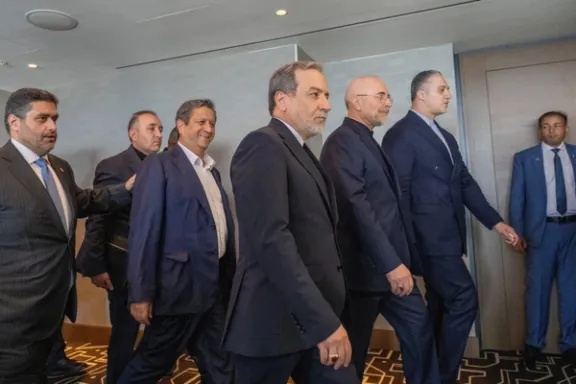
Iran-US negotiations were paused after about 90 minutes, with the Iranian delegation declining to return following Donald Trump’s "threatening and insulting" remarks, while Qatar and Pakistan continued mediation. The article also underscores rising regional tensions as Israeli officials signal no withdrawal from southern Lebanon security zones and Iranian commanders warn of retaliation. Netanyahu said Israel’s strikes have damaged Iran’s nuclear and military capabilities and could help trigger regime change, keeping geopolitical risk elevated.
The market implication is not immediate commodity beta, but a widening gap between headline de-escalation risk and actual implementation risk. When negotiations are carried by intermediaries and publicly framed as insult-driven walkouts, the process becomes highly path-dependent: each pause increases the odds of tactical escalation, even if no side wants a full break. That keeps regional risk premia sticky rather than collapsing, especially for energy, shipping, and defense-linked supply chains.
The more important second-order effect is on Israel’s strategic signaling. Publicly anchoring a permanent security-zone doctrine raises the probability of a longer-duration posture in Lebanon and adjacent theaters, which tends to support defense procurement, ISR, and missile-defense spending regardless of near-term ceasefire headlines. It also increases the chance that any diplomatic breakthrough is partial and reversible, meaning markets should expect repeated “risk-on / risk-off” bursts rather than a clean repricing lower in geopolitical risk.
Contrarian takeaway: the consensus may be overestimating the speed of a diplomatic unwind and underestimating how much of the stress has already been internalized by direct exposures while leaving adjacent beneficiaries underowned. The better trade is not a blunt oil long, but exposure to firms that monetize persistent threat perception, budget hardening, and replenishment cycles. If talks resume, the first beneficiaries are likely the most levered to a lower probability of tail events, but if they stall again, the same names can rerate on renewed procurement urgency.
Catalyst timing is short-term in headlines but medium-term in budgets. Failed talks or a visible public rupture would matter over days; procurement and security-zone policy matters over quarters. The biggest reversal risk is a surprise, durable technical agreement that narrows the scope of confrontation without a visible concession narrative — that would compress geopolitical premia quickly while leaving defense budgets slower to re-rate.
AI-powered research, real-time alerts, and portfolio analytics for institutional investors.
Request DemoOverall Sentiment
mildly negative
Sentiment Score
-0.15
