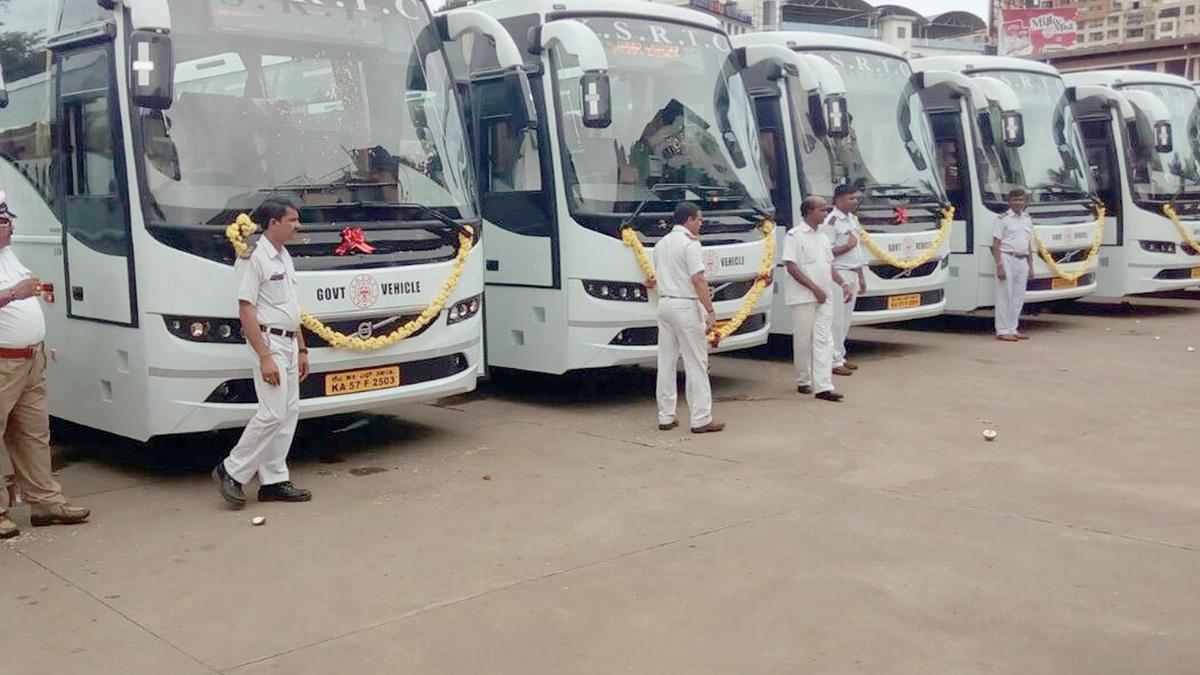
Widespread IndiGo flight cancellations stranded passengers and triggered a sharp surge in private long‑distance bus fares across major routes, with typical seats rising from ₹2,000–₹2,500 to between ₹3,000 and ₹8,000 and instances of bus fares exceeding cancelled air tickets (one passenger reported a ₹6,500 flight replaced by a ₹7,500 bus). Transport officials say they are monitoring complaints and KSRTC has deployed additional buses, creating reputational and regulatory risk for private operators and producing a short‑term modal shift in travel demand, but the story is unlikely to have material impact on broader financial markets.
Market structure: Short-term winners are private intercity bus operators and online ticketing platforms (RedBus/MakeMyTrip/MMYT) as displaced air passengers reveal price inelasticity—reported fares jumped 50–220% (₹2k–2.5k → ₹3k–8k). Losers are the offending airline (InterGlobe/INDIGO) and broader scheduled carriers who suffer reputational damage, potential compensation costs and short-term yield degradation as cancellations force refunds and rebooking. Expect a temporary reallocation of ~5–15% of disrupted air trips to surface transport on peak days.
Risk assessment: Tail risks include a regulatory clampdown within 7–30 days (fare caps or fines) that could compress margins for opportunistic bus operators and increase airline claims; a rapid IndiGo operational fix within 1–3 weeks would normalize flows and reverse pricing power. Hidden dependencies: interstate operator entry/exit dynamics, diesel/jet-fuel moves (+/-5% fuel swing changes pass-through economics for buses/airlines) and online-platform routing capacity. Key catalysts: official enforcement announcements, holiday travel peaks in next 2–6 weeks, and IndiGo ops updates.
Trade implications: Implement a short bias on InterGlobe (NSE: INDIGO) sized 1–2% of NAV via a 3-month put spread (buy 10% OTM, sell 20% OTM) to cap cost; go long MakeMyTrip (NASDAQ: MMYT) 1.5–3% or buy 3-month ATM calls to capture incremental RedBus bookings; consider a smaller 1% long in IRCTC (NSE: IRCTC) for train-redirect demand if bus fare caps emerge. Use a 2:1 long MMYT / short INDIGO pair to express relative winners vs losers over 1–3 months.
Contrarian angles: The market may over-penalize IndiGo if outages prove transient—downside likely capped to 10–15% absent systemic failures, so selling short-dated volatility (sell 4–6 week calls after a pop) could be profitable for experienced options traders. Conversely, a regulatory cap on private-bus fares would be an underappreciated positive for IRCTC and MMYT (digital bookings shift to trains), and warrants active rebalancing if government issues guidance within 30 days.
AI-powered research, real-time alerts, and portfolio analytics for institutional investors.
Request DemoOverall Sentiment
moderately negative
Sentiment Score
-0.50
