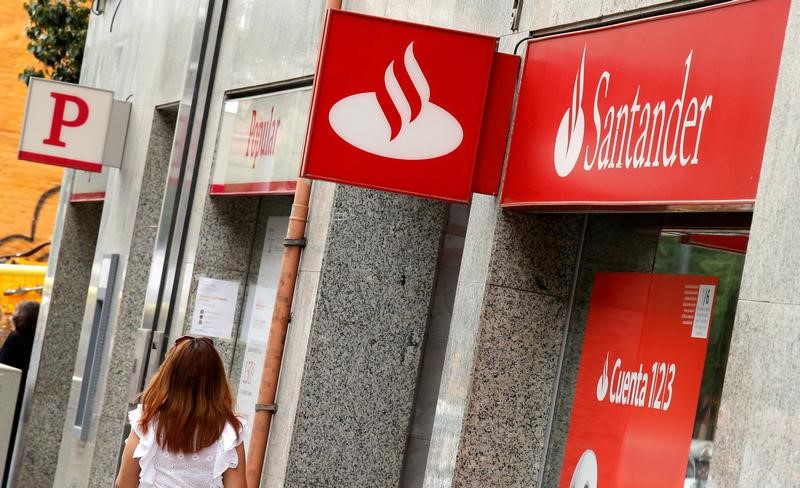
Banco Santander reported a record first-quarter net profit of €5.55 billion, up 60% year on year, though €1.90 billion came from a one-time gain on the sale of Santander Bank Polska. Underlying attributable profit rose 12% to €3.56 billion, with total income up 4% to €15.14 billion and the CET1 ratio improving to 14.4% after the Poland disposal. The bank also reiterated its 2026 CET1 target of 12.8%-13% after pending acquisitions and approved a €12.5 cent final dividend, bringing full-year cash payout to €24 cents per share, about 14% higher than the prior year.
The cleanest read-through is not the headline profit beat; it is that capital generation is now strong enough to fund growth, buybacks, and two acquisitions without jeopardizing the balance sheet. That matters because European bank multiples tend to rerate when investors believe earnings are both durable and distributable. The market should also recognize that the Poland exit is doing more than boosting CET1: it is quietly de-risking the group by reducing exposure to a market where incremental capital would likely have earned lower strategic value than the headline ROE implied.
Second-order, the TSB and Webster deals change the earnings mix toward more fee-sensitive, lower-duration franchise value, but they also increase execution risk over the next 6-18 months. Webster in particular is the more consequential variable: if US regulatory approval drags, the stock can continue to outperform on buyback optics; if approval arrives, near-term dilution concerns can briefly suppress the multiple before synergies and a larger US deposit base matter. For WBS, the risk is not deal announcement but whether the market starts discounting integration friction and any capital return pause.
Credit quality looks benign on the surface, but the small uptick in NPLs plus a flat cost of risk suggests the cycle is normalizing rather than improving. That is enough to keep the equity bid intact, but not enough to justify paying full-cycle premium multiples unless loan growth reaccelerates. The contrarian point: the best setup may be that the bank is being valued too much like a capital return story and too little like a compounding franchise with optionality in US scale—if that narrative takes hold, the rerating can persist for quarters, not days.
AI-powered research, real-time alerts, and portfolio analytics for institutional investors.
Request DemoOverall Sentiment
moderately positive
Sentiment Score
0.62
Ticker Sentiment
