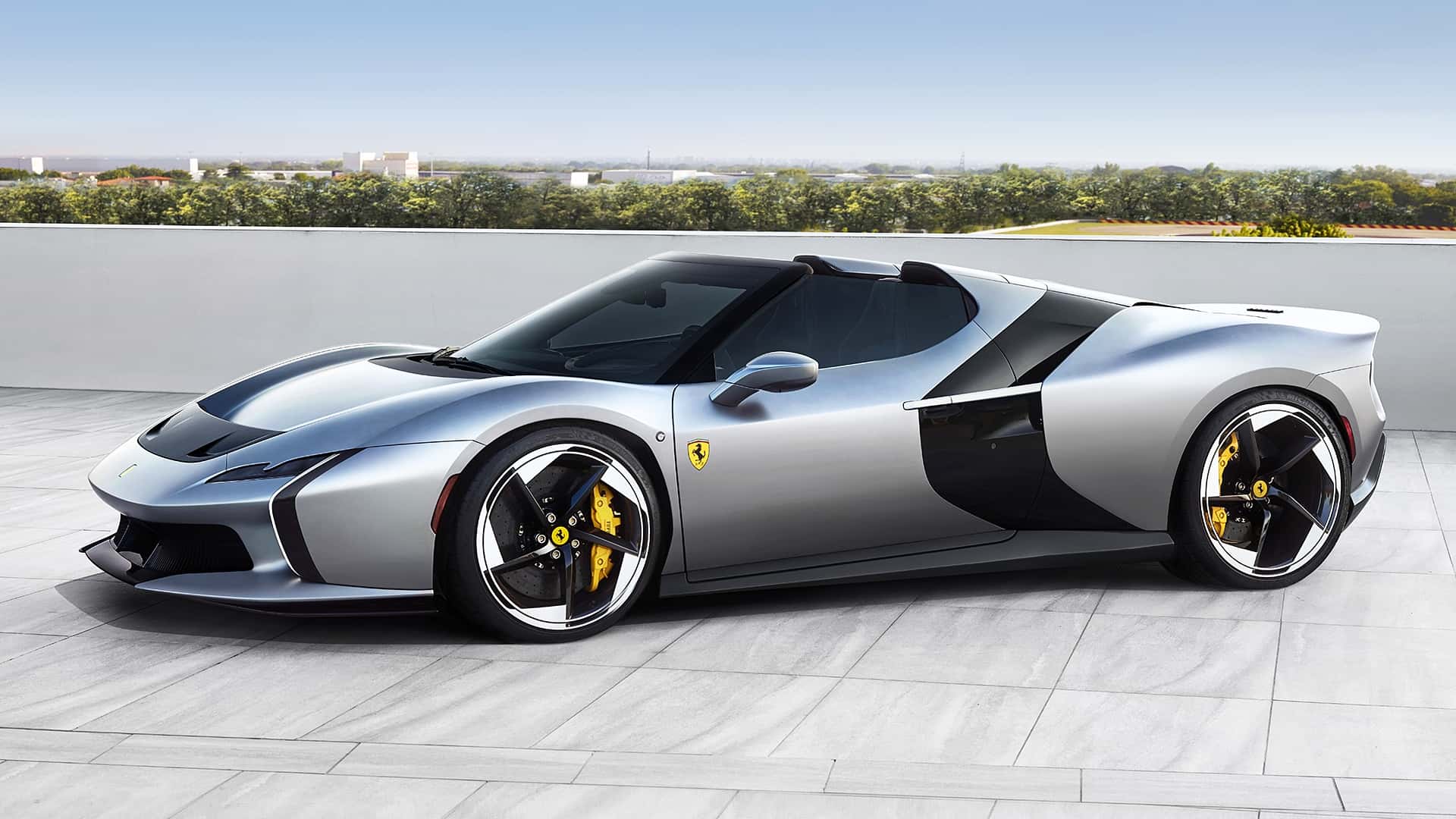
Ferrari unveiled the HC25, a one-off Special Projects supercar based on the F8 Spider and billed as the brand’s last non-hybrid twin-turbo V8 spider. The car introduces bespoke exterior and interior design cues, including a new gloss-black band, vertically arranged LED DRLs, and custom five-spoke wheels, but Ferrari disclosed no performance upgrades. The article is strategically positive for Ferrari’s brand and product image, though the direct market impact is limited given the one-of-one nature of the vehicle.
This is a brand-equity signal more than a unit-volume event: Ferrari is using a one-off to reinforce scarcity, preserve pricing power, and keep the halo well ahead of the hybridization transition. The key second-order effect is that the end of the non-hybrid twin-turbo V8 spider creates a near-term collector pre-order dynamic across used Ferraris and adjacent exotics, as buyers who care about “last of the breed” characteristics tend to front-load demand before the next regulation-driven reset.
For RACE, the increment from a single bespoke car is immaterial financially, but the messaging matters because Ferrari’s valuation depends on mix, customization, and perceived irreplacability more than unit growth. The bigger beneficiary is the broader Ferrari ecosystem: dealers, approved pre-owned inventory, and high-margin personalization attach rates should all see a modest tailwind as the brand’s transition narrative strengthens. Competitively, this raises the bar for Lamborghini and McLaren, which still rely more heavily on product-cycle updates than on pure heritage monetization.
The contrarian risk is that the market may already be fully paying for Ferrari’s scarcity premium, so “one-off halo” news may not translate into multiple expansion unless it is followed by evidence of order-book resilience and margin durability into the hybrid ramp. Over a 3-6 month horizon, the catalyst to watch is whether Ferrari can keep waitlists, pricing, and customization intensity intact as the product mix shifts; if not, the nostalgia effect becomes a short-lived marketing win rather than a fundamental driver.
A subtle longer-term read-through is that the last ICE V8 spider may actually accelerate EV/hybrid curiosity in Ferrari’s ultra-wealthy customer base by making the next generation feel more collectible, not less. That supports the idea that Ferrari can manage transition without surrendering luxury pricing power, but only if the brand consistently frames each new powertrain as a scarcity object rather than a compliance product.
AI-powered research, real-time alerts, and portfolio analytics for institutional investors.
Request DemoOverall Sentiment
mildly positive
Sentiment Score
0.25
Ticker Sentiment
