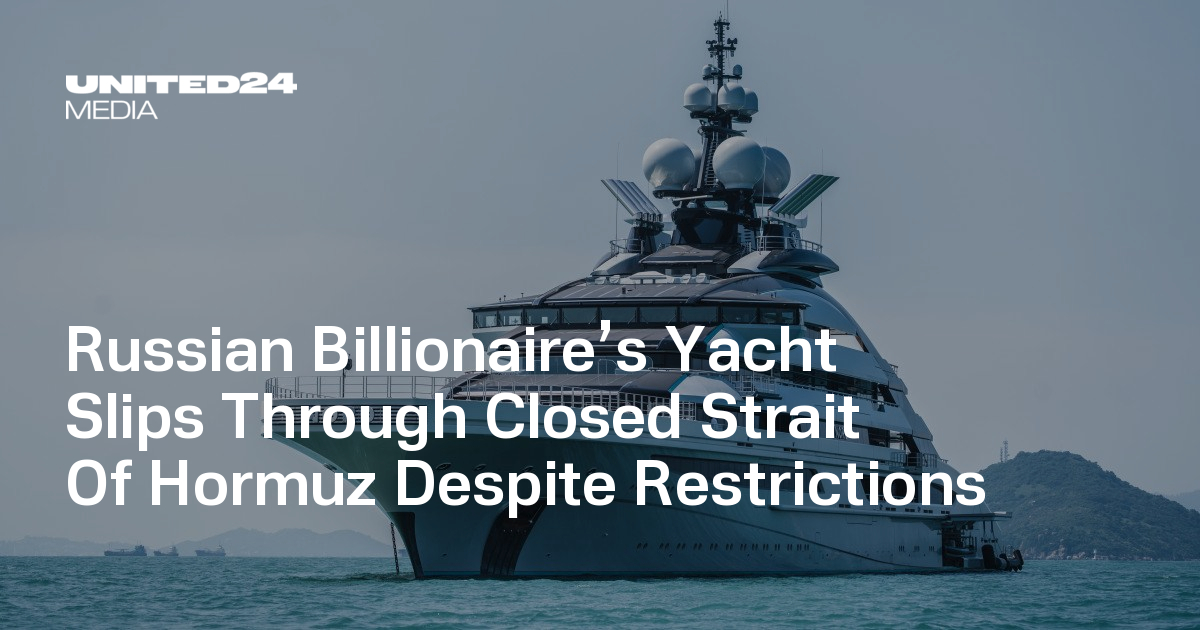
A 142-meter superyacht owned by sanctioned Russian billionaire Alexey Mordashov transited the Strait of Hormuz from Dubai to Oman despite restrictions, highlighting selective enforcement amid heightened US-Israel-Iran tensions. The article also notes that other sanctioned tankers, cargo ships, and a passenger ferry crossed during the same period, while Iran has alternated between limited reopening and renewed constraints on the waterway. The situation raises escalation risk for a key global oil chokepoint and could disrupt shipping and energy markets.
Selective passage through Hormuz is more important than a binary “open/closed” narrative. Once exemptions exist for Russian-linked or politically connected cargoes, the chokepoint becomes a pricing and access regime rather than a shutdown, which weakens the immediate bull case for a sustained spike in tanker rates while still preserving a large geopolitical risk premium in crude and refined products.
The second-order effect is a widening split between compliant and non-compliant shipping. Owners with exposure to sanctioned routes, obscure beneficial ownership, or weak insurer backing face higher detention, war-risk premiums, and routing friction; by contrast, fleets with Western charters, strong documentation, and alternative Gulf load options should gain share. This favors high-quality tanker lessors and integrated energy names with diversified logistics more than pure spot-rate levered names.
The bigger market risk is not one dramatic closure, but a sequence of intermittent seizures, fee waivers, and selective enforcement that degrades schedule reliability over weeks. That raises inventory carry, forces precautionary rerouting around the Cape for some cargoes, and lifts delivered crude differentials in Asia even if headline Brent only moves modestly. The regime also creates a policy trap: if the US escalates maritime interdiction, Iran can respond asymmetrically with more boardings rather than a formal blockade.
Consensus is likely overestimating how quickly this translates into a sustained energy shock and underestimating the microstructure damage to shipping/insurance. The cleaner trade is to fade indiscriminate panic in broad energy beta while expressing a relative short on exposed logistics and sanctioned-fleet proxies. The key catalyst window is the next 1-3 weeks, when vessel behavior and insurer responses will matter more than rhetoric.
AI-powered research, real-time alerts, and portfolio analytics for institutional investors.
Request DemoOverall Sentiment
mildly negative
Sentiment Score
-0.25
