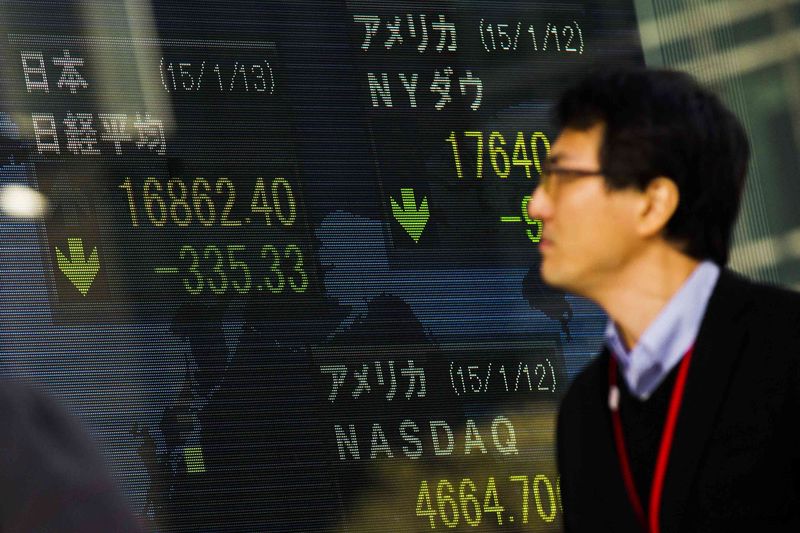
MSCI All Country Asia Pacific ex Japan fell 2.1% as Goldman Sachs doubled its assumed Strait of Hormuz disruption to 21 days and warned of an energy-driven downgrade; foreign investors withdrew about $15.0B from emerging Asian markets, with Taiwan and Korea seeing $7.0B and $5.4B outflows and India and the Philippines each down ~5%. Goldman trimmed GDP forecasts by 0.3–0.5pp for most Asian economies (China trimmed 0.1pp), pushed Brent to a $110 March target, cut MXAPJ 2026 earnings by 2%, and noted US Fed cuts were pushed to Sep/Dec, compounding regional headwinds.
The market reaction is less about a single oil spike and more about a regime shift in supply uncertainty that amplifies cross-asset convexities: shipping/insurance costs, term‑structure dynamics in crude, and contingent production throttles in import‑dependent EMs. Expect higher short‑dated Brent volatility and a steeper forward curve as market participants price a higher probability of episodic closures rather than a one‑off shock, which forces refiners and traders to hold larger premia for prompt delivery and working inventory.
Capital‑flow mechanics will accentuate the equity drawdown: FX weakness in oil‑sensitive Asian markets invites local‑rate hikes or FX intervention, creating a feedback loop of margin calls and forced equity liquidation that can overshoot fundamentals inside 6–12 weeks. This is the channel where policy (delayed Fed cuts, local central bank action) and market structure (leveraged EM long positions, passive index outflows) interact to create outsized short‑term downside.
Corporate winners/losers will not be the usual majors vs explorers dichotomy. Fast‑response producers and liquefaction/LNG sellers with spare capacity, specialized shipping owners (those not tied into long charter contracts), and global fertilizer/chemical firms able to pass through feedstock costs will capture most of the near‑term spread; airlines, container lines, and oil‑intensive manufacturers will see margin compression and working‑capital stress.
Time horizons matter: within days to a few weeks, technical flows and insurance headlines will drive volatility; 1–6 months will decide earnings revisions and capital spending changes; beyond 12 months, investment cycles (capex pullbacks in refining and shipping) could structurally tighten capacity, keeping a higher price floor. The asymmetry favors optionality and pair trades over outright directional high‑beta equity exposures.
AI-powered research, real-time alerts, and portfolio analytics for institutional investors.
Request DemoOverall Sentiment
strongly negative
Sentiment Score
-0.70
Ticker Sentiment
