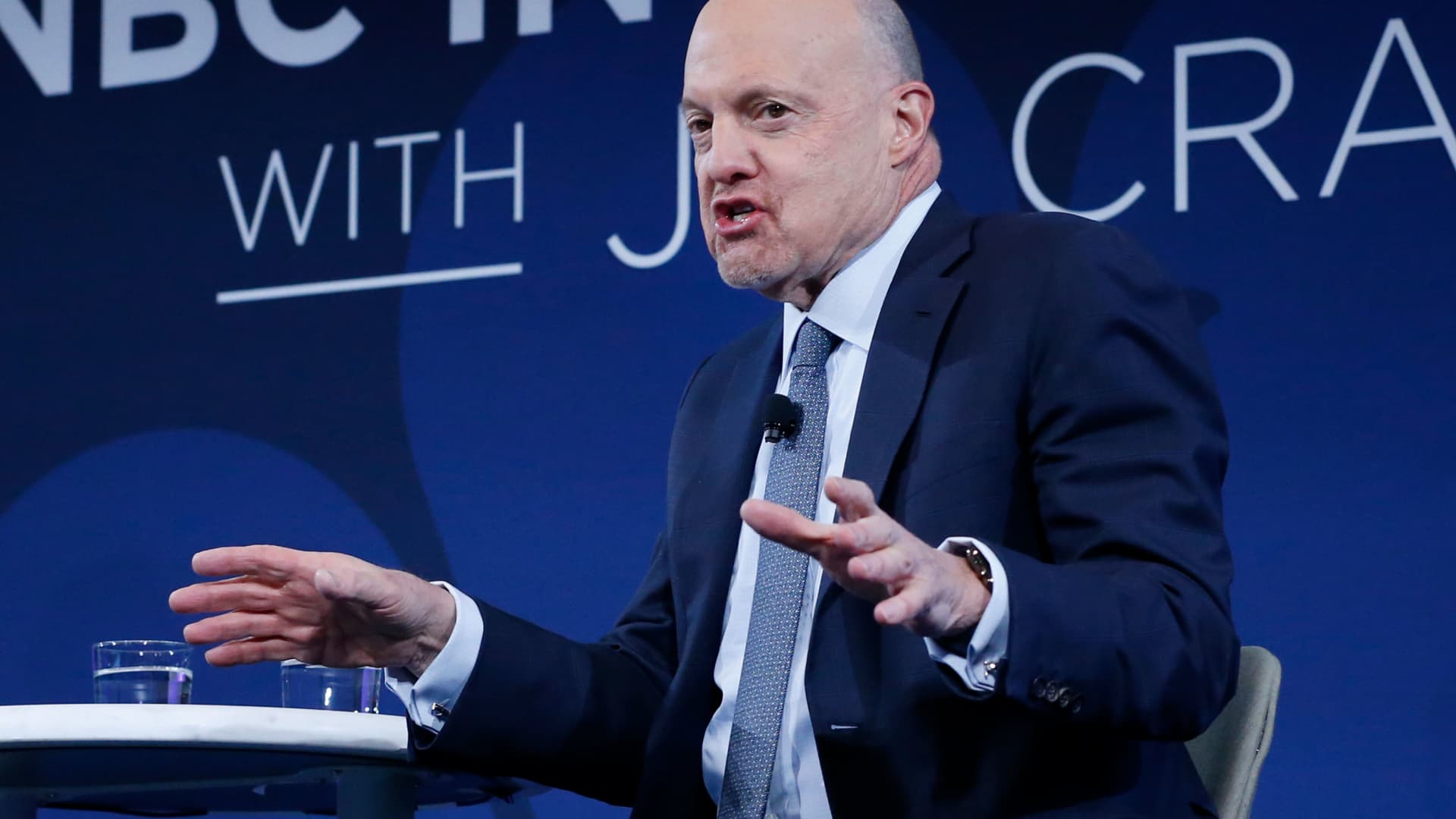
Jim Cramer argued the Fed should keep rates unchanged or cut at least once as oil, housing, insurance, and autos trend lower, potentially easing inflation pressures. He also flagged overheated tech enthusiasm in names like SpaceX, Sandisk, and Western Digital, while still endorsing a balanced mix of rigor and passion in stock picking. The piece is more a macro and sentiment commentary than a direct market catalyst, but it touches on Fed policy and rate expectations that can move broader markets.
The market implication is less about the rhetorical Fed debate and more about the path of real rates over the next 3-6 months. If disinflation from energy flows through goods and transport, duration-sensitive equities get a second wind even if nominal growth merely stays intact; that is the setup for continued multiple expansion in mega-cap tech and rate-sensitive cyclicals. The bigger second-order effect is on credit: lower policy-rate expectations should compress refinancing stress for mid-cap industrial and consumer names before it shows up in earnings revisions.
Retail signals point to a bifurcated consumer where unit demand is stable but basket size is under pressure, which favors operators with scale, private-label mix, and better inventory discipline. That is a relative tailwind for WMT and, to a lesser extent, DLTR/DG on traffic capture, while TGT remains the most vulnerable if discretionary softness persists and promotions stay elevated. The longer the margin pressure lasts, the more market share accrues to the lowest-cost operators, not the highest-growth ones.
In semis and hardware, the harder trade is distinguishing genuine demand from momentum fueled by incremental buybacks, upgrades, and forced positioning. Names with less liquid floats and highly concentrated ownership can overshoot fundamentals for weeks, but the reversal can be violent once marginal buyers are exhausted; that argues for participation via defined-risk structures rather than outright chase. Intel is the cleaner beneficiary if rates ease and capital spending improves, while AMD remains the higher-beta expression of the same theme with more sentiment risk.
The contrarian miss is that the market may be underpricing how quickly softer oil and freight can feed through to nominal earnings power for consumer-sensitive companies, even if top-line growth looks mediocre. Conversely, consensus may still be too relaxed about crowded AI/semis ownership: if the next macro print shifts the Fed path back toward cuts, the tape can support them again, but the unwind risk is highest in the names that already trade like inevitabilities rather than businesses.
AI-powered research, real-time alerts, and portfolio analytics for institutional investors.
Request DemoOverall Sentiment
mildly positive
Sentiment Score
0.15
Ticker Sentiment
