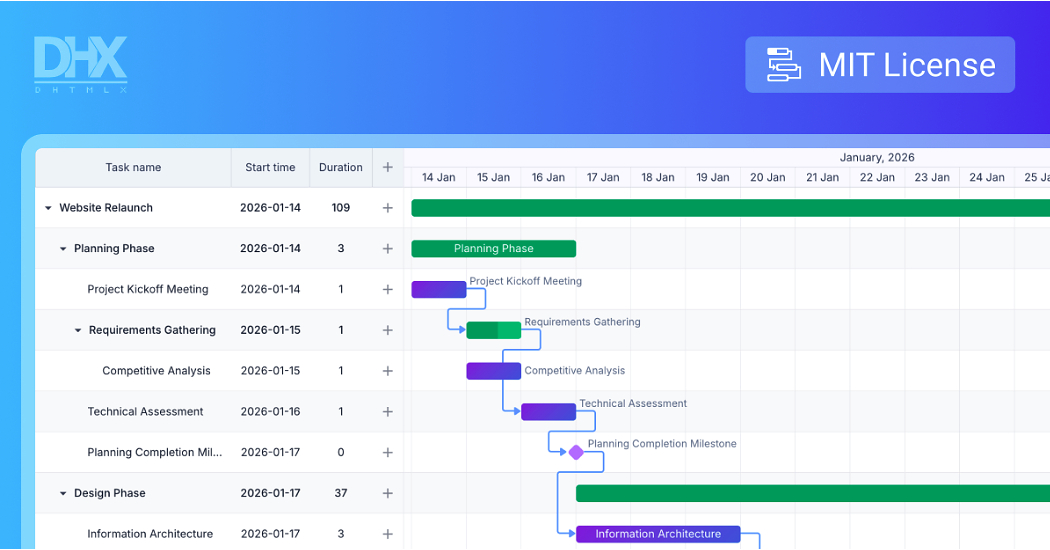
The article cites Black Duck research that open-source components appear in 97% of commercial software applications and that the MIT license is used in 92% of audited commercial codebases. It also reports adoption drivers: 53% of organizations list “no license cost” as the top reason (rising to 92% in government), while 96% maintained or increased open-source use over the prior year. DHTMLX released the free MIT-licensed DHTMLX Gantt Community Edition, positioning permissive licensing as a practical requirement for moving developer tools from evaluation to production with fewer procurement/legal frictions.
The market mechanism here is not “open source is good,” which is already consensus, but that permissive licensing is becoming a procurement default. That matters most for small-to-mid ticket developer tools and UI components because the buyer’s first screen is no longer feature depth; it is legal friction, security review time, and integration risk. Vendors monetizing scarce licenses or restrictive terms face a slower funnel and more price competition as buyers can substitute in MIT-licensed alternatives before ever involving procurement.
Second-order winners are the platforms that monetize around open ecosystems rather than by charging for the component itself: cloud providers, enterprise dev platforms, and governance/security vendors. Broader OSS usage expands the dependency graph, which increases demand for SBOM, scanning, provenance, and runtime monitoring; that is a longer-cycle benefit for security names, but only if they can attach to budget already allocated for development, not just security. The downside is that “free” components can compress spend in the app layer while shifting dollars to integration, support, and compliance.
This is a 6-18 month structural theme, not a days-long catalyst. Near term, the risk is that investors overestimate immediate revenue displacement; most large software vendors will not see a direct P&L hit until renewal cycles or procurement resets. The thesis is falsified if enterprise software budgets tighten enough that even permissive OSS adoption slows, or if a major OSS security event pushes buyers back toward managed proprietary stacks and enterprise indemnification.
AI-powered research, real-time alerts, and portfolio analytics for institutional investors.
Request TrialOverall Sentiment
neutral
Sentiment Score
0.05
