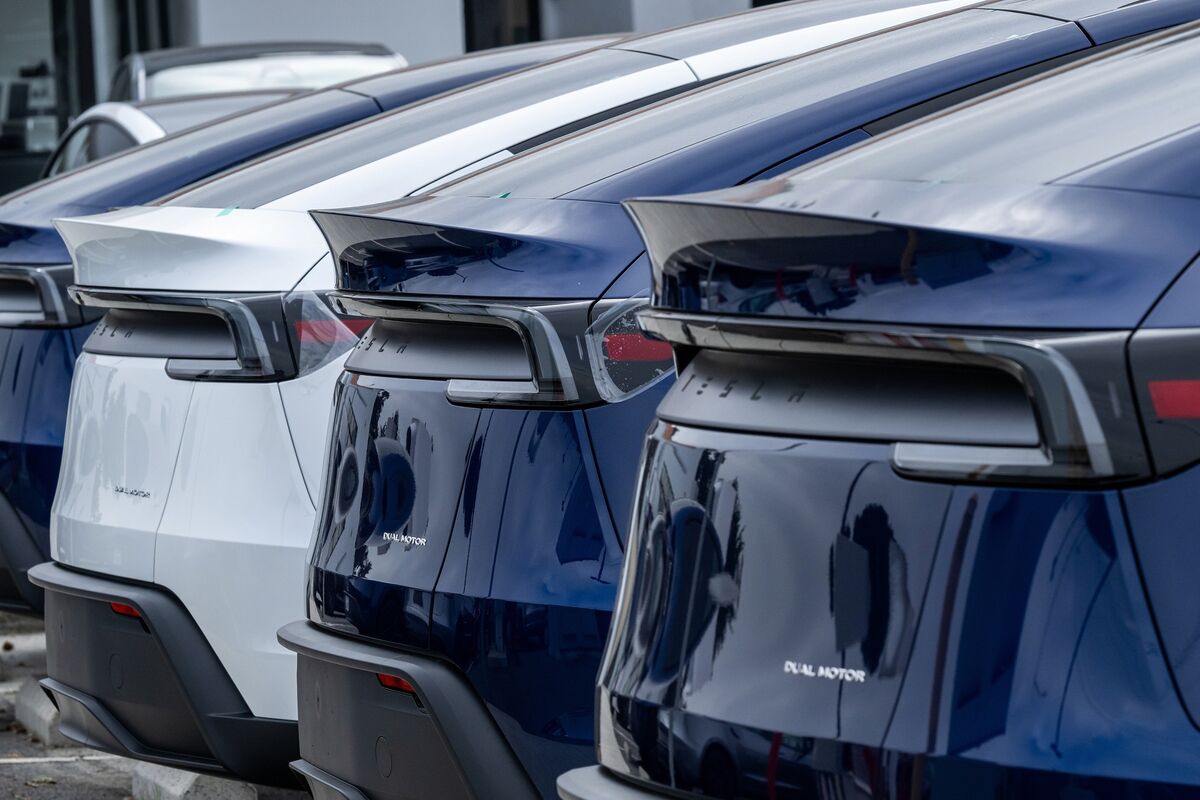
LG Energy Solution will produce $4.3 billion of batteries in Michigan for Tesla's energy storage systems business, a confirmed supply agreement that was highlighted by the U.S. Department of the Interior. The deal localizes significant battery production in the U.S., reinforcing energy-security cooperation with Indo-Pacific partners and strengthening Tesla's ESS supply chain. Expect positive near-term implications for LG's U.S. operations and for the EV/energy-storage sector, with modest upside to the involved companies' share performance and supply-chain resilience.
This deal shifts a non-trivial share of Tesla’s Energy business from an in-house / global-sourcing model toward a US-based outsourced cell supply chain, which should compress lead times and working capital for large BESS deployments within 6–24 months. A modest reduction in delivered cell cost—order of magnitude $5–15/kWh—would translate into mid-single to low-double digit percentage point expansion in Tesla Energy gross margins on current ASPs, materially changing the payback curve for utility-scale projects and accelerating bookings.
The bigger second-order supply effect is upstream: domestic gigawatt-scale cell builds create concentrated new demand for hydroxide/precursor conversion, cathode active materials and recycling capacity in North America. Expect incremental capacity announcements from converters/miners and recycling firms over the next 12–36 months; if domestic precursor capacity lags cell buildout, raw-material spot spreads (Li/Ni/Co) can spike and transiently compress OEM margins.
Principal risks are execution (permitting, construction, ramp yield), counterparty reallocation (cells prioritized to energy vs automotive), and regulatory shifts around domestic-content incentives that can materially change economics within quarters. Short-dated equity moves will be headline-driven (announcements/permits), while true profit pool reallocation plays out over 12–36 months as feedstock and recycling infrastructure respond.
Contrarian read: the market will likely underweight the upstream squeeze — meaning materials and recyclers may outperform Tesla equity if cell demand outstrips domestic precursor buildouts. Conversely, if modular deployment is slower than modeled or Tesla shifts to 4680/other chemistries, the benefit to Tesla EPS could be minimal and the positive headline already priced in.
AI-powered research, real-time alerts, and portfolio analytics for institutional investors.
Request DemoOverall Sentiment
strongly positive
Sentiment Score
0.60
Ticker Sentiment
