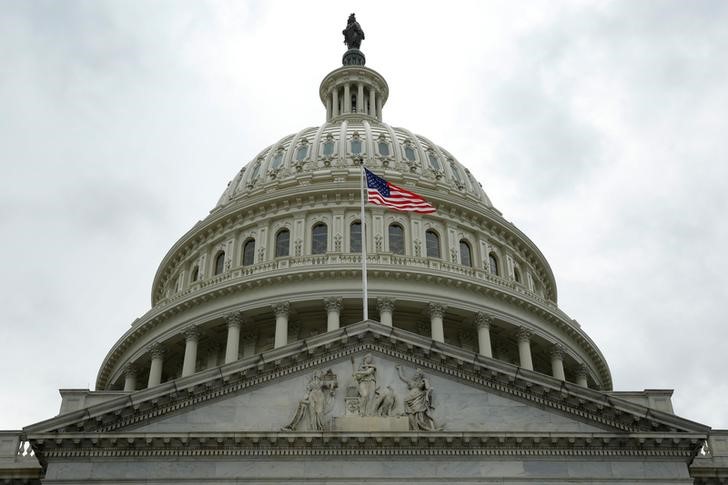
Wolfe Research remains bullish on equities and expects AI and semiconductors to help drive H2 gains, while arguing 2026 midterm elections should not create a meaningful market overhang. The firm sees Democrats regaining the House but Republicans holding the Senate, with limited policy risk and major legislative issues likely pushed into 2027. It also disputes the idea that midterm years are inherently negative for stocks, saying past weakness was driven more by unrelated macro shocks than election uncertainty.
The market implication is less about politics and more about the absence of a macro policy shock window into late 2026. If the legislative agenda stays noisy but low-conviction, the natural winners are secular growth beneficiaries with duration-like cash flows, especially AI infrastructure and semiconductor supply chains, because they need a stable discount-rate and policy backdrop more than they need rapid fiscal acceleration. That argues for staying long the compute stack rather than the broad tape: the trade is not “election beta,” it is continued capex concentration in a narrow set of beneficiaries.
The second-order effect is positioning. A widely discussed “midterm overhang” usually creates a de-risking opportunity in Q1-Q2, but if that fear is overstated, any shallow drawdown in tech/AI should be bought rather than sold. The bigger risk is not policy but crowding: names tied to AI demand can rerate quickly on any sign of capex digestion, margin compression, or shipment normalization, so upside remains intact but path dependence is high.
On the single names, the setup is more favorable for SMCI than APP on a relative basis because SMCI is more levered to near-term AI hardware spend and can benefit disproportionately if investors continue to favor picks-and-shovels exposure. APP is more of a sentiment/advertising and software monetization story, which should still work in a risk-on tape, but it is less directly tied to the infrastructure buildout thesis. The contrarian miss in the market is that a politically calmer 2H26 may actually extend the AI capex cycle by reducing headline discounting, not shorten it.
The main reversal catalysts are not elections; they are rates and hyperscaler capex guidance. A surprise backup in real yields or evidence that cloud giants are pausing spend would hit these names faster than any campaign-related headline. That means the best expression is to stay long secular AI leaders on pullbacks, but hedge with a rate-sensitive short or disciplined options structure rather than treating this as a pure momentum trade.
AI-powered research, real-time alerts, and portfolio analytics for institutional investors.
Request DemoOverall Sentiment
mildly positive
Sentiment Score
0.35
Ticker Sentiment
