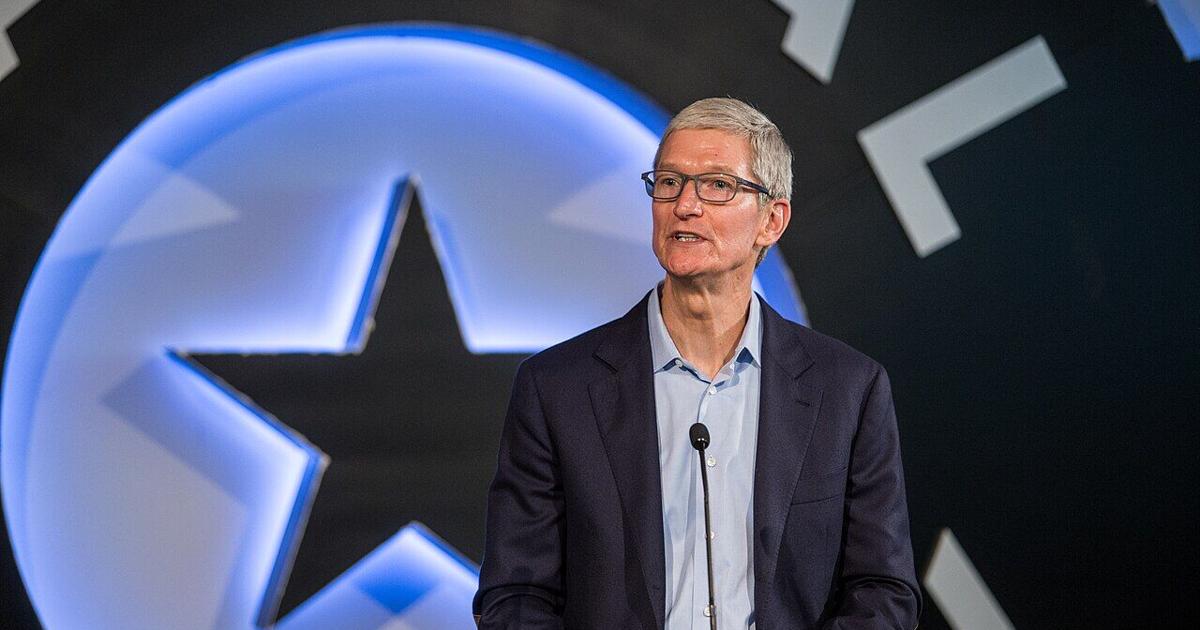
Apple said Tim Cook will step down in September after nearly 15 years as CEO and become executive chair, with hardware chief John Ternus set to succeed him. The transition comes as Apple faces slower product innovation, rising AI competition, antitrust risk, China exposure, and tariff/geopolitical pressure, though the company remains highly profitable with annual profit above $110 billion and a $4 trillion valuation. The move is notable for Apple governance and strategy, but it is more of a leadership transition than an immediate financial shock.
This is less a “succession event” than a governance-overhang reset. The market should treat the change as a catalyst for multiple expansion only if the new regime reduces the perceived key-man discount around hardware execution, capital allocation, and China diplomacy; otherwise, the stock may merely drift as investors wait for proof that product velocity can reaccelerate. The first-order risk is not operational disruption, but a higher probability of strategic ambiguity while the new CEO establishes authority over a management bench that has recently thinned.
The bigger second-order effect is on Apple’s ecosystem monetization arc. If hardware innovation stays incremental, services growth likely becomes more defensible but also more scrutiny-prone, because regulators and developers will continue to argue that Apple is extracting rent from a maturing installed base rather than creating new demand. That combination is usually good for near-term cash flow but bad for long-duration sentiment: it supports buybacks/dividends while compressing the multiple if AI and device refresh cycles do not reaccelerate over the next 2-4 quarters.
The supply-chain angle matters more than the headline suggests. A hardware-chief CEO paired with a chips leader elevated into a broader role increases the odds of deeper vertical integration, which could improve gross margin and component bargaining power over 12-24 months, but also intensify dependence on a narrow set of foundry and assembly partners. Any misstep in China/India diversification or tariff mitigation would show up not in unit volumes first, but in gross margin volatility and inventory planning 1-2 quarters later.
Consensus is likely underestimating how much of the near-term stock reaction depends on whether Ternus is framed as continuity or as a more product-centric pivot. If investors interpret the promotion as signaling a heavier hardware roadmap, the market may extrapolate a larger AI/device cycle than current disclosures justify. If instead the transition reads as managerial succession without a fresh product catalyst, the move is probably overhyped in the short run and the right trade is fade-the-bounce, not chase-the-rally.
AI-powered research, real-time alerts, and portfolio analytics for institutional investors.
Request TrialOverall Sentiment
neutral
Sentiment Score
0.05
Ticker Sentiment
