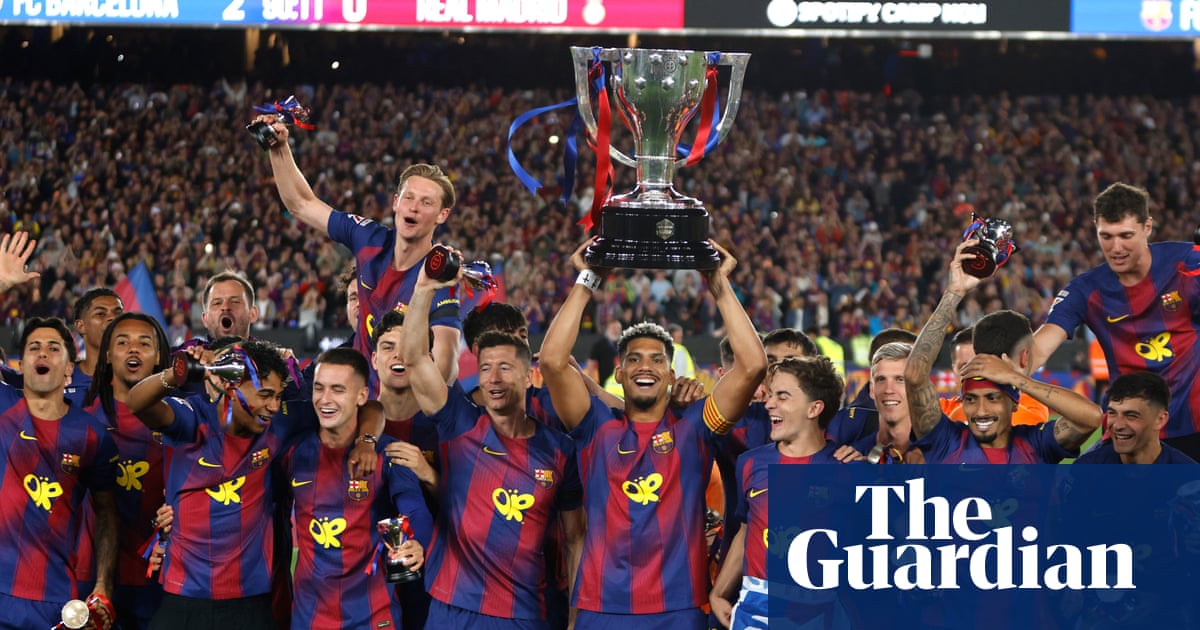
Barcelona clinched the league title at the Camp Nou with a 2-0 win over Real Madrid, sealed by Marcus Rashford’s free-kick and Ferran Torres’ finish. The club secured the championship with three games to spare, marking the first title decided by a clásico in 94 years. The article is sports coverage with no meaningful direct market impact.
The immediate market read is less about the title itself and more about the monetization lift from a fully engaged global property. A classical-title decider between the two biggest brands in European football is the sort of event that can expand near-term demand across media rights, betting, merchandise, and sponsor inventory, with the biggest second-order beneficiary likely to be broadcasters and streaming platforms that own the live window. The stadium-level spectacle also reinforces that elite football remains one of the few appointment-viewing formats that can still command premium ad pricing and low churn.
The more interesting second-order effect is on the loser’s commercial narrative. A trophyless finish at the end of a high-visibility collapse is usually not priced purely as a sporting issue; it can bleed into partner activation quality, shirt sell-through, and in-season merchandising velocity over the next 1-2 quarters, particularly if fan sentiment turns from disappointment to disengagement. For the winner, the upside is asymmetric because title-winning teams often get a short but meaningful spike in global search interest and social engagement that can translate into incremental affiliate, ecommerce, and tour demand over the next 30-90 days.
The contrarian risk is that investors overestimate the durability of the uplift. This is a one-event catalyst with a short half-life unless converted into broader engagement through summer marketing, pre-season tours, and player retention; if the featured loan star leaves, part of the commercial halo may fade quickly. The real tell will be whether the club can convert this into repeatable subscription, sponsorship, and direct-to-consumer growth rather than a one-off sentiment spike.
From a time-horizon perspective, the tradeable move is days to weeks for media and betting exposure, months for retail and merchandise, and years only if this is the start of a structural global fanbase expansion. If the market already assumes a trophy premium in the winner’s ecosystem, the better risk/reward is to fade any post-event euphoric squeeze in the most sentiment-sensitive names and own the infrastructure that monetizes live sports regardless of which club wins.
AI-powered research, real-time alerts, and portfolio analytics for institutional investors.
Request DemoOverall Sentiment
mildly positive
Sentiment Score
0.25
