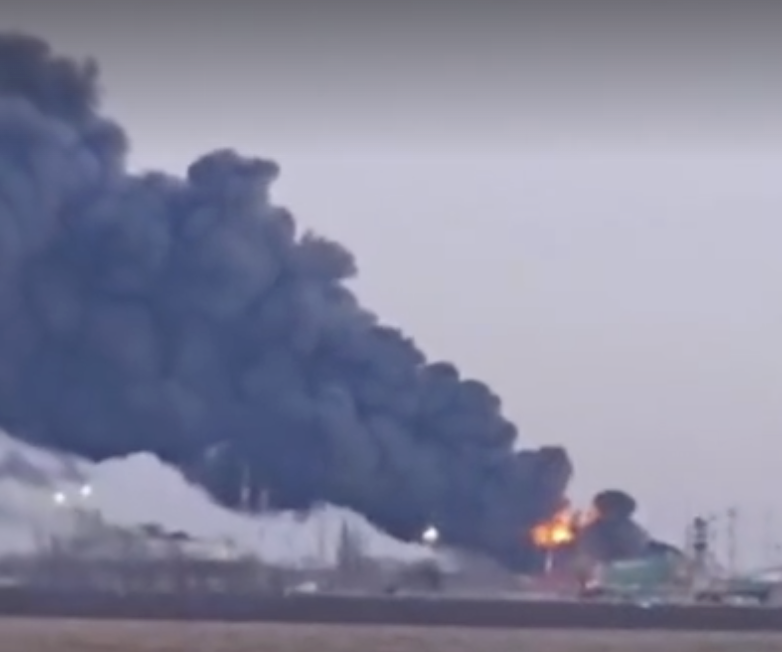
Ukraine said it struck 76 Russian industrial targets in March, including 15 oil refining facilities, using long-range weapons. The campaign appears to be intensifying and has become more effective over the past six months, adding pressure to Russian energy infrastructure and potentially affecting fuel prices and transit flows. The article also describes heavier Russian attacks along the 1,200-kilometer front, underscoring elevated geopolitical and market risk.
The market is still underestimating the compounding effect of persistent long-range strikes: the issue is not just lost barrels, but unplanned downtime, higher insurance, rerouting, and a growing maintenance backlog that can extend disruption well beyond the initial physical damage. That creates a second-order inflation impulse in refined products and feedstocks even if headline crude flows remain only partially impaired, which is more important for European diesel-sensitive industries than for crude benchmarks alone.
The bigger tradeable implication is dispersion within energy: refiners with exposure to Russian product flows, trans-Eurasian logistics, or tight middle-distillate balances are more vulnerable than upstream producers. If Ukrainian strike cadence stays high for another 4-8 weeks, the market should start pricing a higher probability of seasonal bottlenecks in diesel, jet, and naphtha, while still treating broad crude as range-bound because global spare capacity can cushion headline barrels.
On the defense side, this is a demand-signal for air-defense, EW, ISR, and loitering-munition suppliers rather than traditional munitions alone. The effectiveness of low-cost deep-strike systems forces the defender to spend disproportionately on interceptors and radar coverage, so the budget winner is the layered-air-defense stack, especially names with replenishment cycles tied to Europe’s urgency rather than U.S. procurement timing.
The contrarian miss is that energy-price upside may prove less about Brent and more about crack spreads, freight, and refinery utilization risk. If attacks remain surgical rather than broad enough to materially reduce Russian export volumes, the cleanest monetization is in transport/logistics and refined-product dislocations, not a blunt bullish bet on crude.
AI-powered research, real-time alerts, and portfolio analytics for institutional investors.
Request DemoOverall Sentiment
moderately negative
Sentiment Score
-0.35
