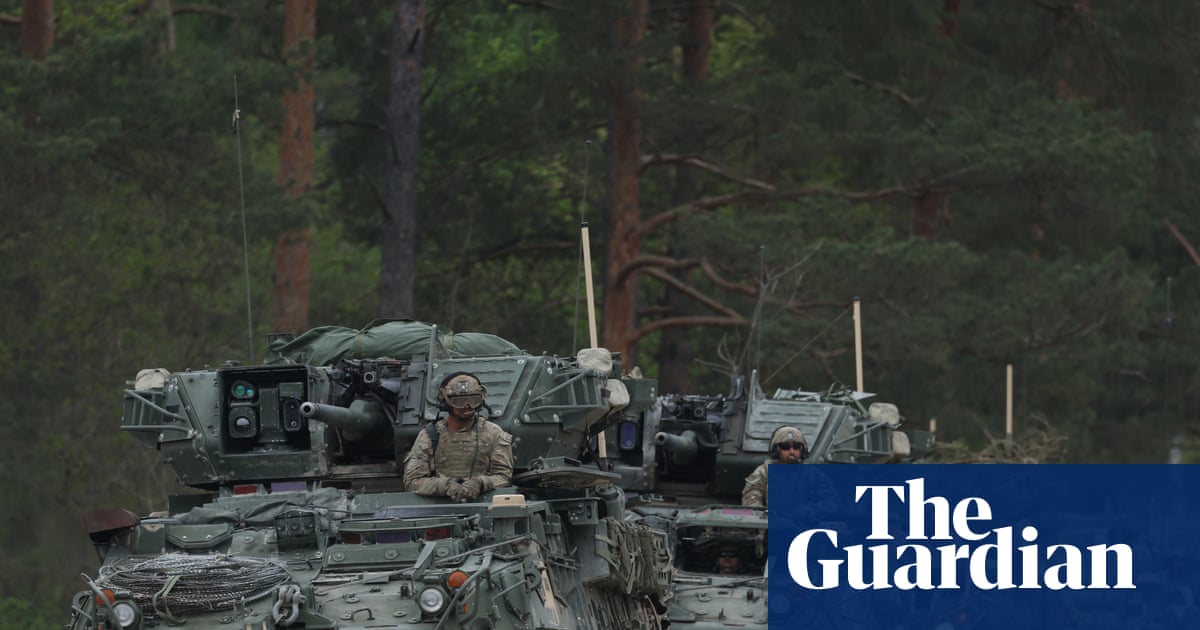
Trump announced an additional 5,000 US troops for Poland, reversing a recent Pentagon move to delay a 4,000-troop rotation to the country. The decision underscores a stronger US security commitment to Poland amid heightened tensions with Russia and ongoing strain in NATO relations. It is politically significant for Europe and defense positioning, though deployment details remain unclear.
The immediate market read is not about the troop headline itself but about the signaling value: Washington is re-anchoring deterrence in Central Europe while simultaneously preserving optionality elsewhere. That creates a near-term bid for the “frontline ally” premium in Polish assets, but more importantly it reduces the probability of a tail-risk repricing in European defense logistics and forward basing over the next 3-6 months. The most vulnerable assets are not Polish equities so much as any European defense names and supply-chain contractors that had been discounting a slower NATO procurement cycle if US burden-sharing rhetoric kept escalating.
Second-order, this likely strengthens the investment case for Poland’s domestic defense-industrial base and infrastructure buildout. If the deployment becomes rotational or semi-permanent, it implies sustained demand for transport, fuel, housing, maintenance, and munitions storage around eastern Poland; those are multi-year capex themes, not one-day headlines. The bigger implication is that Poland may capture an even larger share of NATO adjacent logistics spending, while Germany and southern Europe face a relative loss of strategic relevance in alliance planning.
The contrarian issue is that this is highly personalized policy, not durable institutional policy. A single president-linked troop announcement can reverse quickly if the White House wants leverage in other negotiations, so the correct horizon is days-to-weeks for sentiment and months for actual budget impact. Also, if the move is truly an offset to reductions elsewhere, the net effect on Europe’s security posture may be more symbolic than additive, which caps upside for broad EU defense beta.
For rates/FX, the main risk is a modest rise in geopolitical risk premium for CEE currencies and sovereign spreads if markets interpret this as a durable escalation in East-West military posture. But if the announcement cools concern about abrupt US retrenchment, you could see short-covering in PLN and Polish local duration. The catalyst to watch is clarification from the Pentagon and whether NATO discussions convert this into a funding commitment rather than a rhetorical reassurance.
AI-powered research, real-time alerts, and portfolio analytics for institutional investors.
Request DemoOverall Sentiment
neutral
Sentiment Score
0.10
