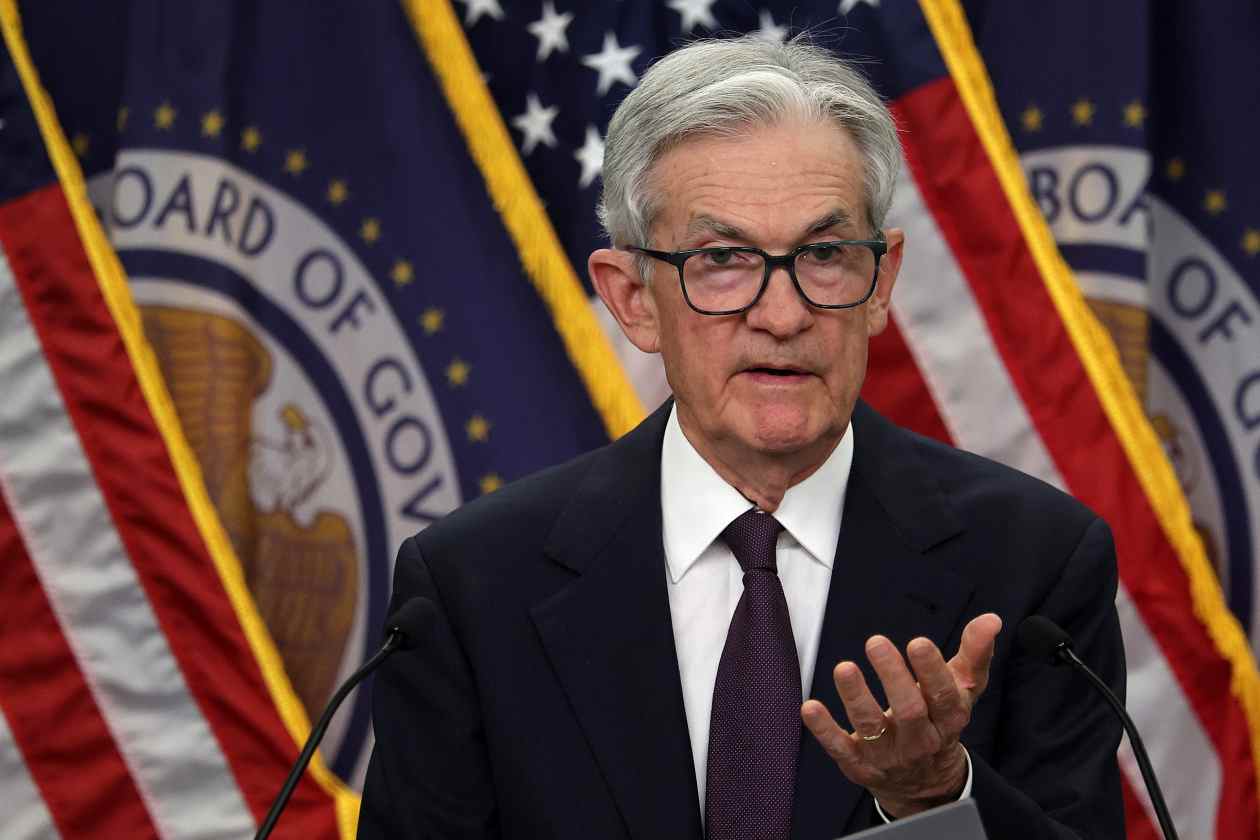
Federal Reserve Chair Jerome Powell has resisted pressure from President Trump and Vice President Vance to cut interest rates, maintaining short-term rates at 4.25% to 4.5%. Despite Trump's insistence that these rates are strangling economic activity, the bond market has not signaled agreement, suggesting Powell's monetary policy decisions are independent of political influence, at least for now.
Federal Reserve Chair Jerome Powell has maintained the target range for short-term interest rates at 4.25% to 4.5%, a decision reaffirmed despite explicit criticism from President Trump and Vice President Vance, who contend that this policy is detrimental to economic activity. The article posits a key financial market observation: if the Federal Reserve's policy were indeed "strangling economic activity" as asserted by the administration, a corresponding decline in long-term interest rates would be anticipated in the bond market. The absence of such a decline suggests that, at present, bond market participants do not share the administration's view of an overly restrictive monetary policy. This situation underscores the Federal Reserve's current operational independence in setting interest-rate policy, even amidst political pressure. The general sentiment is neutral, reflecting an observation of the ongoing dynamic, with a defensive tone attributed to the Federal Reserve's stance, and the news carries a moderate market impact score.
AI-powered research, real-time alerts, and portfolio analytics for institutional investors.
Request DemoOverall Sentiment
neutral
Sentiment Score
0.15
