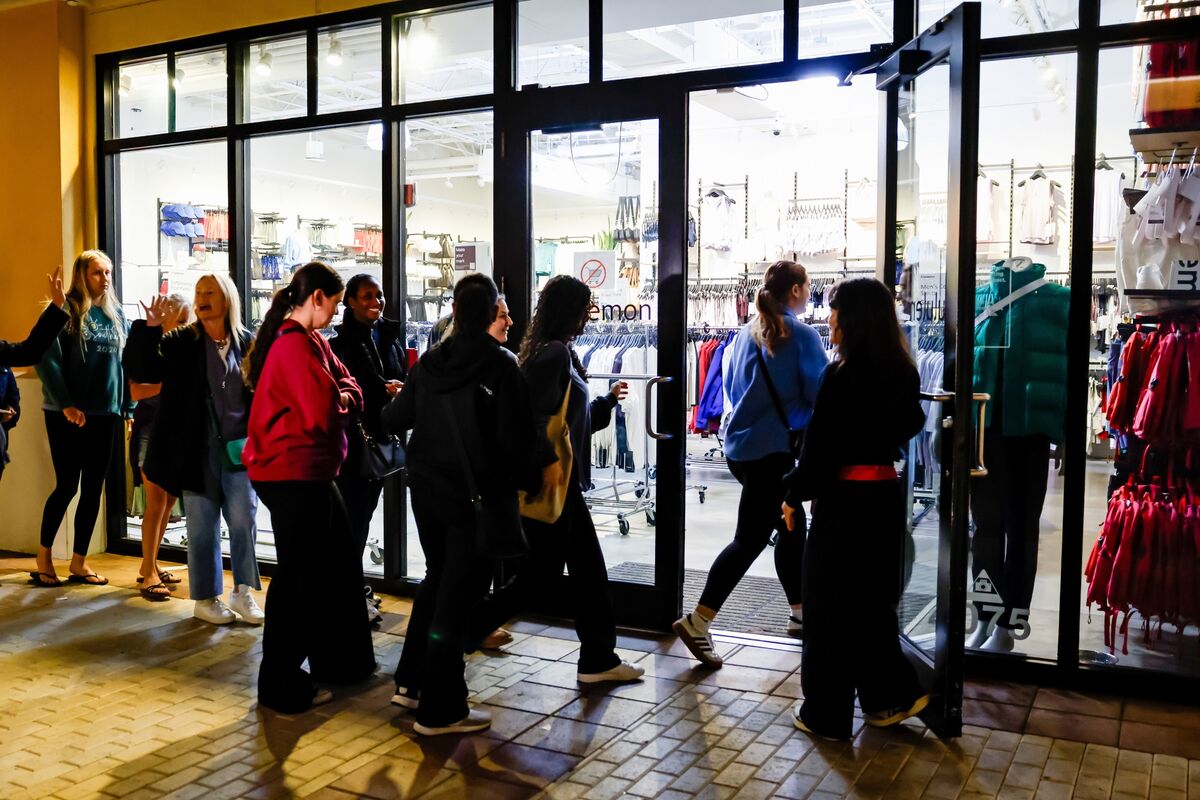
Early Black Friday activity was sporadic, with shoppers targeting limited-release items such as a newly released U.S.S. Enterprise LEGO set that sold out online and drove at least one buyer to wait in line for an in-store purchase. Anecdotal feedback from shoppers indicates mixed price trends—some items feel more expensive while others have declined—pointing to patchy consumer demand rather than a decisive market-moving retail surge.
Market structure: Anecdotal sellouts for niche/high-margin items (LEGO) alongside “sporadic” Black Friday traffic implies bifurcation: premium/collectible and off-price channels gain share while mass merchants face margin pressure from discounting. Expect winners: off-price (TJX, ROST), branded toy makers (HAS, MAT) for hit SKUs; losers: mall-based department stores (M, KSS) and discretionary retailers with bloated inventories. This is a micro-signal ahead of holiday sales — a 1–3% positive demand surprise in weekly retail data would lift retail equities and risk assets for 1–4 weeks.
Risk assessment: Tail risks include a demand shock (inflation spike or recession signal) that compresses discretionary spending by >200 bps YoY, or renewed supply disruptions (tariffs/port strikes) inflating costs 5–10% into Q1 2026. Short-term (days–weeks) volatility will hinge on weekly retail prints and NRF holiday sales; medium-term (3–6 months) depends on inventory digestion rates; long-term (12+ months) on labor/inflation trajectory. Hidden dependency: scarcity-driven pricing (collectibles) can mask broader softness in volume — watch sell-through rates not just sell-outs.
Trade implications: Favor 2–3% overweight to off-price retailers (TJX, ROST) and selective toy exposure (HAS, MAT) for 3–6 month timeframes, funding with 1–2% shorts in mall-based names (M, KSS). Use 1–3 month call spreads to express conviction while capping premium; expect target returns of 10–20% if weekly retail beats consensus by >1.5%. Reduce duration exposure in fixed income by 1–2% if retail signals sustained strength, as a modest risk-on move could lift 2s and 10s by ~5–20 bps.
Contrarian angles: Consensus worries about broad retail weakness may be overstated — the market is underpricing the value of differentiated SKUs and off-price channels where inventory turns accelerate. If weekly retail sales show persistent same-store growth >2% YoY over four consecutive weeks, rotate further into specialty and branded toy names and trim generic discounters. Unintended consequence: overloading small-cap specialty retailers could create a crowded trade; cap exposure and use stops at 7–10% losses.
AI-powered research, real-time alerts, and portfolio analytics for institutional investors.
Request DemoOverall Sentiment
neutral
Sentiment Score
0.00
