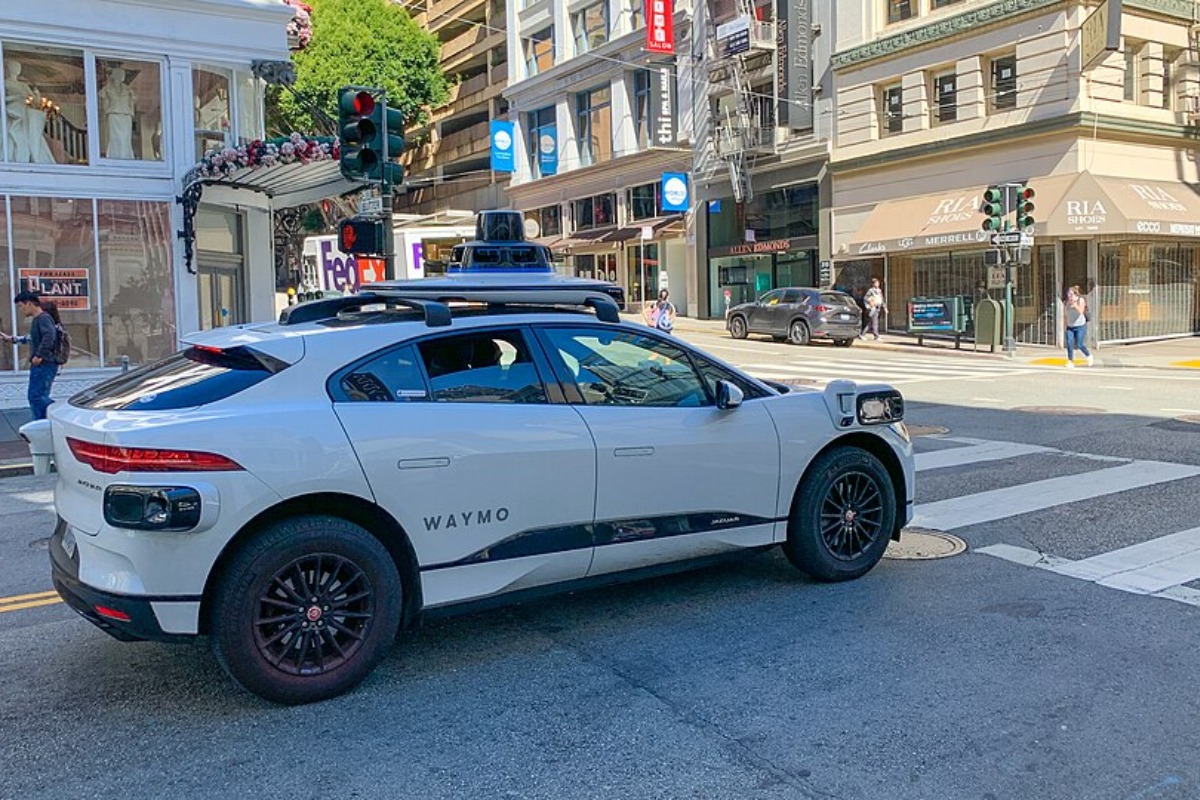
Six minutes: a passenger says he was trapped inside a Waymo robotaxi in San Francisco in January while a man repeatedly struck the vehicle, yanked at locked doors and threatened occupants. The attack is part of a broader pattern — including demonstrators torching several Waymo vehicles in Los Angeles in June 2025 that forced service suspensions — occurring as Waymo reports roughly 15 million trips in 2025, plans expansion into 20+ additional cities, and cites a >10x reduction in serious-injury crashes. Engineering choices that prevent passengers from taking control and reliance on remote support can leave riders exposed, creating reputational, operational and potential regulatory risks that could damp consumer demand.
Engineering choices that prioritize deterministic remote control over human override create a concentrated operational lever: the car’s immobility becomes its main vulnerability. Expect cities and regulators to force short-term operational constraints (curfews, geofenced shutdowns, mandatory local human override capability) within 3–12 months, which will raise per-vehicle opex meaningfully. Rough back-of-envelope: adding local teleop staffing or rapid-response human escorts could add $2–6k annualized per vehicle (staffing, comms, insurance), turning a thin-margin fleet rollout into a capital+opex fight.
Second-order supply-chain winners are likely outside the headline players: teleoperations platforms, hardened vehicle hardware (locks, reinforced glazing, intrusion sensors) and fleet-focused commercial insurers will see new addressable spend even if unit counts slow. Conversely, pure software rollouts that rely on regulatory goodwill face delayed addressable markets — that compresses revenue growth visibility for AV software integrators over the next 12–24 months. The reputational damage is non-linear: each high-profile attack increases municipal permitting friction, raising the cost and timeline to add new cities by quarters, not weeks.
The demand shock will also transiently re-advantage incumbent human-driver platforms in urban markets where on-demand mobility is essential. Expect shorter-term volume and pricing tailwinds for ride-hail networks while autonomous fleets retool. A reversal catalyst would be a rapid, low-cost engineering fix (physical passenger egress override combined with safe-proximity movement algorithms) or clear municipal insurance frameworks that defray operator liability — either could restore rollout pace within 6–12 months.
AI-powered research, real-time alerts, and portfolio analytics for institutional investors.
Request DemoOverall Sentiment
mildly negative
Sentiment Score
-0.35
Ticker Sentiment
