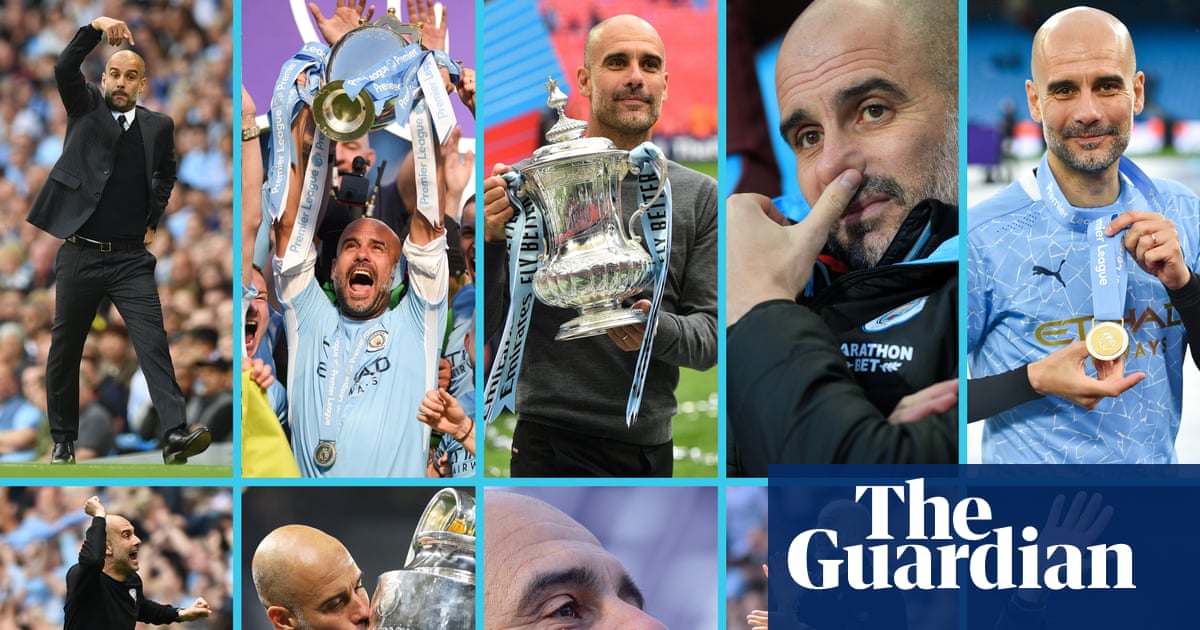
The article reviews Pep Guardiola’s Manchester City tenure across 2016-17 to 2025-26, highlighting 6 Premier League titles, 1 Champions League, and a domestic treble in 2022-23. It emphasizes repeated European setbacks against Real Madrid and mixed seasons including trophyless campaigns, but overall the piece is retrospective and not event-driven. Market impact is minimal because this is a historical football recap rather than new business or financial news.
This reads less like a sports chronology and more like a case study in managerial life-cycle economics: the upside from elite coaching is real, but it decays once the roster architecture stops refreshing. The market lesson for MANU is that clubs with “brand > process” decision-making tend to monetize nostalgia for too long, which ultimately shows up in wage inflation, transfer inefficiency, and weaker sporting volatility-adjusted returns. If the headline ever shifts from legacy management to a hard-nosed reset, that usually marks the point where the equity story becomes investable rather than merely famous.
The second-order effect is competitive positioning in the Premier League ecosystem. A sustained underperformer at the top end of the table depresses the ceiling for adjacent rights-holders and commercial partners because Champions League qualification is the main economic flywheel; missing it for even one season can compress recurring media value, sponsorship leverage, and matchday pricing power. In contrast, a rival that keeps winning creates a compounding advantage in player acquisition and wage efficiency that is difficult to reverse on a 12-month horizon.
The contrarian angle is that disappointment can be bullish if it forces governance change. The consensus likely treats elite clubs as perpetual franchise assets, but the real driver is whether ownership is willing to absorb a one-time reset to restore process discipline. If the next phase includes aggressive squad turnover and a sharper sporting director model, near-term earnings may be noisy but medium-term cash generation and brand durability improve meaningfully.
AI-powered research, real-time alerts, and portfolio analytics for institutional investors.
Request DemoOverall Sentiment
neutral
Sentiment Score
0.12
Ticker Sentiment
