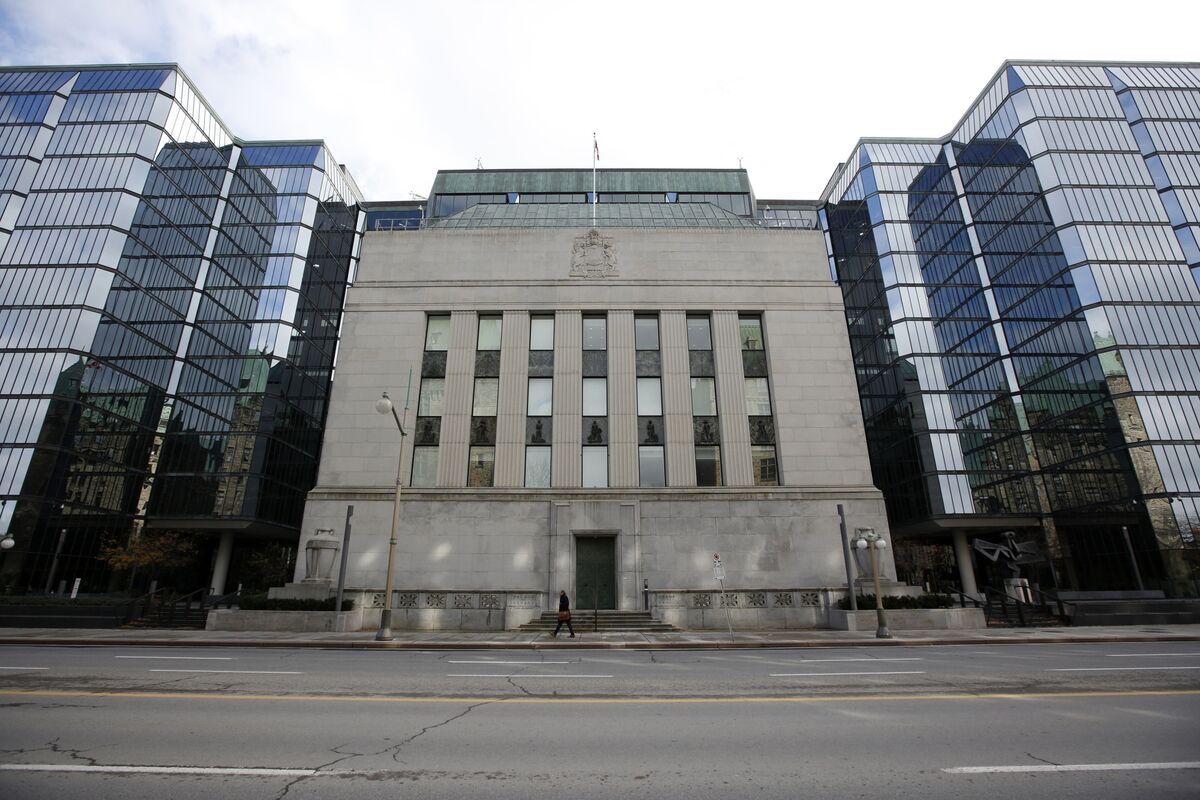
Bank of Canada officials said the economy is not in recession, despite acknowledging weak growth and labor market slack. Real GDP fell 0.1% annualized in Q1 after a 1% decline in Q4, but policymakers said the back-to-back contractions were not enough to declare a full downturn. The article is chiefly relevant for monetary policy expectations and rate-sensitive assets rather than signaling an immediate policy shift.
The key market read is not “recession vs not recession,” but that the central bank is now signaling a tolerance for below-trend growth as long as financial conditions stay orderly. That matters because rate-cut pricing can still steepen the front end even without an official downturn label: the market will likely trade on labor slack and soft capex rather than the headline GDP print. In practice, this keeps pressure on domestic cyclicals and rate-sensitive balance-sheet trades, while reducing the odds of an abrupt policy pivot that would force a violent move in duration.
The second-order effect is that weak growth without a recession stamp is usually the worst mix for banks and consumer lenders: credit demand cools before credit losses visibly spike, so earnings revisions come from NII compression and slower loan growth first. That creates a lagged vulnerability in financials, homebuilders, and small-cap domestic names, especially if the labor market softens further over the next 1-2 quarters. Meanwhile, sectors with global revenue or pricing power should outperform because the local slowdown is more of a domestic demand problem than a broad funding stress event.
The contrarian point: consensus may be too focused on whether the economy has “technically” crossed into recession and not enough on whether the central bank is already behind the curve on easing. If growth stays weak for another 1-2 months and inflation data keep cooling, the market could move quickly to price a faster easing cycle, which would catch crowded short-duration and bank-underweight positioning offside. The reverse risk is a stabilization in labor data, which would punish recession hedges without meaningfully helping cyclicals, leaving the market stuck in a low-growth, high-vol regime.
AI-powered research, real-time alerts, and portfolio analytics for institutional investors.
Request DemoOverall Sentiment
neutral
Sentiment Score
-0.10
