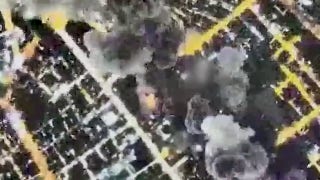
Hezbollah resumed attacks on Israel on March 2 with rockets and drones, prompting the IDF to carry out more than 200 strikes across Lebanon targeting Hezbollah’s military, media and financial infrastructure, according to the FDD Long War Journal. Analysts urge the U.S. to pressure Lebanon to disarm Hezbollah as Beirut’s cabinet reiterated disarmament language amid public anger and political tensions, while France called for urgent steps to prevent Lebanon from being drawn deeper into war; the episode raises regional geopolitical risk and could drive risk-off flows and safe-haven demand.
Market structure: Near-term winners are defense primes (Lockheed LMT, Raytheon RTX, General Dynamics GD), oil & service producers (XOM, CVX, SLB) and safe-haven assets (GLD, UUP) as risk-off flows re-price risk premia. Direct losers are Lebanese sovereigns/regional banks, regional tourism/airlines and Middle‑East credit-sensitive EM assets; pricing power shifts toward defense contractors and insurers writing war-risk coverage, likely widening premium by 100–300bps in affected corridors.
Risk assessment: Tail risks include Iran ‘‘activation’’ of Hezbollah or closure of shipping lanes producing oil spikes >20% (Brent > $110) and a broader regional conflagration that would push global risk premia dramatically higher; probability low (~5–15%) but impact systemic. Immediate (0–2 weeks) expect volatility spikes, gold/USD upticks and EM spread widening; short-term (1–3 months) credit repricing for Lebanon/nearby sovereigns; long-term (≥6 months) potential for structurally higher defense budgets and insurance costs.
Trade implications: Tactical plays should favor 1–3% allocs into defense and energy, hedged with volatility; use call spreads on LMT/RTX for convex exposure and GLD/UUP for tail protection. Rotate out of EM sovereign credit and regional travel/tourism equities (EEM/airlines) and buy 1–2% protection via put spreads or CDS if available; act quickly (enter within 72h) and set event-based exits (de-escalation within 14–21 days).
Contrarian angles: Markets may overprice prolonged Israeli economic damage — 2006 Lebanon war produced short-lived shocks and rapid recoveries in Israeli equities; selective long opportunities in Israeli exporters and defense suppliers with global revenue may be underowned. Unintended consequences: higher defense/energy-driven inflation could force tighter central-bank responses, compressing real returns in fixed income — consider reweighting duration defensively if conflict extends beyond quarter-end.
AI-powered research, real-time alerts, and portfolio analytics for institutional investors.
Request TrialOverall Sentiment
strongly negative
Sentiment Score
-0.60
