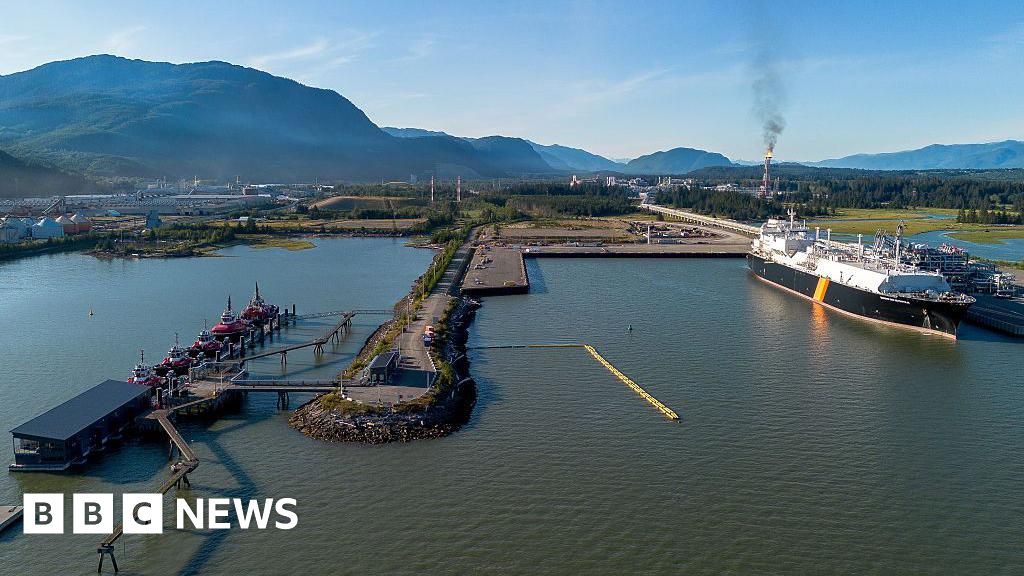
Canada and Germany agreed to a landmark LNG deal for 1 million tons per year from Ksi Lisims, with exports expected to begin in the early 2030s and run for up to 20 years. The agreement is a major step in Canada’s trade diversification away from the US and underscores Europe’s search for non-Russian energy supply, but the project still lacks a final investment decision and faces legal and environmental opposition. Market impact is meaningful for LNG, Canadian energy infrastructure, and broader transatlantic energy security, though near-term execution risk remains high.
This is less a near-term LNG supply shock than a capital-allocation signal: a European utility is now underwriting a Canadian Gulf-to-Asia-class project before FID, which materially improves bankability for other non-US Atlantic Basin energy infrastructure. The second-order winner is the project-finance ecosystem—engineering, construction, shipping, and local infrastructure providers tied to BC export corridors—because the deal reduces merchant risk and raises the odds that scarce long-dated capital rotates into Canadian export assets rather than US Gulf expansions. The bigger strategic implication is margin compression for incumbents that have benefited from Europe’s post-2022 scramble. If even a modest 1 mtpa tranche can be contracted on a 20-year basis, it strengthens the case for more Canada-to-Europe volumes later this decade, which is a medium-term bearish setup for premium non-Russian LNG pricing and for any supplier relying on Europe’s structural scarcity premium. But the project still sits inside a multi-year litigation, permitting, and indigenous-consent bottleneck, so the trade is not about immediate barrels; it is about optionality and the probability-weighting of future export capacity. The contrarian view is that markets may be overpricing the geopolitical symbolism and underpricing execution risk. A long-duration offtake agreement does not solve construction timing, cost inflation, or legal stoppages; if FID slips by 6-12 months, the market will likely fade the story and re-rate the project as another stranded-paper headline. At the same time, Canada’s willingness to diversify away from US defense and energy procurement suggests a broader policy regime shift, which should modestly improve the odds of more non-US industrial and infrastructure procurement over the next 12-24 months.
AI-powered research, real-time alerts, and portfolio analytics for institutional investors.
Overall Sentiment
mildly positive
Sentiment Score
0.35
