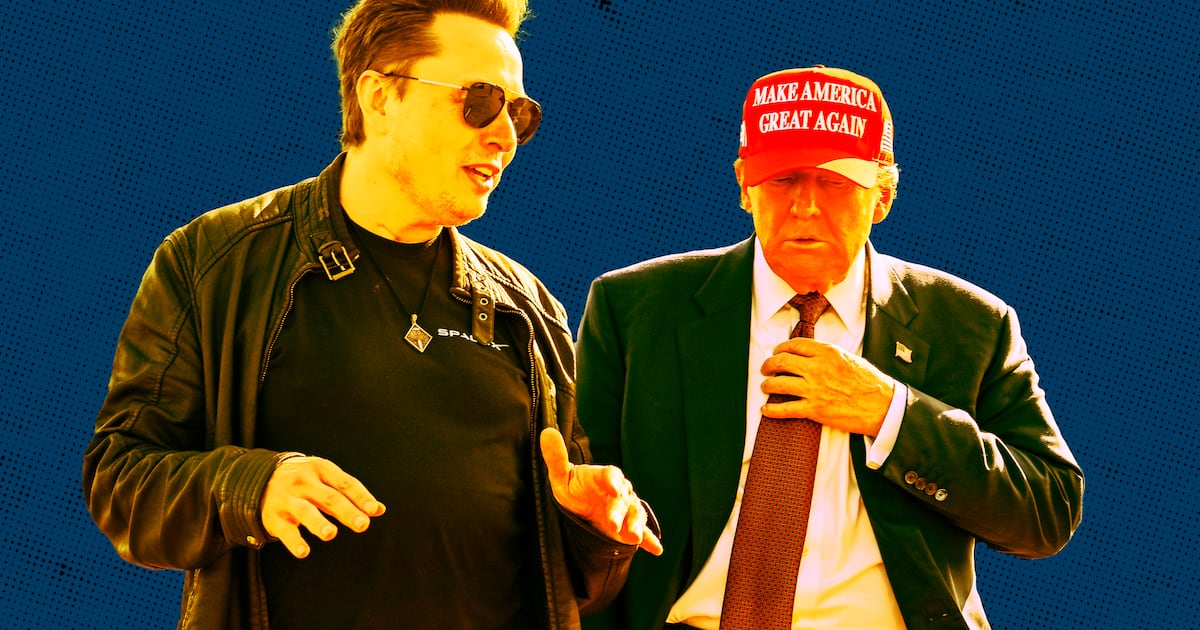
The article highlights Elon Musk’s re-entry into President Trump’s inner circle despite ongoing controversy over white supremacist-adjacent rhetoric and prior public fallout. It cites Musk’s $277 million in support for Trump and Republicans, his brief threat to launch the America Party, and renewed access via an Air Force One trip to China. The piece is primarily political/reputational in nature and is likely to have limited direct market impact, though it may add volatility around Tesla and Musk-linked assets.
The market impact here is less about optics than about the increasing political embeddedness of Tesla’s founder at a moment when TSLA is already trading on a premium multiple of narrative rather than near-term fundamentals. That raises the probability of a higher volatility regime: any renewed proximity to the administration can create downside convexity if Musk becomes a political liability, but it can also preserve access to policy channels that matter for subsidies, autonomous-vehicle regulation, and federal procurement. In other words, the stock’s beta to Musk-persona headlines is rising faster than the business beta to deliveries.
The second-order effect is that this intensifies the risk that Tesla’s brand gets pulled into the same partisan funnel as immigration and identity politics, which is damaging because EV adoption has depended on cross-coalition acceptability. If Tesla becomes a symbol rather than a product company, incremental demand outside the core loyalist base can soften over the next 2-4 quarters, especially in urban and suburban professional cohorts. That is a bigger issue than any one post: it can widen international backlash, complicate European demand, and increase regulatory friction around robotaxi and safety approvals.
The more interesting trade is not outright shorting TSLA into every headline, but owning downside convexity while keeping optionality on a policy-driven rebound. The stock likely overreacts intraday to political news, yet the underlying business still has enough fan base and option-market support to frustrate outright shorts. That makes defined-risk structures preferable: cash-secured downside exposure, put spreads into event windows, or a pair versus a less politically encumbered EV/tech beneficiary.
Consensus may be missing that the reputational cost is cumulative, not discrete. The sanction from customers, employees, regulators, and advertisers does not need to arrive all at once; a slow erosion in goodwill can compress the multiple before fundamentals visibly break. The path dependence matters: if the administration relationship improves, that could be a short-term positive for policy access, but it also increases the probability of future blowups, which keeps implied volatility structurally elevated.
AI-powered research, real-time alerts, and portfolio analytics for institutional investors.
Request DemoOverall Sentiment
moderately negative
Sentiment Score
-0.25
Ticker Sentiment
