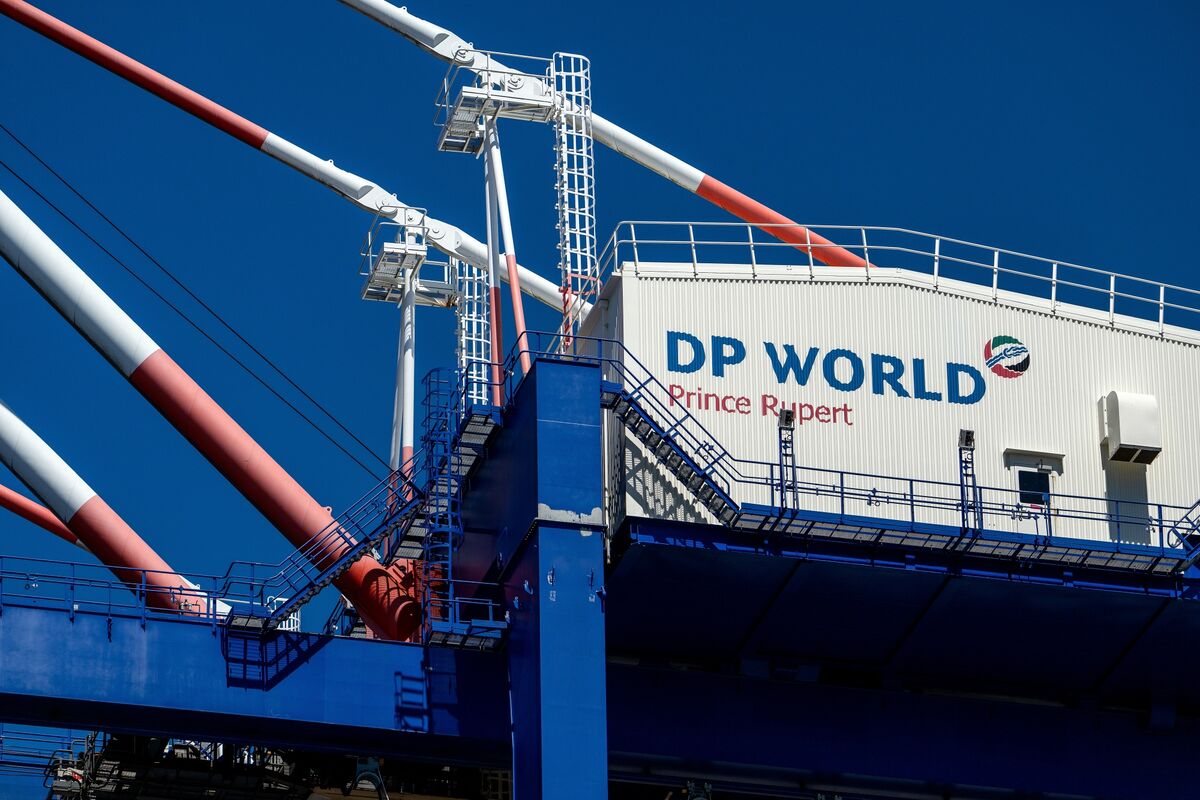
DP World is meeting fixed-income investors as it weighs options for repaying a bond due in a few months, while war-related disruption in the Middle East is pressuring port volumes. The closure of the Strait of Hormuz has constrained commercial traffic and added strain to global supply chains and local port activity. The article signals near-term operational and refinancing caution rather than a direct credit event.
The market is pricing this as a company-specific liquidity discussion, but the real issue is balance-sheet transmission from geopolitics to credit spreads. When a port operator starts pre-emptively engaging lenders ahead of a maturity, it usually means management wants to avoid a refinancing window being forced open at the worst possible time: when freight visibility is poor and insurers are demanding wider war-risk premia. That tends to hit the entire regional logistics complex through higher working capital needs, not just lower throughput.
Second-order winners are inland and non-Gulf routing beneficiaries: Suez-adjacent alternatives, Mediterranean transshipment hubs, and overland corridor operators can see incremental volume even if headline trade weakens. The loser set is broader than port equities; it includes shipping lessors, trade finance providers, and high-yield issuers with exposure to Gulf-linked cash flows, because duration risk rises when asset values are hard to underwrite and collections slow. The pressure is most acute over the next 1-3 months, not years, because refinancing and covenant tests care about near-term utilization more than long-run strategic relevance.
The key catalyst is not simply de-escalation, but restoration of predictable transit economics: insurance spreads, route reliability, and port dwell times need to normalize before volumes fully recover. A ceasefire alone may not be enough if commercial traffic remains rerouted; if carriers discover workable alternative lanes, some share could prove sticky away from the Strait even after tensions ease. That creates a asymmetric downside for operators tied to the chokepoint and a more durable upside for networks that absorb rerouted cargo.
Consensus may be underestimating how quickly credit markets can reprice a perceived geopolitical backstop into a liquidity event. The move is probably underdone in local logistics names and overdone in the idea that this is a temporary headline risk; refinancing stress can force asset sales, dividend cuts, or concession renegotiations even if the macro shock is transient. The better trade is to express relative resilience rather than outright panic, because the strongest franchises can absorb volatility while weaker regional credits cannot.
AI-powered research, real-time alerts, and portfolio analytics for institutional investors.
Request DemoOverall Sentiment
moderately negative
Sentiment Score
-0.30
