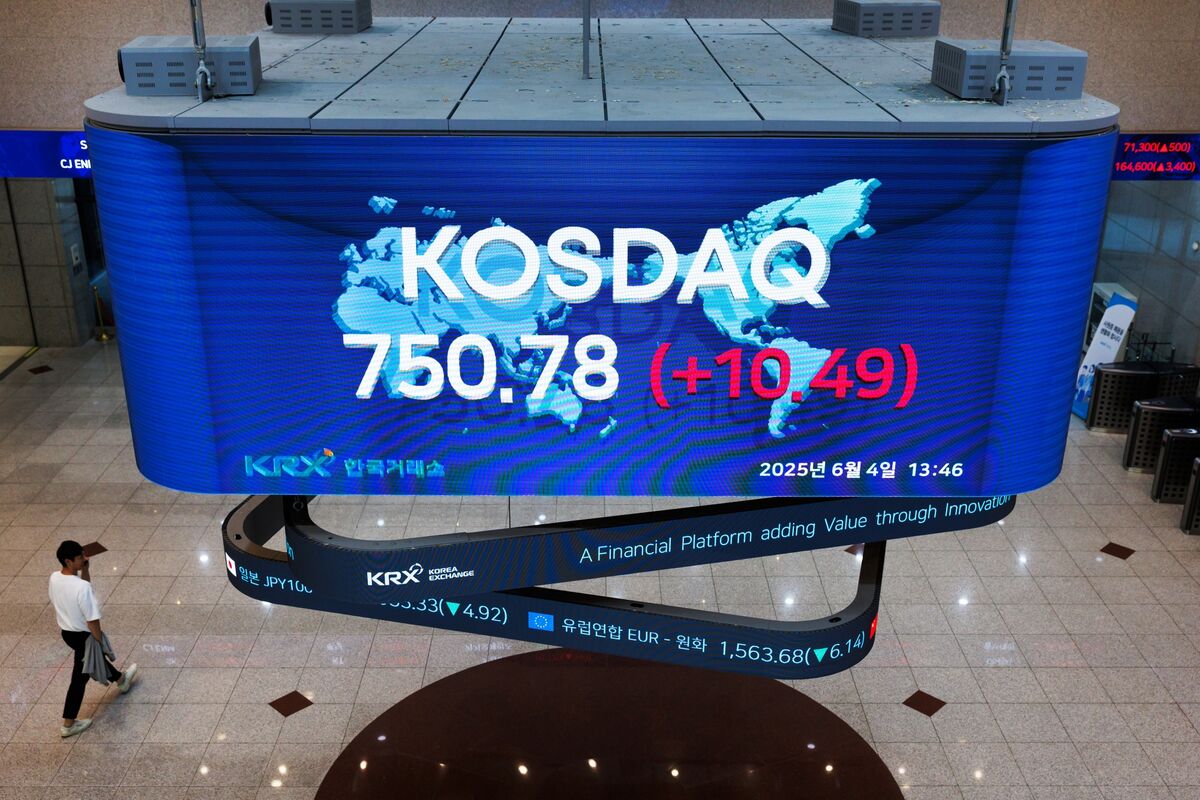
South Korea's small-cap Kosdaq surged as much as 3.1% after local media reported the government plans tax incentives and measures to boost pension funds' and institutions' stock purchases; the Kosdaq outperformed the Kospi by the widest margin since March 2020 as the benchmark Kospi fell about 1%. The proposed incentives and increased institutional buying, if implemented, could materially improve liquidity and valuations in the small-cap market, prompting short-term reallocation into Kosdaq names and increased investor appetite for Korean equities.
Market structure: The immediate winners are KOSDAQ-listed small-cap growth, biotech and software firms because preferential tax treatment and mandated pension buying materially increase demand into a shallow liquidity pool; expect 5–15% upside dispersion across small caps if policy is enacted. Losers are relative large-cap exporters (e.g., Samsung Electronics 005930.KS) and defensive cash proxies as flows rotate; pricing power shifts toward domestically-focused small caps rather than FX-sensitive chaebol names.
Risk assessment: Tail risks include a policy reversal or watered-down legislation (low probability but high impact) that could erase >10–20% of implied small-cap gains, or a pension-fund implementation delay >90 days causing liquidity mismatch and forced selling. Near-term (days–weeks) volatility will spike; short-term (weeks–months) depends on formal passage and implementation timelines; long-term (quarters+) depends on whether this becomes structural reallocation of institutional savings.
Trade implications: Direct plays favor KOSDAQ small-cap ETFs and concentrated small-cap longs, hedged vs large-cap KOSPI exposure; options can express directional view cheaply (3-month call spreads). Rotate portfolio weight +3–5% into small-cap tech/biotech over 2–6 weeks, fund by trimming 2–3% of large-cap exporters and reducing cash/bond holdings exposed to duration if pension demand pushes equities.
Contrarian angles: Consensus assumes permanent pension flows — that underestimates legislative risk and governance conditionality; the 3.1% one-day move looks at least partly headline-driven and may be overdone if confirmation lags more than 30–60 days. Historical parallels (post-stimulus small-cap pops in 2020) show >50% of initial rallies fade without sustained institutional follow-through; unintended consequences include crowding in illiquid names, widening bid-ask spreads and higher forced-liquidation risk.
AI-powered research, real-time alerts, and portfolio analytics for institutional investors.
Request DemoOverall Sentiment
moderately positive
Sentiment Score
0.45
