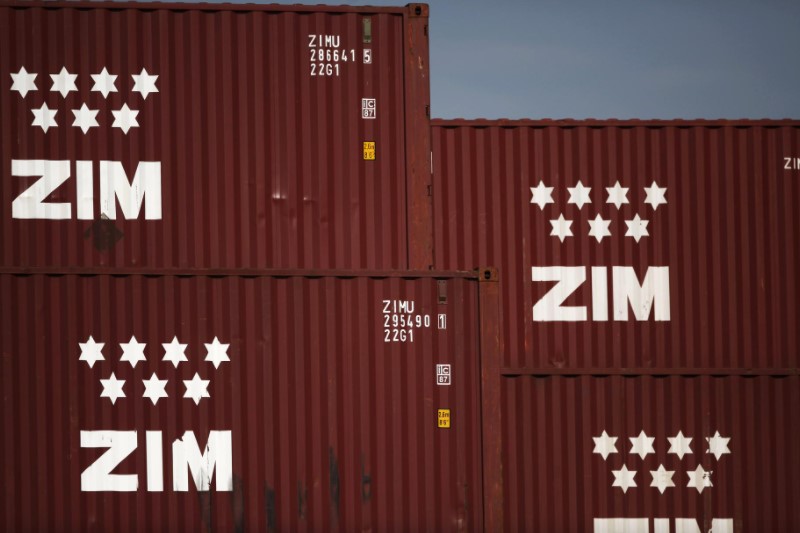
ZIM appointed Dr. Chen Lichtenstein as President and CEO effective July 1, 2026, replacing Eli Glickman, with shareholder approval still required under Israeli law. The company also highlighted a 15% dividend yield and recent Q4 results that beat expectations, with adjusted EPS of $0.32 versus -$0.99 consensus and revenue of $1.48 billion versus $1.45 billion expected. ZIM remains below its 52-week high of $29.97 at $23.49, while shareholders are set to vote on a proposed $35 per share merger with Hapag-Lloyd on April 30, 2026.
ZIM is less of a standalone stock story here and more a proxy for how much geopolitical risk the market is willing to underwrite into global freight. A leadership change with a CFO/strategic-operator profile is positive mainly because it raises the odds of more disciplined capital allocation around dividends, fleet mix, and any M&A optionality; that matters when earnings are cyclical and capital returns are a bigger part of the equity thesis than growth. The market is likely to reward any sign that the new CEO prioritizes balance-sheet resilience over headline yield, because the current payout profile looks most vulnerable precisely when freight rates normalize.
The second-order effect is on competitors and customers, not just ZIM. Higher Middle East risk tends to widen routing spreads and insurance/fuel costs, which is a near-term tailwind for charter/liner rates and a medium-term headwind for trade volumes if shippers start pre-emptively de-risking lanes. That favors asset-light operators with better contract coverage and hurts names with heavier spot exposure; it also pushes procurement teams to diversify away from routes that can be disrupted with little warning, creating a lagged but real volume drag over the next 1-2 quarters.
The market may be underestimating how quickly the dividend can be questioned if freight weakens before the new CEO is seated. The current yield looks attractive, but in a downcycle it can become a trap: once investors start modeling payout cuts, the equity’s support can vanish faster than the earnings decline itself. Conversely, if geopolitical tension persists for several weeks, the stock can rerate sharply higher because the equity has embedded very little durability in cash flows beyond the next quarter.
The contrarian read is that this is not a clean long on geopolitics; it is a volatility event inside a structurally fragile earnings stream. For ZIM, the best trade may be to own optionality into disruption while hedging the downside from a normalizing freight tape and an eventual dividend reset.
AI-powered research, real-time alerts, and portfolio analytics for institutional investors.
Request DemoOverall Sentiment
mildly positive
Sentiment Score
0.15
Ticker Sentiment
