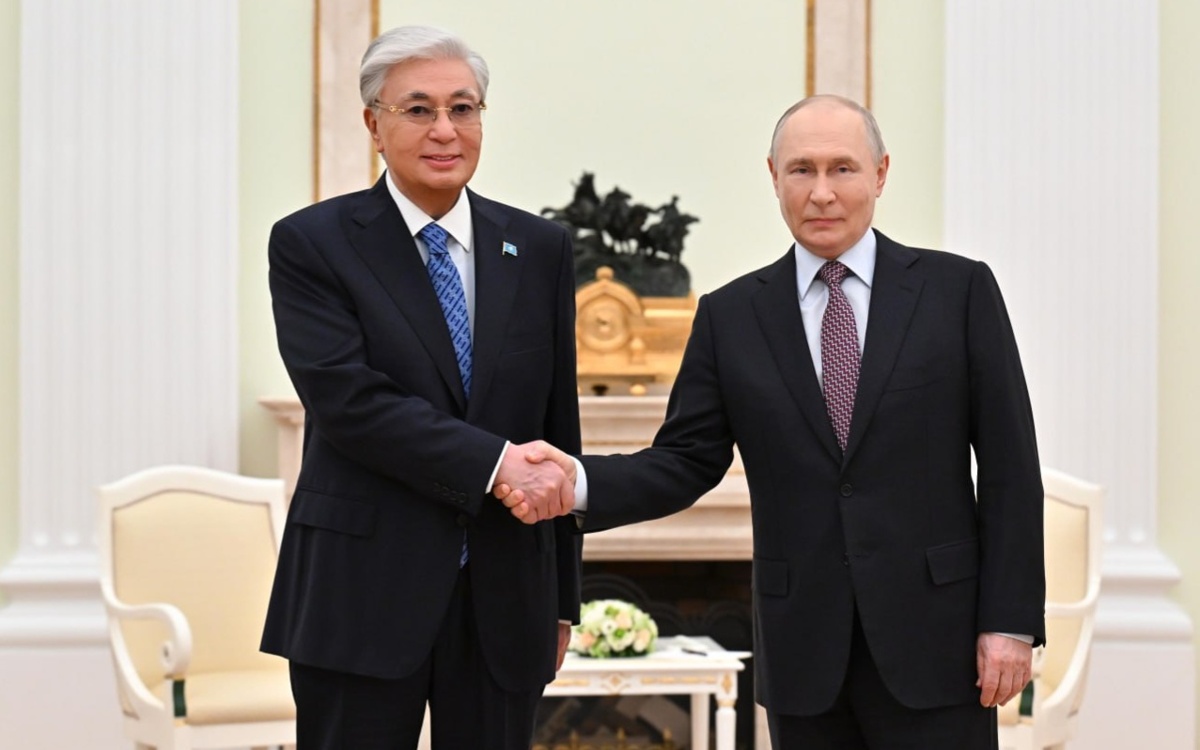
Kazakhstan and Russia reaffirmed close bilateral ties during Tokayev’s meeting with Putin, with both leaders highlighting preparations for a state visit expected at the end of May. Tokayev said bilateral trade is on track to exceed $30 billion this year, and noted Russia remains one of Kazakhstan’s main investors. The article is primarily diplomatic and commemorative, with limited direct market impact.
This reads as a signaling event more than a market-moving policy announcement: Kazakhstan is reinforcing its role as the most reliable overland bridge between Russia and external markets. The second-order implication is that firms with Kazakhstan exposure but limited direct Russia sanctions risk may keep benefiting from rerouted freight, energy services, and cross-border settlement activity; the market often underprices how much incremental volume migrates to “neutral corridor” assets when geopolitical friction persists.
The more important medium-term signal is institutional lock-in. A deeper bilateral agenda, especially around investment, education, and tourism, suggests the relationship is broadening beyond commodity transit into sticky human-capital and state-linked commercial channels. That tends to favor domestic Kazakhstan assets with quasi-sovereign sponsorship and local monopolies, while doing little for global “resolution” trades because the move lowers the odds of a clean decoupling narrative in the next 6-12 months.
Contrarian angle: the headline warmth may be overread as bullish for Kazakhstan risk assets, but it can also raise Western compliance scrutiny if Russian-linked trade volumes keep rising through Kazakh intermediaries. That creates a latent tail risk for logistics, banking, and payments names if secondary-sanctions enforcement tightens. The best risk/reward is not chasing a broad EM beta trade; it is targeting corridor beneficiaries with explicit upside from rerouting, while hedging against abrupt sanctions headlines.
AI-powered research, real-time alerts, and portfolio analytics for institutional investors.
Overall Sentiment
neutral
Sentiment Score
0.05
