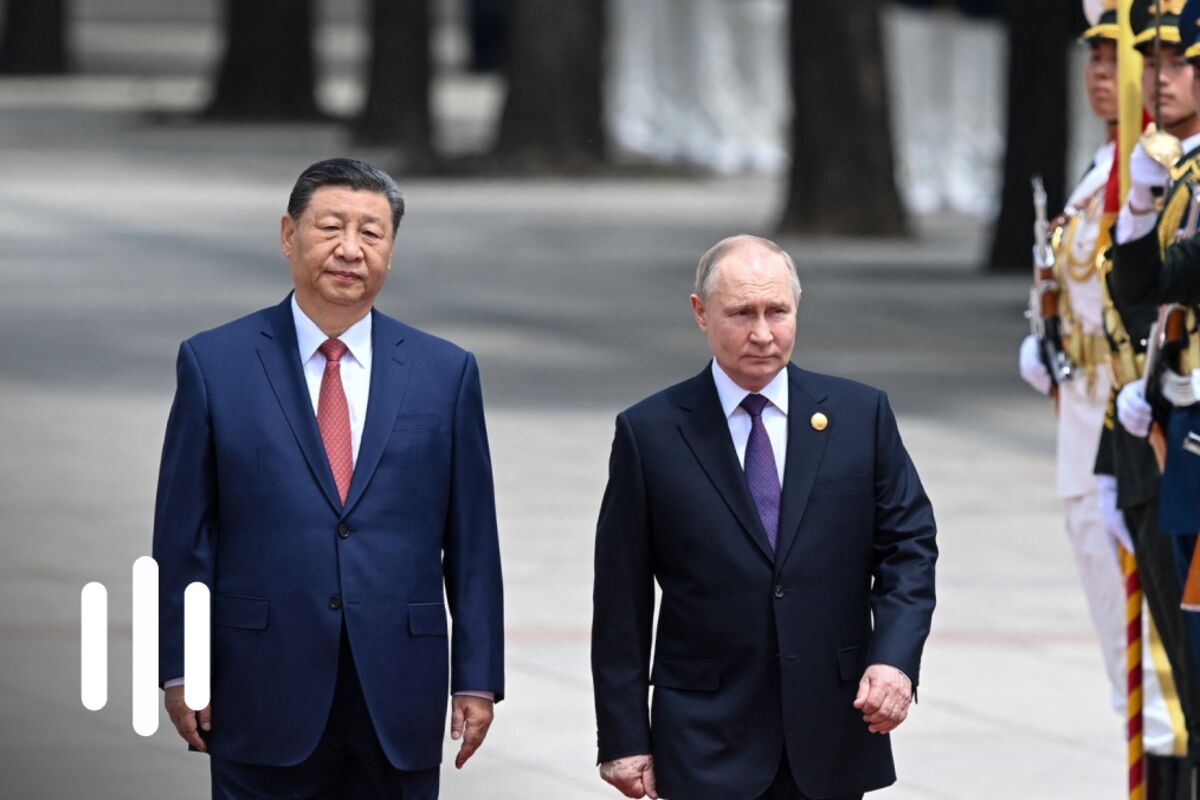
Russia and China are deepening ties with 20 new agreements across trade, technology, and energy, raising the strategic stakes for U.S.-China relations. The article highlights potential acceleration of negotiations on the Power of Siberia 2 gas pipeline if Middle East energy turmoil and a closure of the Strait of Hormuz disrupt global supply. The partnership signals greater geopolitical and energy-market uncertainty, with possible implications for global gas flows and regional stability.
The important second-order effect is not the optics of the agreements themselves, but the incremental hardening of a non-dollar, non-Western trade stack. Every new bilateral link in energy, logistics, and tech lowers the friction cost of rerouting flows away from US-influenced chokepoints, which matters most when shipping insurance, clearing, and sanctions enforcement become binding constraints rather than price alone. That makes the system more resilient to sanctions and more fragile for anyone relying on the Strait of Hormuz as a marginal supply valve.
For energy, the market is likely underestimating how quickly a Middle East shock can accelerate a Russia-China molecule swap. If Hormuz risk persists for weeks, Beijing has both an economic and political incentive to lock in long-duration discounted gas, even if the headline pipeline economics are marginal today; the embedded option value of security of supply rises sharply in tail events. That is a medium-term bearish setup for LNG chokepoint premiums and a relative positive for pipeline-backed, landlocked supply assets, especially if China is willing to subsidize strategic resilience over IRR.
The contrarian mistake is to assume this is only a diplomatic gesture. The real risk is a gradual reconfiguration of bargaining power in which Russia gains a dependable buyer, China gains leverage over seaborne LNG suppliers, and US allies face a higher structural floor for energy security spending. In the next 1-3 months, the catalyst is not a finalized megaproject but whether spot volatility in the Middle East keeps widening the discount Russia can demand from China; over 12-24 months, repeated disruptions could make the pipeline decision look less like a project finance question and more like a strategic necessity.
AI-powered research, real-time alerts, and portfolio analytics for institutional investors.
Request DemoOverall Sentiment
mildly negative
Sentiment Score
-0.15
