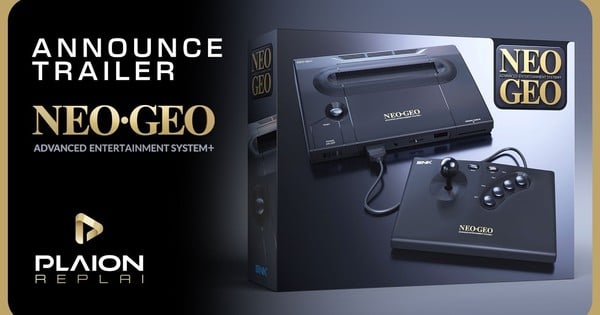
SNK and Plaion Replai announced the NeoGeo AES+ console, set to launch on November 12 at $249.99, with premium editions priced at $349.99 and $999.99. The system recreates original Neo Geo hardware using ASIC chips rather than software emulation or FPGA, and will support both legacy AES cartridges and new cartridges. The launch lineup includes 10 game cartridges, including Metal Slug and The King of Fighters 2002, positioning the release as a niche retro-gaming product rather than a market-moving event.
This is less a nostalgia story than a niche hardware monetization test. The economics hinge on whether SNK/Plaion can convert a collector audience into recurring cartridge demand without relying on emulation convenience; if they can, the attach-rate on the low-priced base unit becomes more important than unit sales of the console itself. The real second-order beneficiary is the physical goods supply chain around limited-run manufacturing, specialty retail, and retro distribution, which tends to enjoy high gross margins but is highly sensitive to any fulfillment slip or quality-control issue.
The competitive signal is stronger than it looks: a faithful hardware recreation raises the bar for all retro-console peers that depend on emulation accuracy as their core selling point. That creates a wedge between “authenticity” products and “good enough” products, likely pushing demand toward premium-priced collector editions and away from mass-market retro boxes. It also implies a longer-tail aftermarket for legacy cartridges and peripherals, because this device effectively revalidates the original cartridge ecosystem rather than replacing it.
The key risk is that this is a finite collector event, not a scalable consumer platform. Demand likely peaks into launch and decays quickly unless cartridge availability stays tight and new content cadence is sustained; any perception of overpricing or latency/compatibility issues would hit sell-through within weeks, not quarters. A second risk is that high pricing of the top SKU could cannibalize the standard edition’s conversion if enthusiasts perceive the bundle as extracting surplus rather than adding utility.
Contrarian view: the market may be underestimating how much of the value is in scarcity and community signaling rather than gameplay utility. If the launch is clean, the winner may be the licensed-content model behind it, not the console hardware economics; if the launch stumbles, the downside is concentrated in premium bundles while the base nostalgia segment likely remains intact. This makes the setup more about launch execution and inventory discipline than about long-run unit volume.
AI-powered research, real-time alerts, and portfolio analytics for institutional investors.
Request TrialOverall Sentiment
mildly positive
Sentiment Score
0.22
