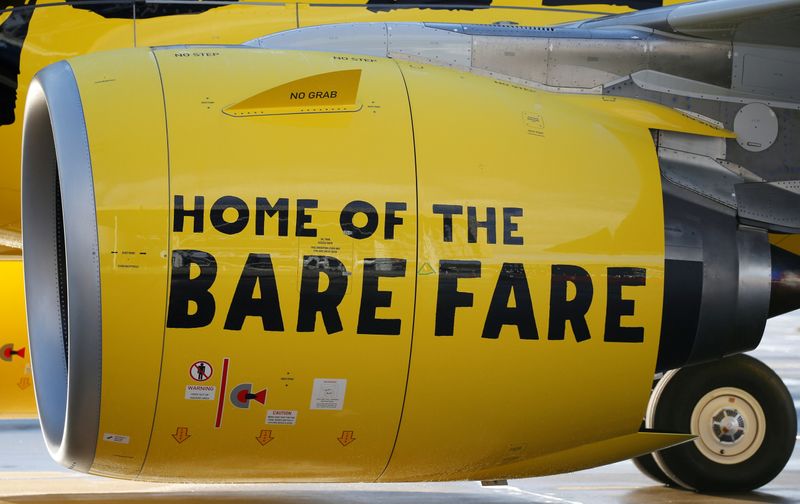
Spirit Airlines has cancelled all flights and immediately shut down operations, ending its 34-year run and leaving more than 15,000 employees without jobs. The carrier failed to emerge from a second bankruptcy in less than a year after rising jet fuel costs tied to the Iran war and the collapse of talks with the White House, bondholders, and potential partners. The shutdown follows a blocked JetBlue merger and underscores continuing distress in the ultra-low-cost airline segment.
This is less about one airline failing and more about the repricing of ultra-low-cost aviation as a structurally broken business model. The competitive winner is not just the surviving ULCC peers; it is the legacy carriers and larger network airlines that can now harvest abandoned leisure demand without matching the weakest pricing discipline in the sector. In the near term, capacity exits should improve domestic fare integrity on overlap routes, but the bigger second-order effect is lower industry tolerance for marginally profitable seat growth, which should support unit revenue across the group.
Credit is the cleaner signal than equity here. A forced shutdown after repeated restructuring attempts tells you recovery values in distressed airline capital structures are being compressed by high fuel, weak pricing, and limited refinancing appetite; that should spill over to other levered travel credits with thin liquidity. The market is likely underestimating how quickly lessors, maintenance vendors, and airport service contractors re-underwrite exposure to smaller carriers once one name goes to zero, which can tighten terms across the ecosystem over the next 1-2 quarters.
The contrarian angle is that the shutdown may be near-term bullish for surviving competitors but not uniformly so for airlines as a sector. If displaced passengers rebook quickly, some of the benefit is temporary; if travelers simply defer or shift to cars, the demand uplift is muted while pricing pressure on the lowest-cost leisure routes still fades. The real risk catalyst is regulatory or political intervention around airfare caps, refund rules, or labor spillovers if the job losses become a broader consumer issue, which could matter within days to weeks if Congress or the White House turns this into a headline.
The cleanest setup is to own capacity discipline and avoid balance-sheet fragility. The next step is likely a bifurcation between carriers with strong cash generation and those still reliant on financing markets; that gap should widen over the next 3-6 months as refinancing windows stay selective and fuel remains volatile.
AI-powered research, real-time alerts, and portfolio analytics for institutional investors.
Request DemoOverall Sentiment
extremely negative
Sentiment Score
-0.92
