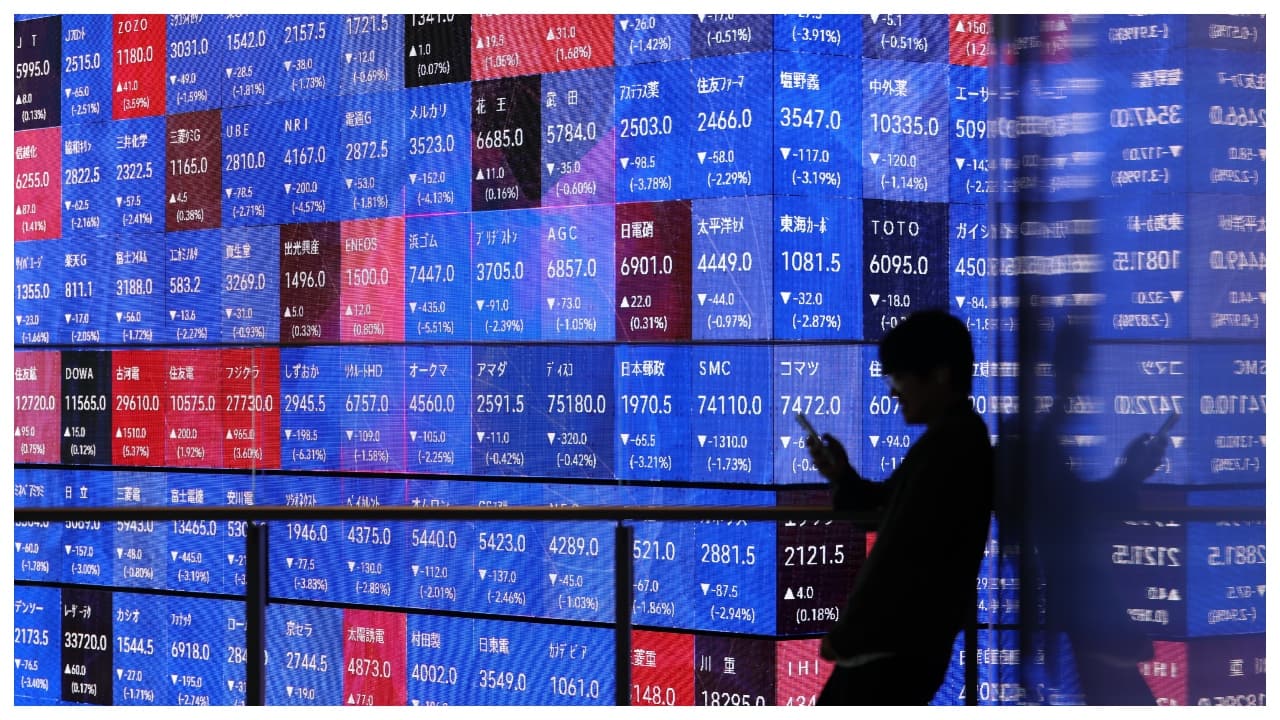
Stocks rallied and oil fell after Trump signaled progress toward a final agreement with Iran, with Brent down 1.3% to about $108 a barrel and S&P 500 futures up 0.3% while Nasdaq 100 futures rose 0.7%. Asian equities hit a record, led by a 5% jump in South Korea and renewed AI optimism, while Samsung Electronics reached a $1 trillion valuation. The dollar weakened, the yen firmed 0.1%, gold rose 0.8% to about $4,590, and US long bonds rebounded, pulling the 30-year yield back below 5%.
The immediate market read-through is that geopolitics is morphing from an energy shock into a breadth/rotation event. If crude keeps easing, the beneficiaries are not just cyclicals but any duration-sensitive segment that was being discounted for stickier inflation; that helps tech multiples, long bonds, and rate-sensitive growth simultaneously. The second-order effect is that lower input costs can unlock margin upside for industrial and consumer franchises that were previously trapped between expensive freight and cautious demand, which argues for broader index participation rather than just another narrow mega-cap bid.
The most interesting setup is in semis and AI infrastructure. The market is likely underestimating how much a lower-energy, lower-yield tape supports capex continuation: if inflation expectations cool even modestly, boardrooms can justify keeping AI spend elevated without immediately penalizing free cash flow. That is especially supportive for high-beta suppliers with operating leverage to server buildouts, while the real laggards are likely to be energy producers and any names where recent outperformance was driven by the inflation hedge trade rather than fundamental earnings revision.
The risk is that this is a headline-driven relief rally before the underlying policy regime is clarified. A partial diplomatic pause does not equal a durable supply normalization, and any failure to convert rhetoric into a formal de-escalation would likely snap oil back higher within days, not months. Bond markets are also flashing a nontrivial contradiction: equity investors are pricing lower inflation, while rates traders are still leaning toward tighter policy, so a renewed move in yields could compress the multiple expansion trade quickly.
The contrarian view is that the move may be too one-dimensional on the oil thesis and not positive enough on growth breadth. If oil falls without a corresponding deterioration in global demand, the biggest winners may be the hardest-hit cyclical laggards and not the already-expensive AI leaders; that creates an opportunity to fade the most crowded winners and reallocate toward higher beta international equities and quality industrials that benefit from both cheaper energy and improved sentiment.
AI-powered research, real-time alerts, and portfolio analytics for institutional investors.
Request DemoOverall Sentiment
moderately positive
Sentiment Score
0.55
Ticker Sentiment
