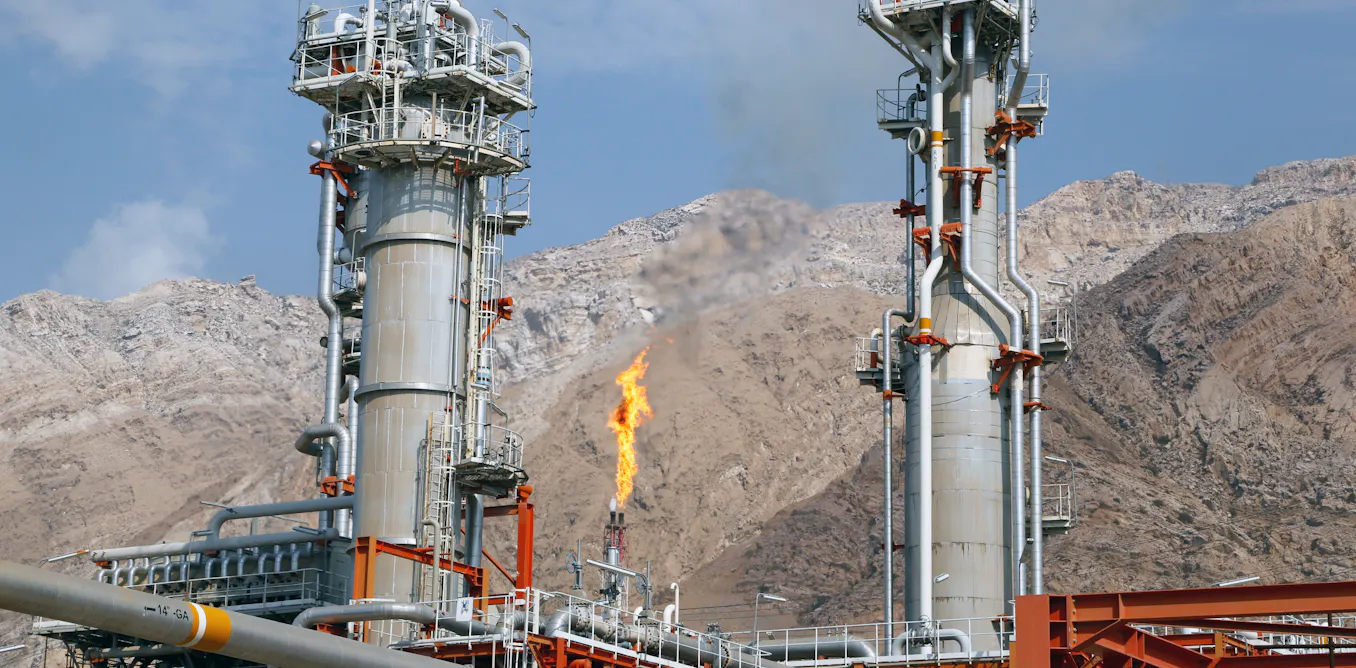
Iran's March 18 strikes on Gulf energy facilities, including Qatar's LNG hub, have helped push Brent from roughly $68 on Feb 27 to nearly $100 and disrupted Hormuz shipping. Goldman Sachs estimates Qatar and Kuwait GDP could drop ~14% if the war lasts to end-April, Capital Economics warns regional GDP could fall 10–15% with lasting energy-infrastructure damage, and US pump prices have averaged $3.60/gal, heightening political and market pressure on the US ahead of the midterms.
The immediate market transmission is not just a price shock to hydrocarbon benchmarks but a re-routing shock across the logistics and underwriting stack: higher tanker rates, elevated insurance premiums for Gulf transits, and a push into alternative supply corridors will raise delivered fuel costs by mid-single digits to low double-digits in importing nations within 30–90 days. That combination amplifies inflation persistence (energy component) and increases backwardation in refined product markets, which benefits firms with spare refining capacity and storage operators able to capture time-spread arbitrage.
Second-order winners are suppliers outside the Gulf with fast marginal supply response (US shale/LNG exporters, Australian LNG) and asset owners of transport and storage capacity who can re-price contracted volumes; losers are regionally concentrated midstream and refining operators facing prolonged capex and insurance uncertainty that can delay repairs for months. Over 3–12 months this will materially re-shape capital allocation: investors and sovereign buyers will accelerate long-term contracts with non-Gulf suppliers, supporting higher FCF for contracting/export platforms even if spot prices mean-revert.
Key risks and catalysts are path-dependent and binary: a sustained disruption (weeks–months) can push Brent toward $115–130 within 60 days and strain global refined product availability, while decisive diplomatic or military de-escalation, coordinated SPR releases and re-routing around Africa could compress spreads back toward pre-shock levels within 2–6 weeks. Monitor three near-term indicators as trade triggers—(1) insured hull premiums for Gulf transits, (2) time-spread structure in Brent/ULSD (contango/backwardation), and (3) incremental LNG cargo re-direction volumes out of the Atlantic basin versus the Middle East—to time entry and hedge size.
AI-powered research, real-time alerts, and portfolio analytics for institutional investors.
Request DemoOverall Sentiment
strongly negative
Sentiment Score
-0.70
Ticker Sentiment
