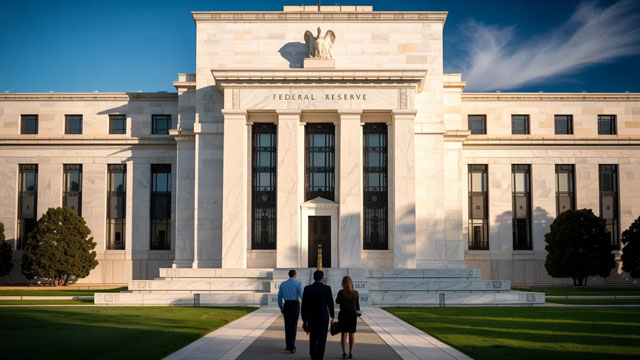
The article says Fed reform task forces led by Fed Chairman Kevin Warsh are getting “strong early reviews” for leaning heavily on foreign central-banking expertise and Obama-era appointees. It contrasts this with the White House’s distancing from “globalization” and efforts to strip expertise from other independent agencies. Net impact on markets is likely limited, but the credibility signal is modestly positive for the Fed’s reform process.
The market implication is not the personnel list itself; it is the signaling that Fed governance may remain technocratic rather than becoming a pure loyalty test. That should marginally compress the political-risk premium in rates, which matters most for long-duration assets and any equity factor priced off lower discount rates. The effect is likely measured in basis points, not a regime shift, so the first-order move should be in bond vol rather than earnings estimates.
Over the next 1-3 months, the cleaner read is a modest tailwind for duration-sensitive proxies such as TLT/IEF, REITs (IYR), and quality growth (QQQ), while the biggest loser would be the "higher-for-longer because the Fed is captured" trade. Banks are less directly exposed than duration assets, but a calmer policy process can reduce funding-spread volatility and improve visibility for NIM-sensitive names if the curve steepens less chaotically. The second-order effect is lower dispersion: fewer policy-shock hedges demanded by macro funds, which can support risk parity and systematic flows.
The contrarian view is that this is mostly optics until the actual reform text and chair dynamics are known. If the final product is still politically constrained, today’s positive read evaporates quickly; the falsifier is any uptick in implied rate volatility or a rise in the term premium despite continued bipartisan staffing. In that case, the right stance is to fade the enthusiasm rather than extrapolate a durable institutional premium.
AI-powered research, real-time alerts, and portfolio analytics for institutional investors.
Overall Sentiment
mildly positive
Sentiment Score
0.12
