
Jim Cramer's advice on navigating the pullback in parabolic stocks
Source: Cnbc
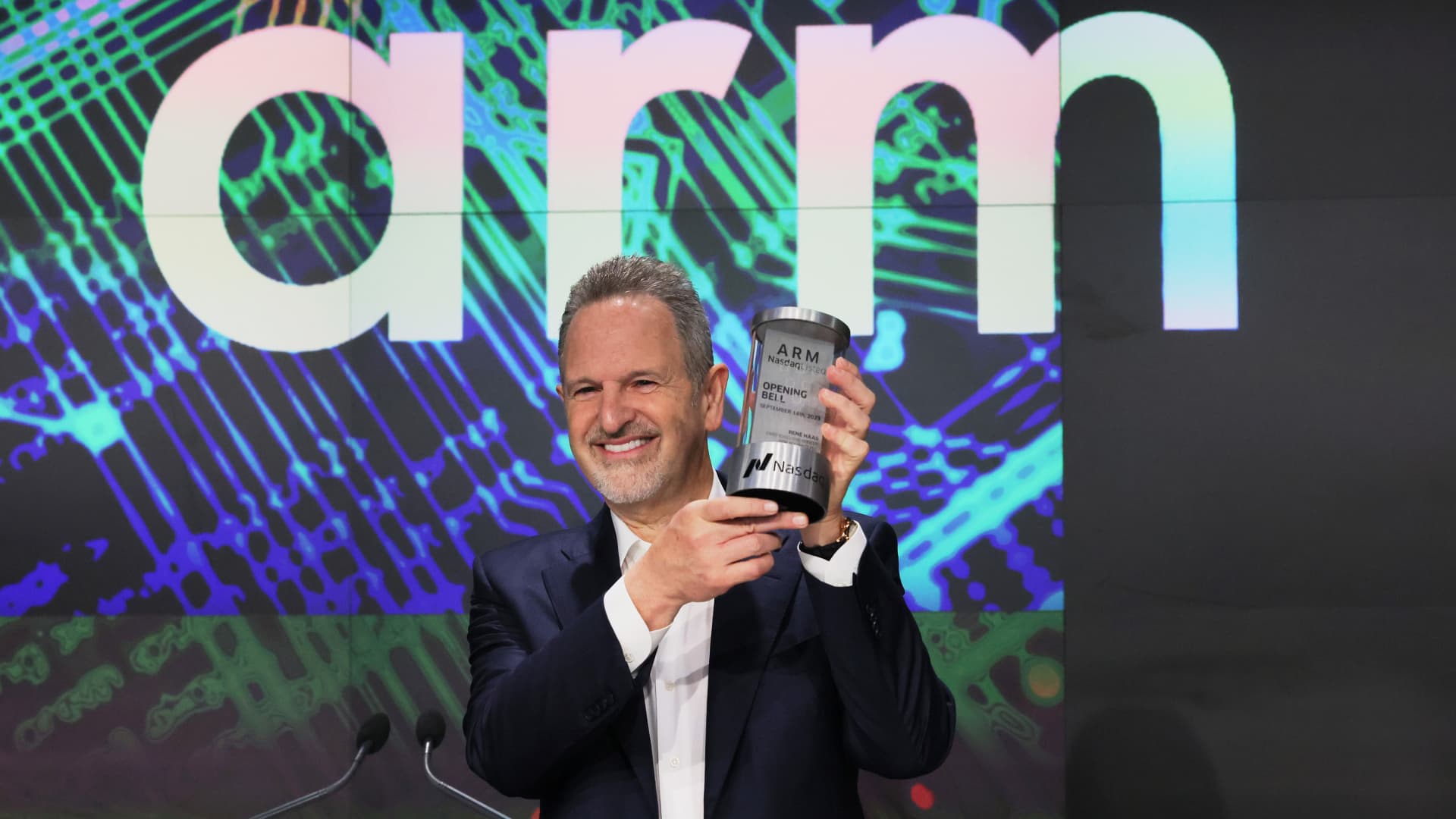
The S&P 500 pulled back from record highs as a Wall Street Journal report on OpenAI pressured the AI trade, highlighting vulnerability after parabolic moves in red-hot chip stocks. Arm Holdings fell another 8.5% Tuesday after Monday's 8% drop, while Jim Cramer said investors should consider starter positions only if it declines further. Starbucks reports after the close, with Cramer urging trimming about a quarter of the position amid margin concerns and a potentially softer consumer backdrop.
Analysis
The key market signal is not just a dip in AI—it is that the market is now pricing a higher beta to narrative risk inside crowded growth ownership. When a few highly owned winners move in lockstep, the first-order catalyst matters less than positioning, and that creates air pockets where otherwise “good” names can fall far more than fundamentals would justify over 1-5 trading sessions. That makes trims in the strongest names less about timing tops and more about preserving optionality for re-entry after forced de-risking.
ARM is the most interesting setup because its drawdown is mechanically different from a normal earnings reset: the stock had become a momentum proxy for AI scarcity, so a sharp reversal can overshoot on the downside as trend followers and leverage unwind. If the multiple compresses another 10-15% from here, the stock can quickly become investable again on a starter basis, but only if the market stops treating it as a high-beta trade and starts discriminating on licensing durability and royalty mix. Near term, the risk is still another sympathy leg lower if the AI complex remains under pressure.
SBUX is a separate story: this is less about the quarter than about whether the market believes turnaround execution can outrun a softer consumer backdrop. If margins fail to inflect, the stock can de-rate even on decent comps because investors will conclude the turnaround is buying growth with earnings quality. The contrarian angle is that a mild disappointment could be constructive for longer-term holders if it resets expectations and forces a cleaner entry point, but only if management can preserve medium-term margin architecture.
Overall, the setup favors selling strength in crowded momentum and buying idiosyncratic dislocations after the first wave of de-risking. The next 2-6 weeks matter more than the next 2-3 years for tactically managing exposure, because this is a positioning-driven tape until a new fundamental catalyst restores breadth.
AllMind Terminal
AI-powered research, real-time alerts, and portfolio analytics for institutional investors.
Request TrialMarket Sentiment
Overall Sentiment
mildly negative
Sentiment Score
-0.15
Ticker Sentiment
Key Decisions for Investors
- ARM: wait for an additional 10-15% downside or a stabilization day before initiating; use a 25% starter position only if selling pressure exhausts, with a 2-3 week horizon and a tight stop if AI breadth keeps deteriorating.
- AVGO/Q: use strength to trim another 10-20% of oversized AI/semicap exposure over the next 1-2 sessions; the risk/reward favors harvesting gains before sympathy selling broadens further.
- SBUX: buy only into post-earnings weakness if the stock sells off on manageable guidance misses; target a 3-6 month horizon for a margin-recovery re-rating, but avoid chasing if management does not defend operating leverage.
- Pair trade: long a high-quality AI beneficiary with lower narrative risk versus short a high-beta AI proxy such as ARM on a 1-4 week horizon; this isolates positioning unwind risk while preserving upside if the AI theme re-accelerates.
- If ARM reclaims the prior breakdown level after earnings commentary, consider scaling from starter to half size; if not, respect the tape and wait for a full sentiment reset rather than averaging down early.
More News
- As high fuel costs force people to choose between filling up or buying groceries, Trump says ‘it’s a very inexpensive price to pay’ for the Iran war
- Elon Musk’s DOGE swiped $329 million in humanitarian funding from Nepal, leaving a Gen Z tech revolution to transform the budding country’s economy
- U.S.-China gastrodiplomacy: Despite political tension, fast food chains from both countries gain popularity in each other’s territory
- Greg Abel Recently Plowed $4.2 Billion Into Warren Buffett's Favorite Stock, and It Wasn't Apple
- Better Artificial Intelligence Stock: Arm Holdings vs. ASML
- Solidion names Jaymes Winters chairman and CEO