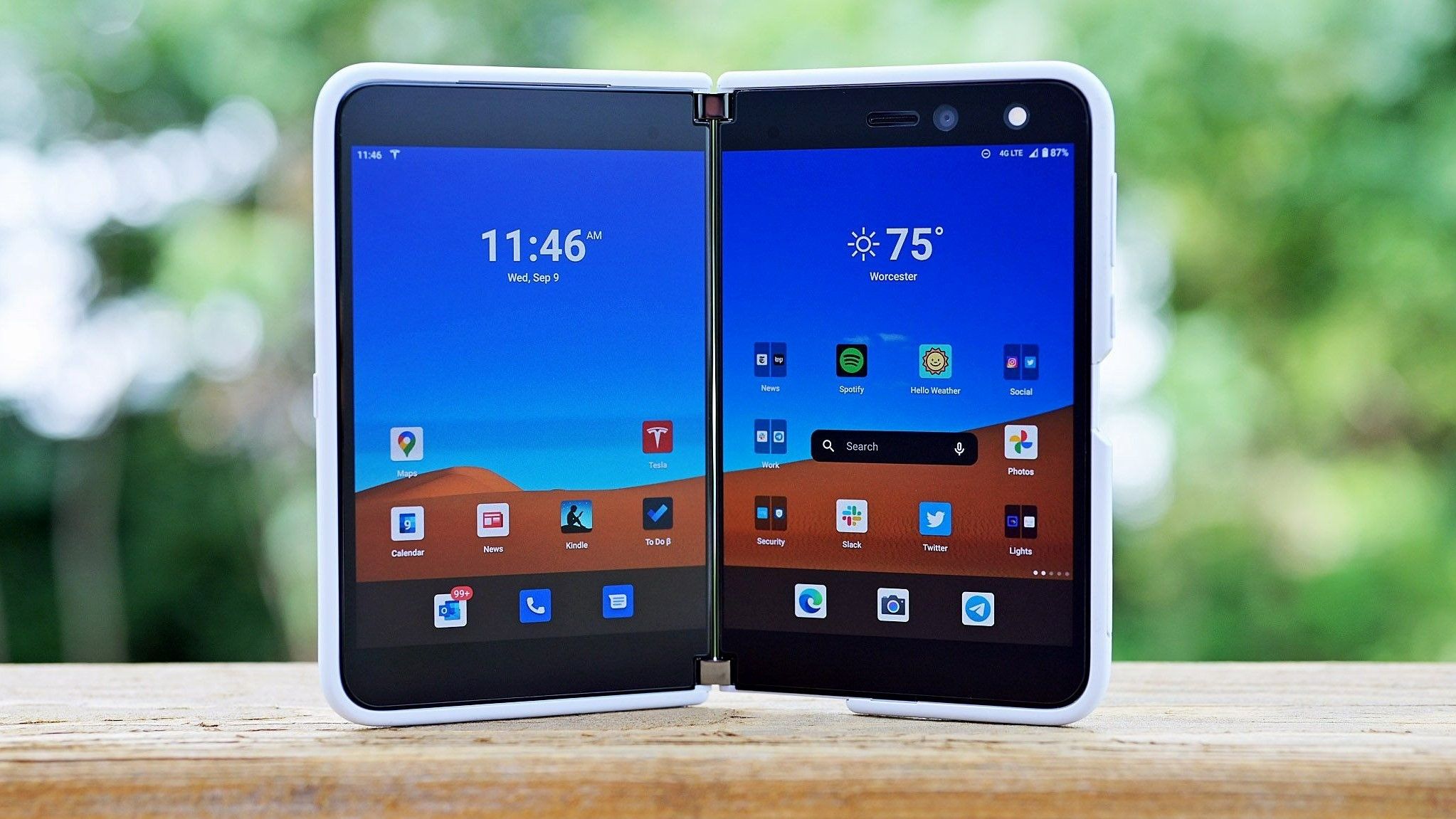
Apple is reportedly developing a foldable iPhone with a short‑wide form factor similar to the Microsoft Surface Duo, featuring a 5.5-inch external display and a 7.8-inch internal foldable screen, Touch ID in the power button, a very large battery and a reportedly creaseless panel. Priced rumoredly north of $2,000, the device would position Apple into the high‑end foldable segment and could reshape demand dynamics for premium smartphones and small tablets if the hybrid iOS/iPadOS experience and build quality meet expectations, though details remain speculative ahead of an expected launch next year.
Market structure: A successful iPhone Fold would be a clear win for AAPL (premium ASP and services attach) and for display/battery suppliers (Samsung Display/BOE, TSMC, major battery makers) with potential incremental revenue of $8–12B/yr if Apple ships ~4–6M units at ~$2k in year one (35%+ gross margin implies $3–4B gross profit). Losers include niche foldable Android OEMs and Microsoft’s hardware credibility; gross-margin displacement for Android OEMs could compress pricing in the sub-$1,000 foldable tier. The launch shifts pricing power higher in the premium segment but requires supply chain capacity (foldable OLED, dual-cell batteries) to scale without steep COGS inflation.
Risk assessment: Key tail risks are yield problems for crease-less panels, demand elasticity above $2,000 (adoption <2M units), and supplier concentration risk at TSMC/Samsung leading to production bottlenecks; regulatory risks (antitrust around pre-installation/OS tie-ins) are lower probability but material. Immediate (days) effect = elevated AAPL option IV around leaks; short-term (3–6 months) = sentiment-driven re-rating around WWDC/launch; long-term (12–36 months) = structural share gains if iOS fold software locks users. Hidden dependencies include iOS/iPadOS hybrid UX execution—software failure would meaningfully reduce lifetime value and services upside.
Trade implications: Favor AAPL-centric exposure: concentrated 2–3% long position in AAPL for 6–12 months (target +15–30%, stop -10%) ahead of official launch signals; complement with 6–12 month call spreads to cap premium (buy 9–12m AAPL 20% OTM calls / sell 40% OTM). Add selective supplier longs (TSM — capacity beneficiary; ticker-specific exposure sized 1–2%) but avoid display names until order confirmations. Consider a relative-value pair: long AAPL vs short GOOGL (size 1:0.6) over 6–12 months if Apple shows strong preorder data—GOOGL’s Pixel ecosystem lacks comparable channel reach for premium pricing.
Contrarian view: Consensus assumes Apple will automatically convert Duo/Pixel users — that’s not guaranteed; software ergonomics and battery life matter more than aspect ratio. The market may underprice service upside (higher ARPU per fold user) while overpricing unit risk; historically (iPhone early years) small volumes preceded outsized ecosystem monopoly gains, so a well-executed foldable could be a multi-year alpha generator. Unintended consequences: cannibalization of iPad mini could mute net revenue uplift, and a >$2,000 price could limit TAM expansion, making early supplier equities binary rather than gradual winners.
AI-powered research, real-time alerts, and portfolio analytics for institutional investors.
Request DemoOverall Sentiment
moderately positive
Sentiment Score
0.45
Ticker Sentiment
