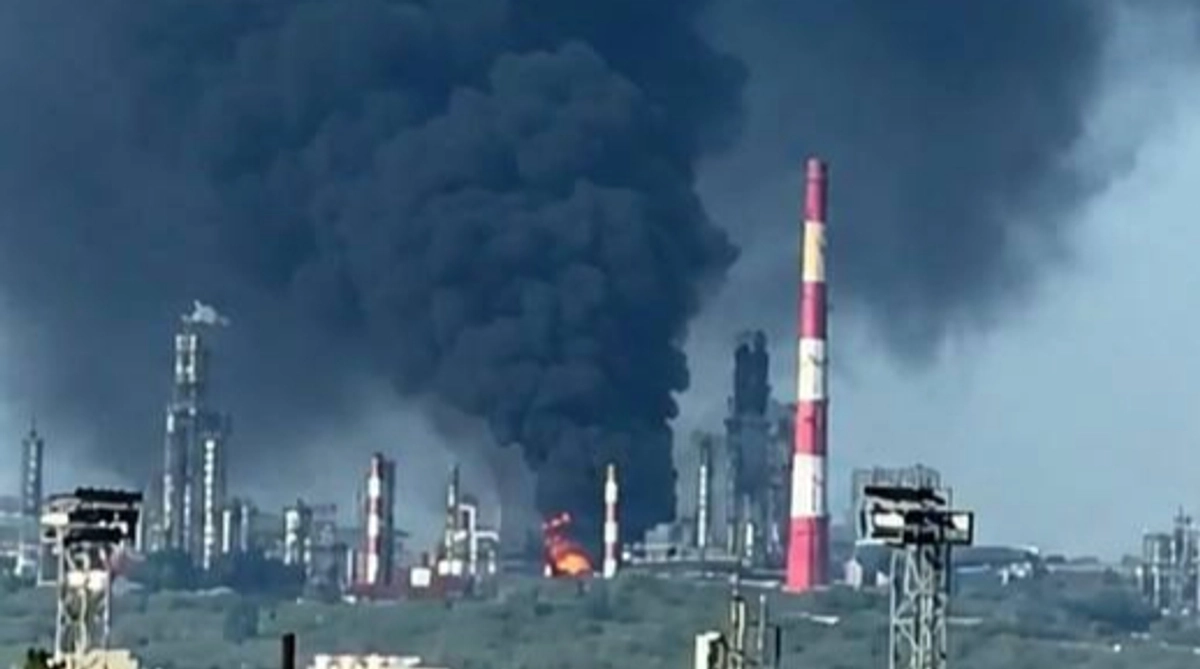
A fire broke out at the Syzran oil refinery amid a reported drone attack in Russia's Samara Oblast, with authorities later saying two people were killed and several injured. The refinery processes 7 to 8.9 million tonnes of oil annually and has been targeted repeatedly, including as recently as April. Rosaviatsiya also temporarily closed multiple Russian airports, including Saratov, Nizhny Novgorod, Penza, Makhachkala and Kaluga.
The immediate market read is not just higher crude risk, but a renewed premium for “interruptible supply” inside Russia’s downstream system. Even if the physical damage is localized, repeated strikes force operators and insurers to price in longer maintenance outages, tighter domestic product availability, and a higher probability of ad hoc export curbs. That matters more for refined products than for headline crude volumes: diesel and jet constraints can surface quickly in regional markets and ripple into shipping, trucking, and power backup demand across Eurasia.
The second-order winner is non-Russian refined product exporters and seaborne logistics benefiting from any substitution away from Russian middle distillates. If the market starts to treat these assets as chronically vulnerable, crack spreads can widen even without a sustained Brent move, because buyers pay up for reliability and shorter supply chains. On the defense side, this reinforces the standing bid for counter-drone systems, airport screening, and critical infrastructure security names, with the strongest read-through in Europe and the Middle East where infrastructure hardening spend is still early-cycle.
The key risk is that the initial price reaction may be broader than the actual supply loss. If the incident proves contained and no export disruptions emerge within 24-72 hours, energy beta can fade fast; however, the larger tail risk is escalation and repeated follow-on strikes over the next 1-3 months, which would keep aviation restrictions and refinery precautionary shutdowns recurring. A sustained pattern would gradually tighten diesel balances into winter and be more inflationary than a one-off crude spike.
Consensus may underappreciate how much this is a logistics story, not just an oil story. The market tends to overtrade headline crude and undertrade the knock-on effects in airport operations, freight, and regional product distribution. That creates a better setup in spreads and security beneficiaries than in outright directional oil, unless we see clear evidence of multi-site refinery downtime or broader export interference.
AI-powered research, real-time alerts, and portfolio analytics for institutional investors.
Request DemoOverall Sentiment
strongly negative
Sentiment Score
-0.65
