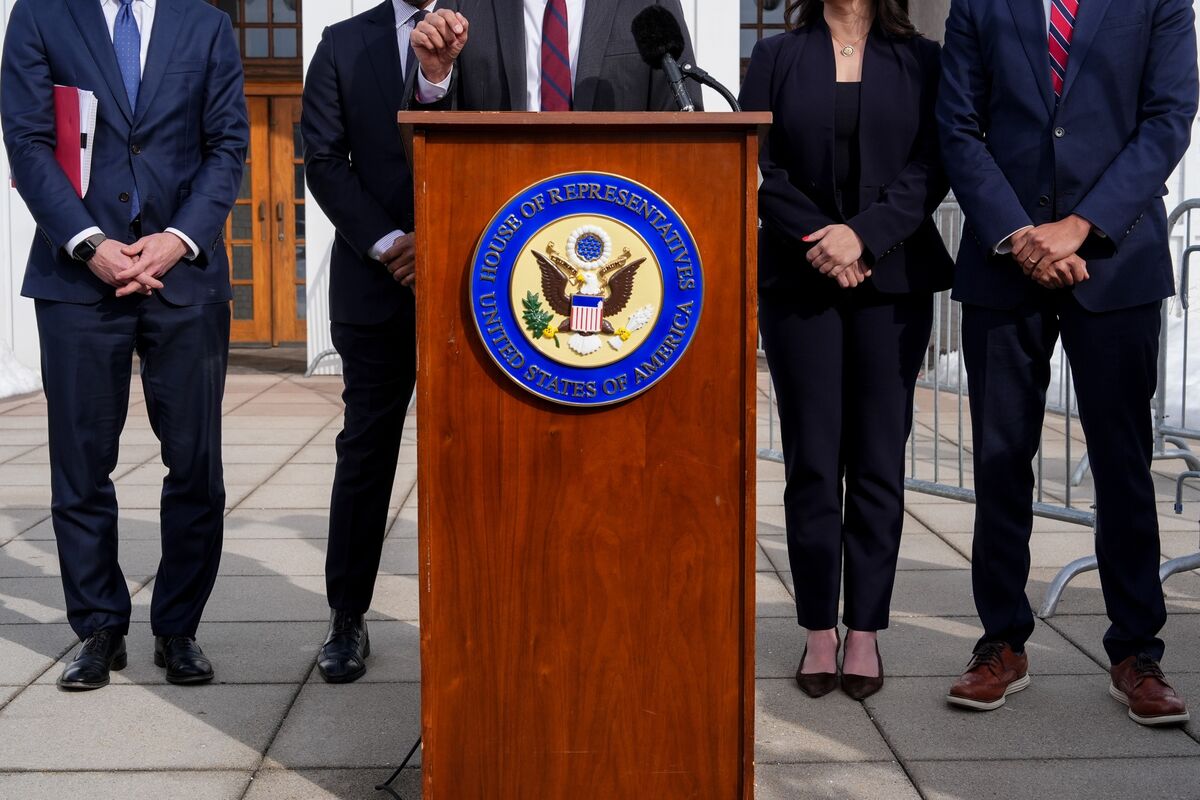
The U.S. House Ethics Committee said it has launched 20 sexual misconduct probes since 2017, offering rare visibility into its investigative activity. The article is primarily a governance and accountability update in Congress, with limited direct market relevance.
This is less a direct market event than a governance regime shift: once an ethics process starts surfacing at scale, the second-order effect is a higher perceived probability of headline risk for any legislator already under review. That matters for sectors exposed to appropriations, telecom, defense, healthcare, and energy policy, where a few marginal votes can swing procurement, permitting, or reimbursement outcomes. The immediate market impact is usually negligible, but the value lies in identifying which committees or members become temporarily less effective dealmakers.
The bigger consequence is deterrence. If oversight intensity rises, the expected cost of misconduct and cover-up increases, which can change behavior in two opposite ways: some actors become more cautious, while others accelerate turnover or retirement decisions to avoid prolonged exposure. That creates a subtle tailwind for institutional continuity and a headwind for officeholders with elevated vulnerability, especially as election cycles approach and donors, lobbyists, and staffers become more selective about association risk.
From a timing perspective, the catalyst window is months, not days: reputational effects compound when probes intersect with primaries, fundraising cycles, or committee assignments. The main reversal is a shift back toward procedural opacity or bipartisan fatigue, which would compress the headline cycle and reduce the odds of forced resignations, leadership changes, or late-cycle candidate replacements. The best contrarian read is that the market may underprice the spillover into candidate quality and legislative productivity rather than treating this as purely a political story.
AI-powered research, real-time alerts, and portfolio analytics for institutional investors.
Request DemoOverall Sentiment
neutral
Sentiment Score
-0.05
