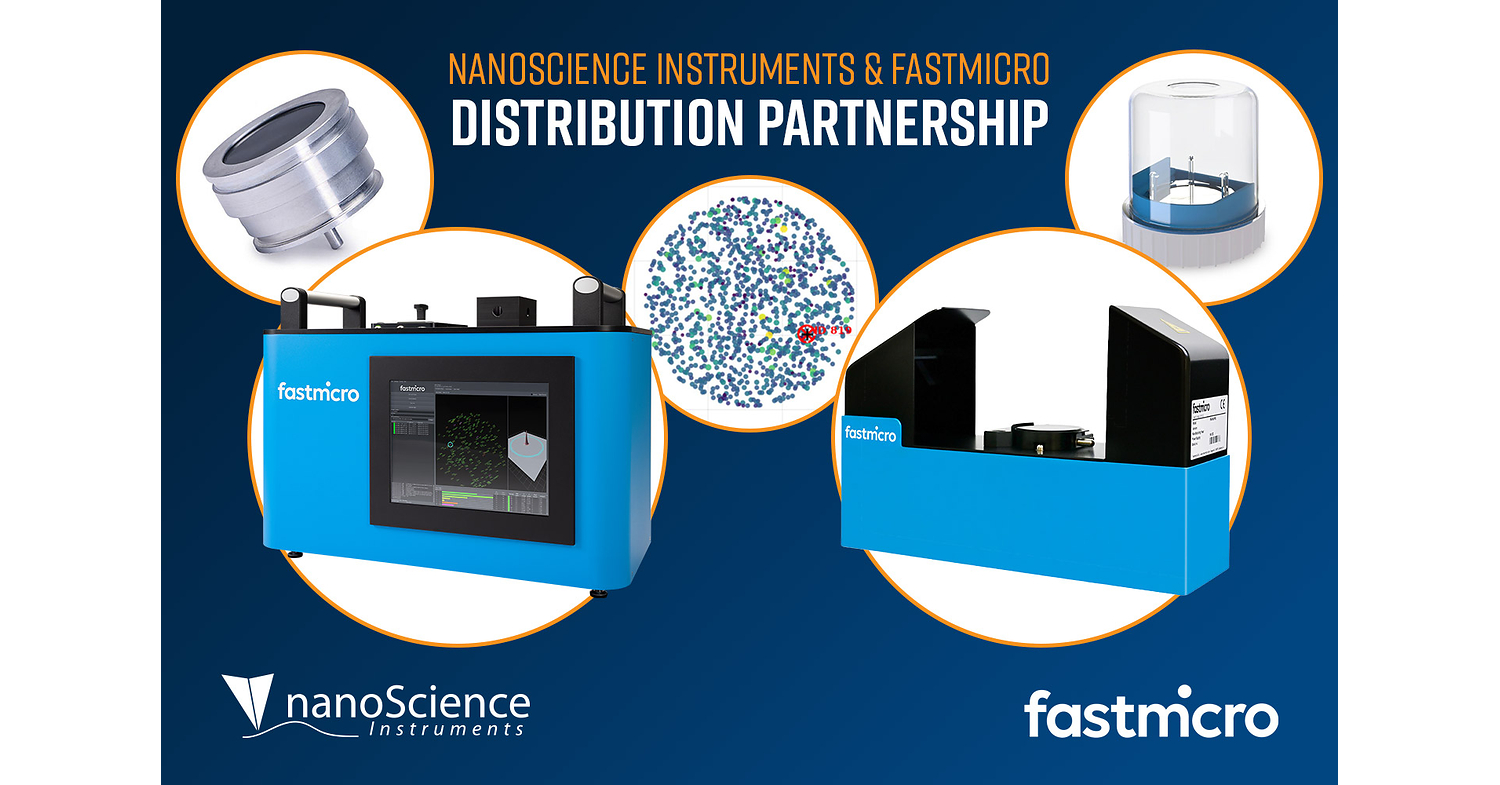
Nanoscience Instruments announced a strategic partnership with Fastmicro to deliver an integrated surface particle contamination workflow, combining Fastmicro’s rapid particle detection/counting/mapping with Nanoscience’s Phenom Desktop SEM for automated morphology and elemental (EDS) characterization. The initiative targets reduced time to root-cause analysis and improved cleanliness-control decisions for industries including semiconductors and advanced electronics, with no financial terms disclosed. Overall, it’s a modest positive product/technology update likely to matter more to customers than to broad markets.
This reads as a workflow-compression story, not a near-term revenue inflection. The economic value is in reducing root-cause cycle time, which matters most when a contamination event threatens a high-value run; that creates a budget line item in advanced packaging, compound semis, and aerospace/medical, but adoption is usually gated by validation, not enthusiasm. In public markets, the cleaner read-through is to inspection/metrology and electron microscopy vendors with installed bases in R&D and FA labs, while labor-heavy contract analysis shops are the subtle losers if customers internalize more screening before sending fewer, higher-quality samples out.
The second-order effect is on yield economics: faster triage lowers scrap and rework, which can improve customer willingness to spend on contamination control even in a flat capex cycle. That is constructive for OEMs selling sampling, automation, and analytics, but the revenue impact is likely back-end weighted over 1-3 quarters as purchase committees convert a technical win into an approved workflow. The most important falsifier is if semiconductor and advanced packaging capex weakens; in that case, these partnerships stay marketing-led and do not translate into material bookings.
Contrarian view: the market may overestimate how much AI/automation alone changes contamination spend. Most fabs already know contamination matters; what they lack is throughput and integration, so the real prize is not a flashy new tool but a serviceable, repeatable process that can be standardized across sites. If this partnership is genuinely embedded into QA/QC protocols, it could be a small but persistent tailwind for tooling and metrology names; if not, it is mostly a distributor-led cross-sell with limited equity relevance.
AI-powered research, real-time alerts, and portfolio analytics for institutional investors.
Request DemoOverall Sentiment
mildly positive
Sentiment Score
0.12
Ticker Sentiment
