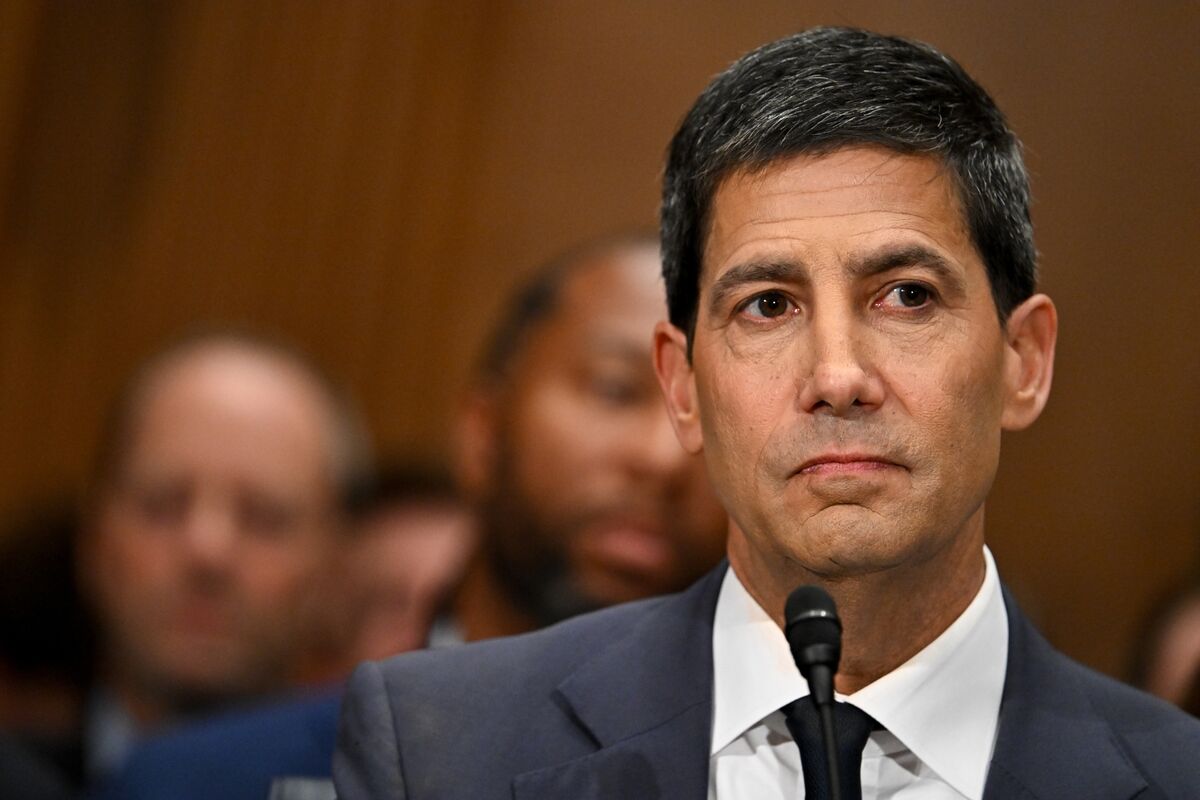
Fidelity says new Fed Chairman Kevin Warsh could spur bond-market volatility by signaling his views on inflation after Wednesday’s Fed decision. The key risk is that his post-meeting remarks may move rates and bond prices once investors have absorbed the policy statement and economic projections. The article is commentary rather than a policy change, so the impact is likely limited but notable for fixed-income markets.
The market’s real vulnerability here is not the policy decision itself but the sequencing of information. Once rates traders have already repositioned on the statement and dots, any post-meeting inflation commentary from a chair with a strong anti-inflation reputation can force a second impulse higher in term premium, especially in the long end where positioning is most crowded. That matters because volatility tends to rise fastest when the market has already priced a benign outcome and is then asked to re-rate the distribution of future cuts rather than the next meeting.
The biggest second-order beneficiary is not just cash bond bears but optionality: rate vol, receiver/seller dislocations, and relative-value desks that monetize wider intraday ranges. Credit is the most exposed loser on a one- to three-week horizon because wider Treasury volatility mechanically raises discount-rate uncertainty and tends to cheapen lower-quality IG and HY first, even if spreads do not gap immediately. Banks and other duration-sensitive financials can also see their rate-hedging costs rise if the move is led by the long end rather than front-end repricing.
The catalyst window is days, not months: the risk is a sharp knee-jerk move around the post-decision press event or follow-up remarks, with persistence only if the commentary changes the market’s belief about the terminal rate path. The main reversal is a softer-than-expected inflation print or data that forces the market back toward cuts, which would compress vol quickly and punish late duration shorts. A deeper tail risk is that the market starts to interpret strong anti-inflation rhetoric as a signal the Fed is willing to tolerate slower growth to re-anchor expectations, which would steepen recession odds over 3-6 months.
Consensus is probably underestimating how much this is a positioning event versus a pure macro event. If rates desks are already structurally short duration, the first move can overshoot on little new information, creating a better entry for fading the vol spike after the event rather than chasing it beforehand. The cleaner expression is to own optionality into the event and then monetize any post-event dislocation in rates vol if the reaction becomes one-way.
AI-powered research, real-time alerts, and portfolio analytics for institutional investors.
Request DemoOverall Sentiment
mildly negative
Sentiment Score
-0.15
