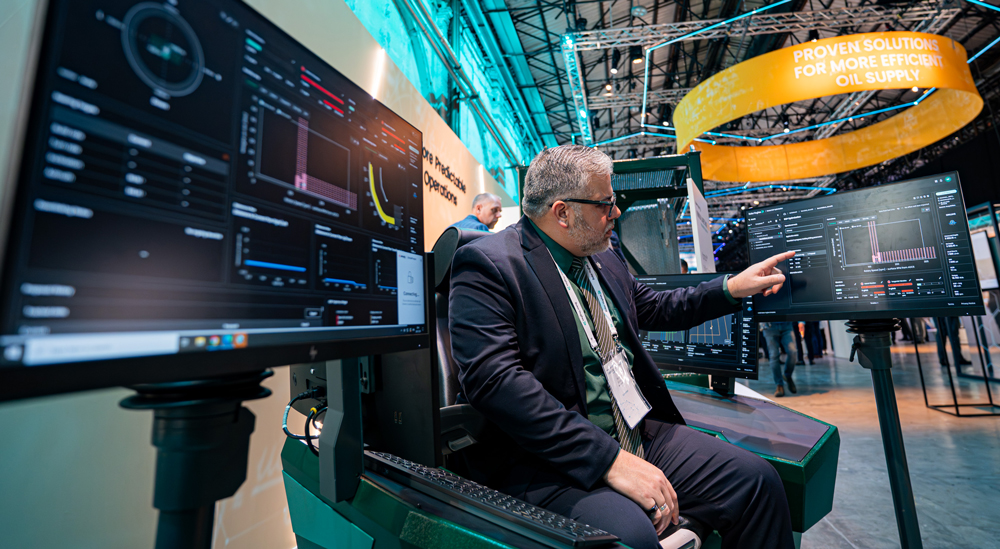
Baker Hughes debuted its Kantori autonomous well construction solution on Jan. 29, 2026, positioning it as a full-cycle drilling platform that combines physics-based models, AI, and rig connectivity. Management says the system can cut well delivery cycles by up to 15 days, improve ROP and hole quality, reduce emissions, and move personnel out of harm's way. The article is largely a positive product/strategy update rather than a financial catalyst, so likely near-term market impact is limited.
This is less a near-term revenue story and more a positioning signal that autonomous well construction is moving from pilot to procurement. The second-order winner is Baker Hughes’ software-plus-services attach rate: once a customer adopts autonomous drilling on a high-value well program, switching costs rise because the value comes from the integrated workflow, not a single tool. That should support mix and pricing over the next 4-8 quarters, especially in offshore, extended-reach, and thin-pay environments where a few days of rig time dominate economics.
The competitive implication is that HAL is now more exposed to being benchmarked on closed-loop execution, not just hardware breadth. If Baker Hughes can prove repeatable time savings and consistency, service differentiation shifts toward data ownership and control-system interoperability, which favors vendors with rig-side integration depth and digital telemetry relationships. That could also pressure smaller niche drilling-tech suppliers whose standalone value proposition gets absorbed into larger platform offerings.
The key risk is adoption friction, not technology readiness. The market can overestimate how quickly operators hand control to algorithms, so the inflection is likely gradual: early wins at complex, high-cost wells first, then broader rollout only after 2-3 quarters of reference cases. A failure mode would be an autonomous event or a high-profile interoperability miss, which would slow procurement cycles and push customers back toward advisory-only deployment.
Contrarian take: the biggest upside may not be higher drilling activity, but lower service intensity per well. If autonomy consistently reduces nonproductive time and tool wear, the industry could see fewer billable intervention hours even as well construction quality improves. That means BKR can win share and margins while peers dependent on high-touch labor and reactive troubleshooting see revenue per well under pressure.
AI-powered research, real-time alerts, and portfolio analytics for institutional investors.
Request DemoOverall Sentiment
moderately positive
Sentiment Score
0.55
Ticker Sentiment
