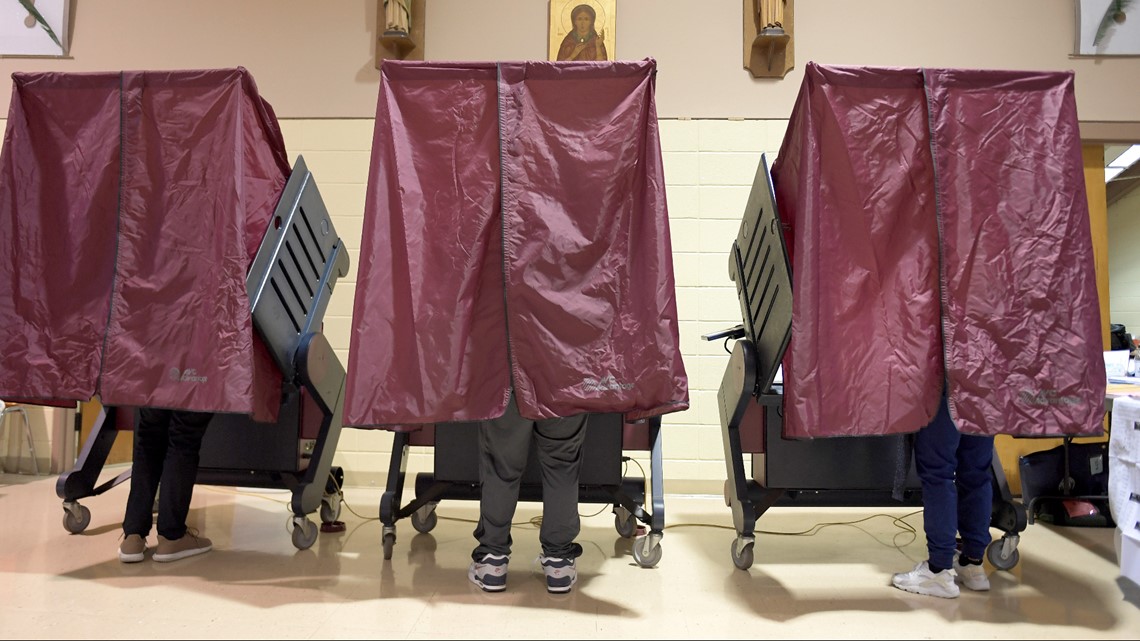
Louisiana voters rejected all five constitutional amendments, including measures on teacher pay raises, a St. George school system, judicial retirement age, civil service reclassification, and parish property tax relief. The failed teacher-pay amendment would have provided a $2,250 raise for teachers and a $1,125 raise for support staff starting in 2027. The votes keep the current civil service, school district, tax, and judicial retirement frameworks unchanged.
The cleanest read-through is not ideological but operational: voters preserved the status quo across labor governance, school district fragmentation, and tax flexibility, which is mildly negative for any policy-driven efficiency or margin expansion in Louisiana public-sector administration. The failure to broaden at-will classification reduces the probability of near-term personnel turnover and politicized reshuffling, which should lower execution risk for state agencies but also keeps wage rigidity and bureaucratic friction elevated over a multi-year horizon.
The biggest second-order impact is on local tax and school-finance dynamics. Blocking inventory tax relief keeps a modest but broad base of local revenue intact, which matters more for small industrial and distribution-heavy employers than headline tax rates imply; that reduces the odds of incremental site-selection advantages versus neighboring Southern states. The St. George rejection also preserves current scale economics in East Baton Rouge schools, avoiding a costly duplication of administrative overhead that would likely have pressured parish-level budgets and created a future referendum cycle around funding gaps.
For the education complex, the teacher-pay measure’s defeat removes a politically sticky funding obligation from the state balance sheet and keeps the education trust corpus from being redeployed, but it also leaves a latent labor-relations issue unresolved. That means the relevant catalyst window is months to years, not days: expect renewed bargaining pressure, legislative retrading, or another ballot attempt once union/public sentiment re-centers around pay. Judges’ retirement-age status quo is a low-visibility governance positive for institutional continuity, but it also delays leadership refresh at the margins.
Contrarianly, the market may overestimate the immediate fiscal discipline benefit and underappreciate the growth drag from rejecting local tax flexibility. In a state competing for industrial investment, preserving inventory taxation can subtly impair warehouse, logistics, and manufacturing marginal returns relative to more tax-aggressive peers. That creates a slow-burn relative disadvantage rather than a headline shock, which is exactly the kind of policy outcome that shows up later in employment and capex data.
AI-powered research, real-time alerts, and portfolio analytics for institutional investors.
Request DemoOverall Sentiment
neutral
Sentiment Score
-0.05
