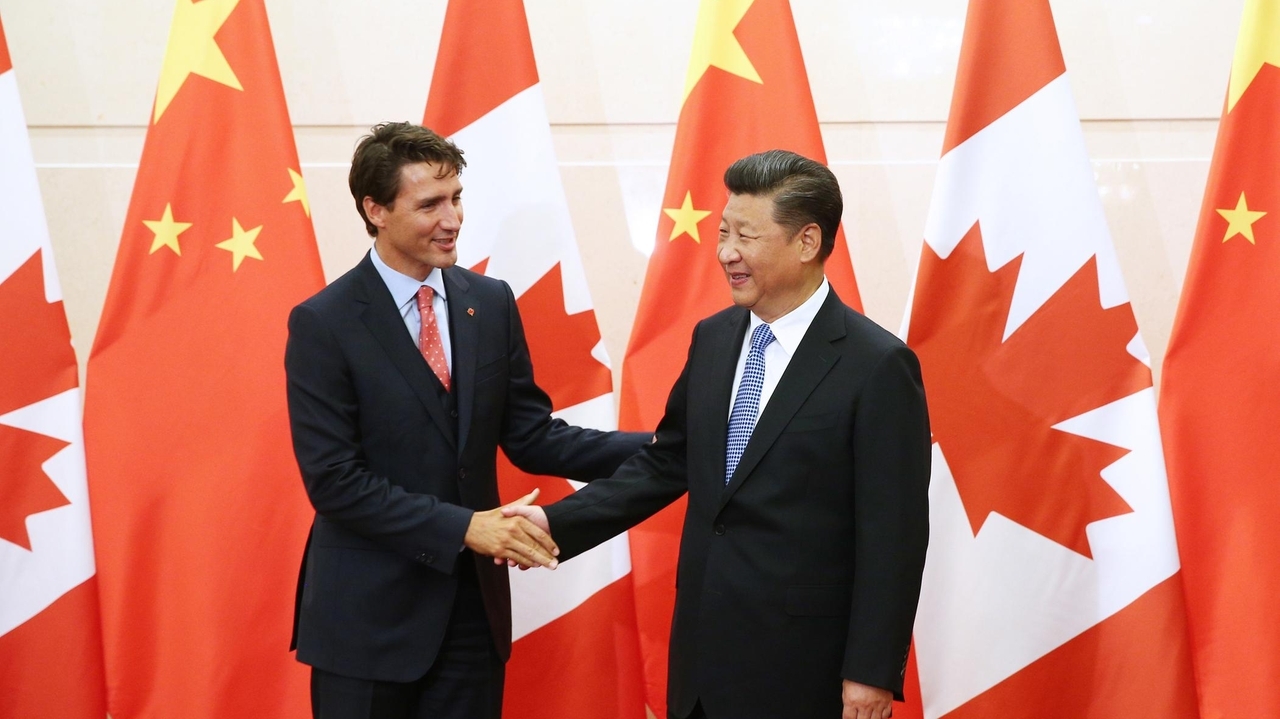
Canada-China relations have shifted from early rapprochement in 1970 to deep tensions after high‑profile incidents — notably Canada’s 2018 detention of Huawei CFO Meng and Canada’s 2022 ban on Huawei and ZTE equipment. In 2024 Ottawa imposed a 100% tariff on China‑made electric vehicles and 25% on Chinese steel and aluminum, and Beijing retaliated in March 2025 with a 100% tariff on canola and 25% on Canadian seafood and pork; diplomatic frictions have also included expulsions, detentions and an election‑interference inquiry. Prime Minister Mark Carney, who took office in March 2025, met Xi in October seeking a reset; investors should watch near‑term policy risks to Canadian agriculture, metals and EV supply chains as talks progress.
Market structure: The Canadian 100% EV tariff and 25% steel/aluminum tariff function as immediate protection for North American producers while directly compressing margins and volumes for Canadian agriculture exporters (canola, pork, seafood) and any China-based EV entrants. Expect domestic steel/aluminum price support of ~5–15% over 3–6 months and a temporary reduction in EV model variety/pricing competition in Canada; CAD likely under 1–3% depreciation vs USD in the near term as export risk premiums rise.
Risk assessment: Tail risks include escalation into broader sectoral sanctions (minerals, energy) or reciprocal measures hitting Canadian financials—low probability but portfolio‑level high impact (market drawdowns >10%). Immediate (days) volatility will spike around diplomatic statements; short-term (weeks–months) earnings and cashflow impacts for exporters; medium-term (quarters) supply‑chain rerouting and subsidy decisions will determine permanence. Hidden dependency: many Canadian agribusinesses rely on a small number of Chinese buyers, so demand reallocation could compress cashflow quickly.
Trade implications: Tactical winners are North American steel/aluminum makers (NUE, X, AA) and incumbent EV OEMs with local footprints (TSLA, GM, F) who face one less low-cost competitor in Canada; tactical losers include Canada‑exposed ETFs and ag exporters (EWC, TSX ag names). Use FX to express country risk (short CAD vs USD) and buy downside protection on Canada equity exposure (3‑month puts) while selectively long US industrials for 3–9 months to capture price rebalancing.
Contrarian angles: The market may overprice permanence—Carney’s Beijing engagement creates a credible path to partial rollbacks within 1–3 months; tariffs create arbitrage opportunities rather than permanent market share shifts because Canada is a small funnel for Chinese EVs. If diplomatic signals improve, Canadian equities (EWC) and ag names could snap back 8–15% within 3–6 months; conversely, further escalation is binary and would be the regime change scenario to hedge heavily against.
AI-powered research, real-time alerts, and portfolio analytics for institutional investors.
Request DemoOverall Sentiment
mildly negative
Sentiment Score
-0.25
